

Back in 2014 gamers from all over the world came together under the #GamerGate hashtag to expose the corruption taking place within the media, but the discussion was drowned out by the exact same corrupt media outlets being criticized for publishing fake news and engaging in unethical practices. They managed to do this by shaping a narrative that #GamerGate was a harassment campaign. Since then, the media has only become worse, with more corruption and fake news coming to light in greater frequency than ever before. Gamers, however, stayed true to their original mission and cataloged a lot of the corruption over on the website DeepFreeze.it.
Well, The Escapist Magazine’s editor-in-chief, Russ Pitts, decided to revisit #GamerGate for some reason and talk about ethics in games journalism with a piece published on February 5th, 2018 titled “How Do We Finally Talk About Ethics?”.
Like almost every other news media piece that misrepresents the consumer revolt, Pitts indulges in the harassment campaign narrative devised and maintained by the media with nary a shred of evidence, writing…
“Most of the people I talked to about GamerGate at the time it was happening were journalists or developers who experienced a movement that had nothing to do with ethics and everything to do with hurting women. People were doxxed, bullied, harassed, threatened, actually assaulted, SWATTed, forced to relocate or change jobs, and flat out terrorized during GamerGate. Pretending an enormous, motivated group that relished in making other people hurt didn’t exist, or was exaggerated, not only insults its victims, but is simply unreasonable and illogical. It requires a willful ignorance not worthy of debating.”
Wrong.
Extraordinary claims require extraordinary evidence.
If the FBI report couldn’t find evidence of #GamerGate being a targeted harassment campaign, then where has all the evidence gone?
The internet never forgets, and yet all the people making claims about #GamerGate being a harassment campaign can’t seem to come up with evidence that it was ever a harassment campaign: tweets, Facebook posts, archives, or police reports of the people who were “bullied” and “hurt” by #GamerGate… where are they?
Surely if #GamerGate existed in the way that Pitts described there should be plenty of citations. Yet when asking for said evidence there’s nothing but deflection and equivocation from the people claiming that #GamerGate is a harassment campaign.
Russ Pitts goes on to write…
Put simply: someone involved with GamerGate may have cared about ethics, but the movement was about hurting people.
Citation needed.
According to the WAM!, peer reviewed report, there wasn’t enough evidence to even remotely suggest that #GamerGate was about harassing or “hurting” people.
Further in, Pitts states…
“The movement was at the time, and remains to this day, inseparable from the targeted harassment, identity politics, and profit-driven hate mongering of many of those who claimed to support it.”
This is actually true.
Anita Sarkeesian managed to use #GamerGate to make a lot of money from donations based on the movement, along with Zoe Quinn, who was making more than $4,000 a month in Patreon donations while claiming to be a victim of #GamerGate, as recorded on Graphtreon.
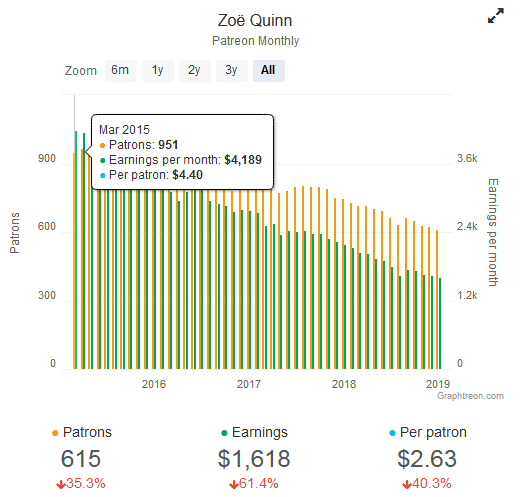
Both Sarkeesian and Quinn also directed a lot of hate toward the gaming community for no other reason than to capitalize on the personal gain proliferated through marketing themselves as victims.
And that’s not even getting into the fact that both were associated with targeted harassment and identity politics to make bank based on the movement. Quinn’s Crash Override Network group engaged in doxing and harassment of #GamerGate members, according to leaked chat logs, and Anita Sarkeesian was captured on film harassing YouTuber and pundit Sargon of Akkad.
This all took place while media outlets also used targeted harassment to denigrate, belittle, and berate gamers, and by proxy devalue the allure of gaming for everyone.
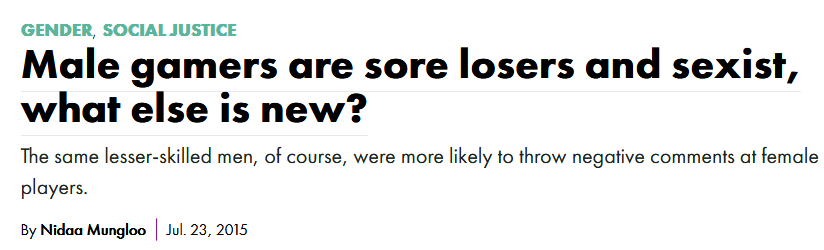

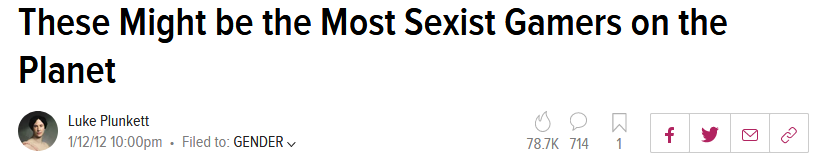
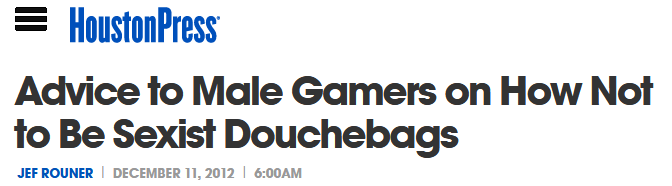
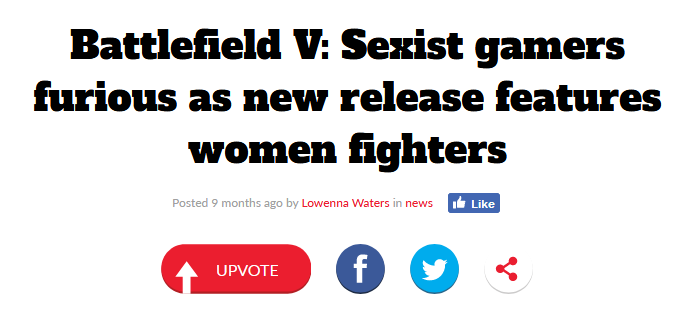
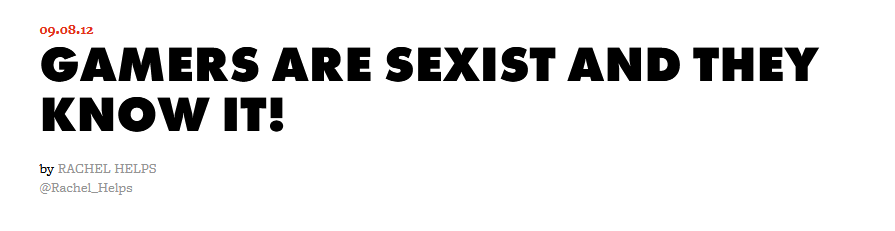
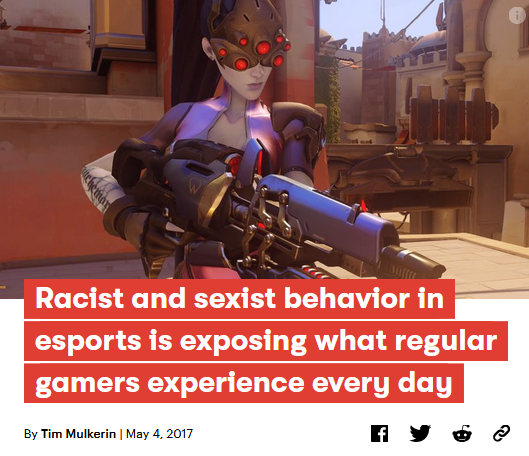
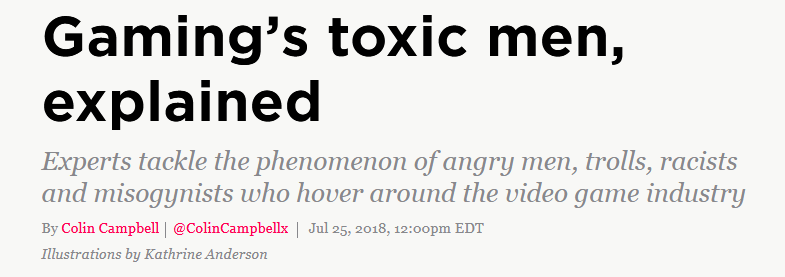

There are hundreds more where those came from, but if the article was just filled with games journalists harassing gamers by calling them sexist, violent, misogynists, the article would be over a 100 pages long.
Anyways, back to Pitts… he continues through the list of how #GamerGate’s very simple request for better ethics in journalism (which included disclosures and leaving the calumny at the door – the former of which was actually enforced by the FTC due to a #GamerGate campign), writing…
“The people most qualified to have a meaningful conversation about ethics in journalism couldn’t reasonably engage on that topic while fielding death threats from those demanding they do so.”
Actually, Michael Koretzky from the Society of Professional Journalists did field those questions and even organized the #GamerGate Airplay event back in August of 2015. The entire stream can be viewed over on Sargan of Akkad’s YouTube channel.
Pitts also writes…
“It is still to this day difficult to start a conversation about the very real issues of ethics and transparency — in publishing, in criticism, in consuming — without reopening the terrible wounds caused by the bad people who used those topics as a smokescreen to conduct their harassment, terrorism, and culture war.”
Wrong.
The media refuses to have this conversation because they’re too busy publishing fake news. It should come as no surprise that trust in the media is at an all-time low and given that activists posing as journalists have devalued their own market, which resulted in more than 1,200 journalists being put out of work in a matter of weeks.
The rest of the article diverges away from #GamerGate to discuss other topics. However, even Pitts bringing up #GamerGate has angered Social Justice Warriors, despite the fact that Pitts’ recount of the consumer revolt was filled with misinformation and falsehoods.
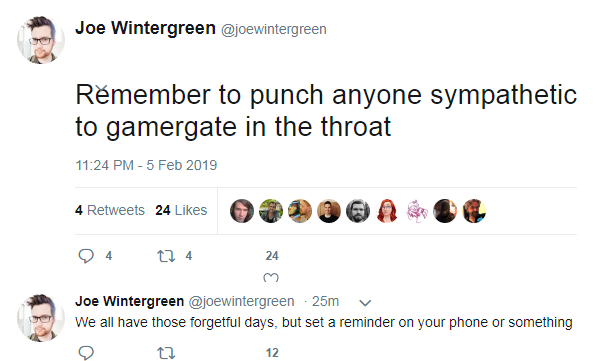
Various individuals began reproaching Pitts for using #GamerGate to talk about ethics in games journalism.
Anyone who is telling you that Gamergate was ever actually about ethics in video games or that we can start a conversation about ethics in video games using Gamergate as a model is either lying or deluded. Which one are you, Russ Pitts?
— Mashed PoDaniel (@danielwhitcomb) February 6, 2019
Russ Pitts, retire bitch.
— Birthday Binch (@dialacina) February 6, 2019
Scanline Media co-host Jennifer Unkle claimed that Pitts’ article was equivalent to a “YouTube reactionary”.
Remember when this dude wrote a whole article about how Blizzard “Betrayed Its Fans” by announcing the Diablo phone game at its annual convention and blamed the press for “attacking fans”? What a joke.
— Jennifer Unkle (@jbu3) February 6, 2019
Games writing is already doing the work he claims isn’t there (labor reporting, for one), but hey: maybe he should live up to his own example and not write articles indistinguishable from a YouTube reactionary squawking into his microphone?
— Jennifer Unkle (@jbu3) February 6, 2019
Others simply dismissed the notion of even discussing the topic at hand, either brushing it off with one-word repudiations.
As the kids say: Yikes.https://t.co/umi0uObr6W
— Michael (@steal_from_work) February 6, 2019
There have been multiple books written about it.
“Game Changers” and “Crash Override” are two good ones to start on.
Trying to rehabilitate a hate group by trotting out “ethics” again?
That’s just the pits, man.
— John Kane (@gritfish) February 6, 2019
shut the fuck up, russ pic.twitter.com/53ybnkZceF
— Leena (@LeenaVanD) February 6, 2019
Anyone trying to suggest GamerGate had good faith intentions or “was trying to have a larger conversation” need to be treated like they’ve walked into your lounge and taken a shit on your floor while making eye contact and smirking at you.
Don’t put up with it.
— Leena (@LeenaVanD) February 6, 2019
Russ Pitts acknowledges that GG mostly hurt people but then frames it as a movement about ethics that got co-opted by bad people until, by the end, he’s literally calling for people to “try again”
“Maybe if I lick the OTHER boot it’ll taste like mint? Will report back” pic.twitter.com/trbc1YpUyY
— Corbyn Lagann (@Ettin64) February 6, 2019
Basically, even though Russ Pitts is still staunchly anti-#GamerGate, even acknowledging #GamerGate’s ethics, such as when campaigns were made to get Kotaku, Destructoid, Polygon, The Verge, and VG 24/7 to update their ethics policies, was enough to trigger some SJWs to get them to flame Russ on social media.
I suppose, even when some anti-#GamerGate individuals attempt to talk about ethics in games journalism there are some people who are still intent on talking about harassment.
(Thanks for the news tip Lyle)
Loading comments…