
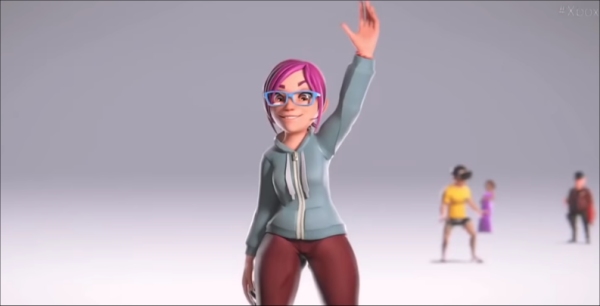
Microsoft’s Gaming For Everyone initiative is a diversity program designed to build “inclusivity both internally and externally”. The idea is that it’s aimed at recruiting “marginalized” groups and keeping them within the community, since they’ve apparently been unable to keep such people within the industry.
Senior community program manager for Gaming For Everyone is being headed up by Benjamin Williams, whose job is focused on keeping “marginalized communities” within the industry after they get hired.
Williams told Gamesindustry.biz…
“[Marginalized communities] have been a part of the gaming industry since the gaming industry was a thing. We’ve always been here and we’ve always had an impact, but that impact hasn’t necessarily been seen or felt by everyone else. So while those communities have always been here, Gaming for Everyone is here to help amplify their voices.
“We do that by providing a space for everyone to gather and succeed through networking, professional development, and things like that. We sponsor professional development scholarships through the IGDA and through partnering with other companies who are also interested in this work.”
According to Williams, Microsoft is aimed at bringing more “marginalized” people into the fold, especially people who can’t regularly attend workshops at conventions like GDC in San Francisco, California.
Microsoft is basically building out the infrastructure of social engineering to expand hiring practices for people outside the interest groups who actually want to work within the gaming and tech field.
However, Williams lets it slip that the main idea is to bring in these non-endemic demographics to change the culture and shape it into something else, saying…
“There have been diversity and inclusion initiatives in tech and gaming for decades, and those initiatives generally focus on hiring and recruitment. Those programs are absolutely successful and they have metrics to show that, yes, if you show up in the place where people are and come to them on their terms, you can successfully recruit them into the industry. But what we’ve found is that they don’t stay. We are on that journey of finding ways to entice people to stay and have an impact.
“I always joke that it’s very difficult to measure success in my job because all of my key performance indicators are feelings. How do you measure a feeling of identity? When I feel I’m succeeding at my job is when people are able to say they feel like they belong, that they’ve found a support network, that they found where they can go to for jobs, for professional development, for emotional support and impact.
“That is where my focus is, and that is what I feel will get people to stay in the industry. And if they stay in the industry and succeed, they’ll have an impact on its products and futures.”
There’s a lot to unpack in that quote, but the most significant is the end piece because they’ve already had an impact on the products.
We’ve seen from a multitude of examples how changing brand identities to suit the phantom audience is a death knell for most established properties, oftentimes resulting in them ending up on the Get Woke; Go Broke – Master List.
We’ve seen a number of franchises completely abandon their original audience in favor of chasing after those phantom dollars only to completely faceplant. The Coalition and Microsoft are trying that right now with the upcoming Gears 5, which is being made in collaboration with Facebook’s social engineering program known as Women In Gaming. The idea is to reorient the focus of the game more-so from a feminist perspective.
A lot of fanboys are too dense to speak up about it and are willing to accommodate the subversion on behalf of brand loyalty, but trying to sell a typically masculine franchise like Gears of War as a more female-focused game is like trying to sell Ghostbusters as a vehicle for feminism. The results oftentimes don’t favor the propagandists, as outlined by WorldClassBullshitters.
Also, Williams’ quote is quite telling about the inability to retain these “marginalized” hires in the tech industry. If these people aren’t sticking around because they’re passionate about the work then it means they’re not passionate about the industry. At the end of the day it sounds more like these people are joining with the intent to influence and usurp rather than to be part of something for the enjoyment of it.
Heck, we’re literally seeing that train wreck play out in slow motion within the comic book industry, where sales are continuing to take a dive, with 2018’s numbers being down, as reported by CBR. This is coming off a 6.5% drop in sales in 2017 compared to the previous year, as reported by Newsarama. That’s not to mention that chasing after these “marginalized” groups are demographically insignificant when it comes to consumer percentages, and unless you enjoy being bankrupt it’s an anti-capitalist venture through and through. But I digress.
According to GamesIndustry.biz, Microsoft will be further celebrating and expanding their reach for “marginalized” groups, headed up in part by Williams. They explain…
“Next year will be the 20th anniversary of the Women in Gaming rally, as well as the 15th anniversary for the Black in Gaming Green Room event. Williams says these two long-running examples demonstrate that the communities they celebrate have always been a part of the industry, but he wanted to expand Gaming for Everyone events to other underrepresented groups — such as the LGBTQIA and disabled communities, which just celebrated their third and second annual GDC events respectively.”
Anyway, Microsoft has been making a lot of moves further Left in rapid succession in recent times. From excluding Markus “Notch” Persson from the Minecraft 10th anniversary event for his anti-SJW Twitter comments, to their discriminatory hiring practices that excludes straight white males and Asian males, it looks like Microsoft has decided to drink the Kool-Aid and join Sony at the table of the Intersectional Inquisition.
(Thanks for the news tip Rob Far)
Loading comments…