
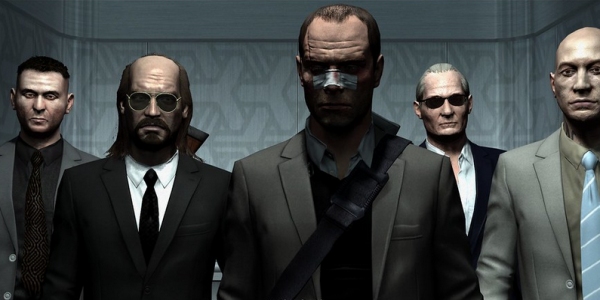
Title: Kane & Lynch: Dead Men
Players: 1 – 2 (co-op) 2 – 8 (online)
Platforms: PC (Reviewed), PS3, Xbox 360
Developer: IO Interactive
Publisher: Eidos/Square Enix
Release Date: November 13th, 2007
Kane & Lynch: Dead Men is one of those games where the controversy surrounding the game was bigger than anything dealing with the game itself. Namely, Gerstmanngate, which involved Jeff Gerstmann getting fired from Gamespot because he gave the game an above-average 6 out of 10 during a time when Eidos was advertising on the website, which set the seeds as a proto-#GamerGate.
Lost in all of the outrage and controversy was the game itself, a conceptually competent third-person shooter themed around cooperative gameplay that was mired in nihilism and obstructed by clunky controls. But I’ll get into all of that later on.
Pros:
+Campaign co-op
+Interesting multiplayer
+Masculine main characters
+AI that reacts to suppression fire
+Destructible environments
+First half of the game had cool stages
Neutral:
• Weapon selection
• Game length
• Endings
Cons:
-Second half of the game
-Some weird performance drops
-Clunky/slow controls
-Incoherent story pacing
-Lack of replayability
Wokeness: Pozz-free
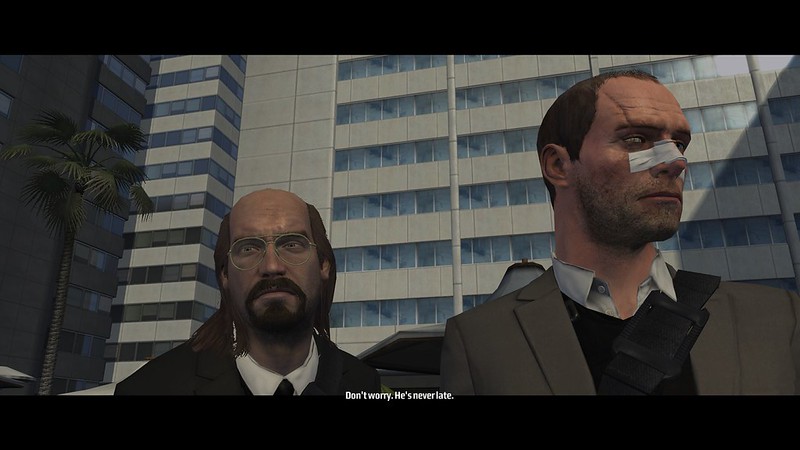
The game starts with a prison break involving the characters Kane and Lynch. Kane is an ex-mercenary who worked for a group called The7. He ended up betraying them and landed in prison. Lynch is a psychopath who has an uncontrollable tendency to murder people. Both characters are deplorable scumbags, but that’s kind of the whole point.
The story follows the two characters as they’re captured by The7, who force Kane to bring them back the items he stole from them. They recruit Lynch to watch over Kane and report back to them every thing they do. They give Kane three weeks to recover the items or they’ll kill him, and his estranged wife and daughter.
The setup is quite intense, and the confusing and chaotic first level feels grounded and gritty. You can tell that IO Interactive mirrored the shootouts around Michael Mann’s 1995 classic, Heat.
The game does away with a heads-up display and instead has players relying on wits and cues to navigate the levels. You have a Call of Duty-style health system, where if you take too much damage your screen turns red and then you begin to bleed out. If you’re playing in two-player mode a second player can run over and heal you with an adrenaline shot.
In single-player mode you choose to play as Kane or Lynch, and the AI will take control of the other character.
NPC companions can be directed using the face buttons. You can direct NPCs to a location using the ‘B’ button, or have them focus on a target using ‘Y’. You can also tell them to follow you by tapping ‘X’.
In single-player mode the ability to micro-manage NPC movement and actions becomes vital given that it’s very easy to become overwhelmed by AI opponents.
You can tell IO Interactive carried over some of the Hitman designs into Kane & Lynch, as NPCs are quite reactive within the game world.
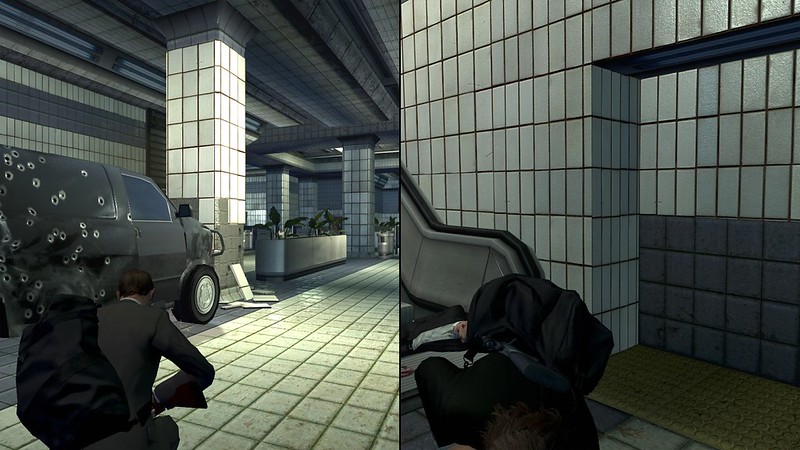
If you shoot at an NPC or they get shot at, they take cover. If they receive too much fire or the suppression lets up, they’ll attempt to move to better cover, or attempt to setup flanking positions. Enemy AI will also lay down suppression fire at times in order allow their teammates to move into better firing lines.
It’s quite impressive seeing them at work, especially compared to how crappy AI is handled in most current gen games.
This dynamic setup also extends into the firefights. Players can shoot at certain body parts of an AI to weaken or expose them while they’re in cover, or force them to stay in cover by laying down suppression fire on their position. While this might not seem important, it becomes extremely vital in certain stages like when running through the streets of Tokyo, or attempting to get around enemy nests in Venezuela.
In two-player mode the tactics of working together is what makes Kane & Lynch tick. In one stage you have to infiltrate a Japanese night club, beat the female owner into a pulp and carry her out. This was before feminism co-opted the gaming industry, so punching chicks in the face was still allowed back in 2007.
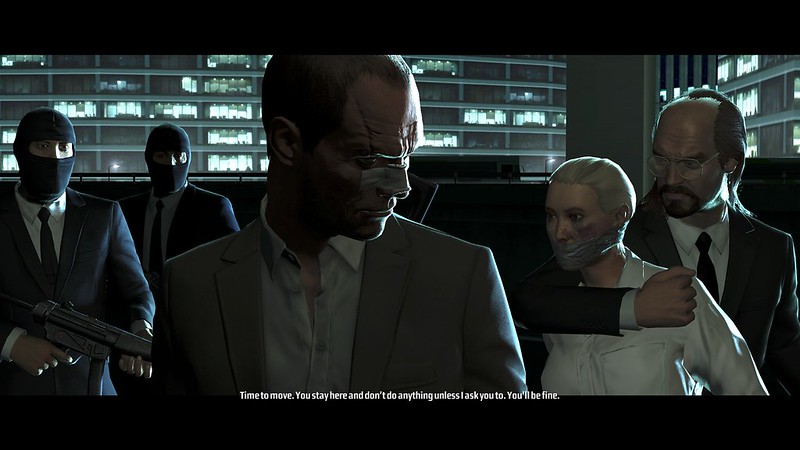
The hook is that while one person carries the chick, the other has to spot and take down the armed guards. This is actually a really cool scene that was probably one of the best executed levels in the game, mostly because the nightclub is filled to the brim with NPCs and loud music. So if you do it right you can actually take down the guards before they fire their weapons and navigate through the first half of the level stealthily.
The ability to utilize melee take-downs while attempting to engage in a pistol firefight throughout a crowded club almost seemed like John Wick before John Wick was a thing.
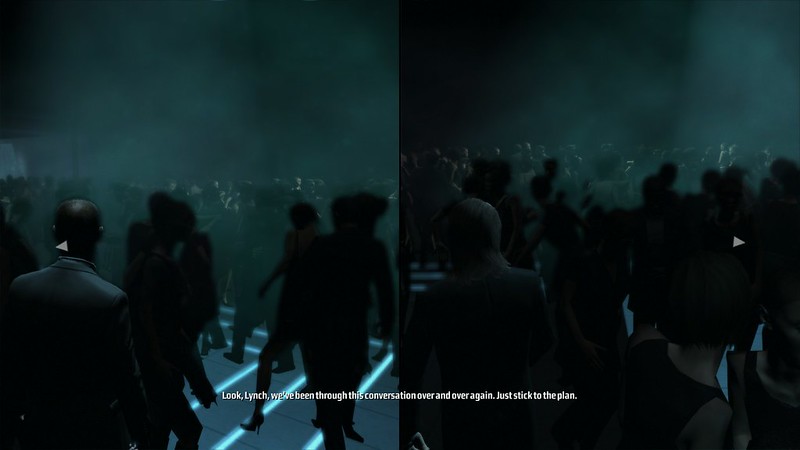
The only problem is that the cool scenes and awesome levels were hampered by the absolutely clunky controls.
Even on PC and with the ability to modify the controls outside of the game for the Steam controller, I found myself struggling with the aiming mechanics. It felt like the character reticules were smothered in molasses.
Forcing an expanded deadzone and over-compensating the sensitivity didn’t help much either. Either the aiming was too fast and jittery or too slow and poorly responsive, especially when precision aiming with the left trigger.
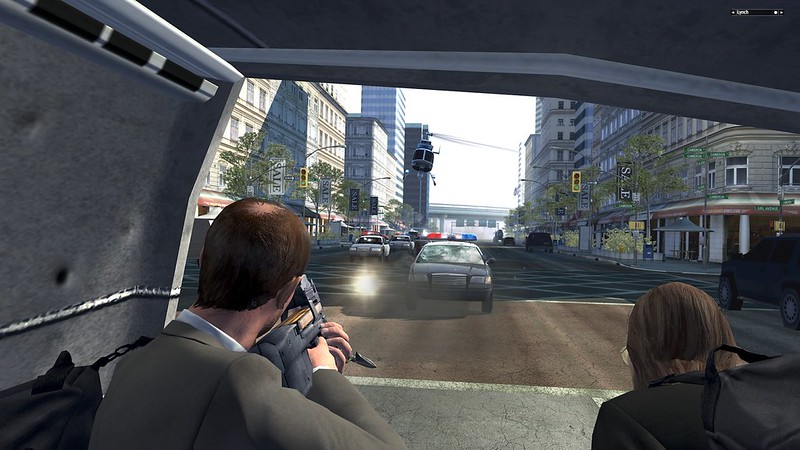
Maneuvering the characters with the left analog is fine, but it was a real struggle with the right analog and how slow or unresponsive the targeting felt. This made chase sequences especially difficult to play through because manning turret guns or firing from the back of moving vehicles became an absolute chore.
Instead of fighting against the enemy AI, majority of the time is spent fighting against the aiming mechanisms.
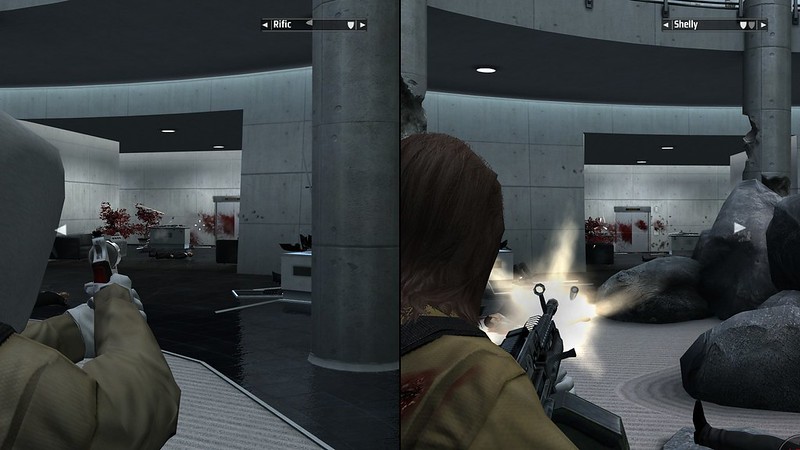
If this wasn’t such a huge issue it would have made the game so much more fun, especially given that some of the levels are designed really well if not to the point of being underutilized.
I mentioned at the top of the article that the first-half of the game is quite inventive and the levels are really cool. It’s true. Some of the levels are like a mix between Eidos’ Resevoir Dogs for PS2 and the OG Xbox, and Overkill Software’s Payday series.
The urban sprawl being the epicenter for intense shootouts in the middle of the street feel gritty and really gets the pulse-pounding.
If I did have a criticism of these inner-city shootouts it’s that the sound didn’t quite match the intensity of some of the levels’ setup. For instance, when you’re moving down the streets of Tokyo and cars are being shot from either side as police attempt to surround you, you don’t quite feel like you’re hearing the scenario play out as viscerally as it looks.
Glass shattering feels muted, ricochets aren’t heard at all, we don’t get enough dinks and clangs from bullets penetrating car frames, and the guns themselves sound very weak.
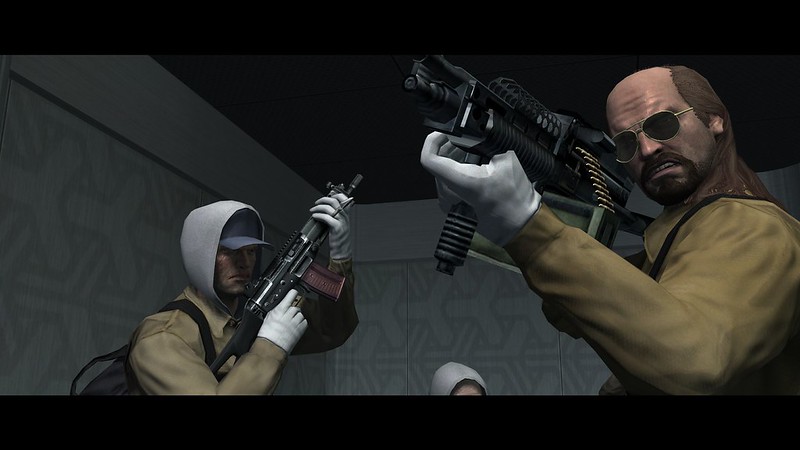
Imitating Heat is absolutely commendable, but they should have gone the extra step and make it where they also mimicked the way the guns sounded in the shootout.
For me this really took away from the potential intensity that some of the levels could have had.
It also didn’t help that the weapon selection in the game was extremely sparse. You only had two types of handguns, a semi-automatic and a revolver – the former of which could come in a silent variant. They had two types of shotguns, a standard pump-handle and a SPAS-12. There was a rocket launcher, a grenade launcher, a sniper rifle, three types of assault rifles, an LMG, and a sub-machine gun.
It seemed like there were more weapons and with a greater variety in Hitman 2.
The game also took a rather unfortunate downward spiral in quality during the second half.
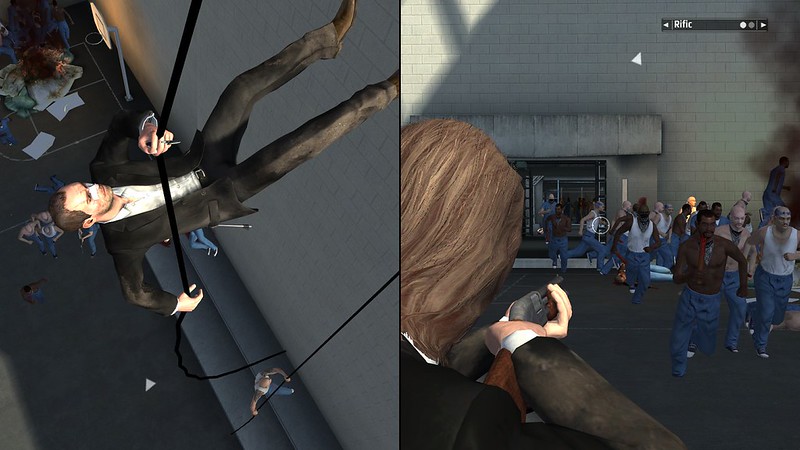
Kane attempts to put together a mercenary party by breaking some guys out of prison, which was kind of cool given that the prison break once again showcased a neat display of the software technology powering the game as dozens of prisoners piled out of their cells and throughout the prison courtyard, and afterward we got the cool heist in Japan, but then the game put players in the midst of a civil war in Venezuela that seemed way outside what the game was originally attempting to do.
The stage itself was passably decent, save for an annoying Hind that would fly around and kill you instantly, and a glitchy part of the map leading into a building that would kill the frame-rate if you looked at some tanks in the middle of the street.
But the problem was that the entire core of the game’s mechanics weren’t really designed around a war-game scenario. If this were Gears of War or Max Payne it would make more sense, but given that Kayne & Lynch didn’t have a button for wall-hugging – the characters would automatically hug certain structures if you were close enough – it meant that if you weren’t tucked against a wall you were exposed and riddled with bullets.
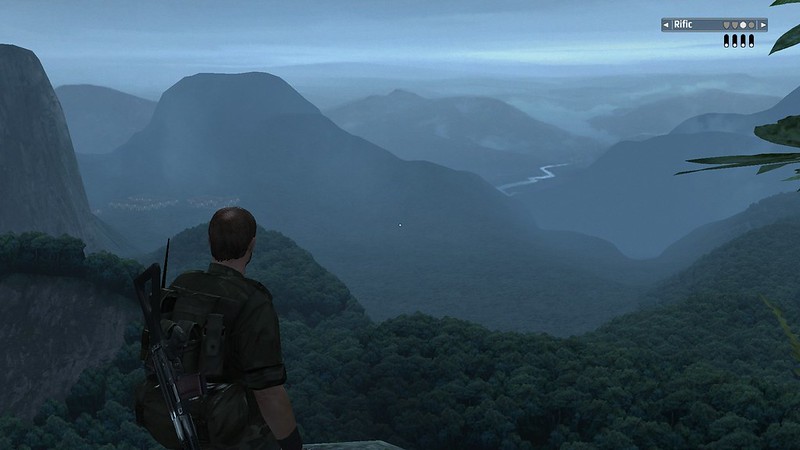
This required a meticulous playthrough of the Venezuela city siege levels due to the game’s lack of accommodating mechanisms designed around war game scenarios. For instance, there was no dodge-roll, and you could only sprint for a few seconds. This made traversing the war-torn level more tedious than it should have been.
Thankfully they did supply players with ample amounts of grenades, of which they came in two varieties: smoke and explosive. Those ended up becoming extremely important in the jungle stages leading up to the finale where visibility became an issue and cover became sparse.
The game also attempted to wrap up the story with this clandestine cabal known as The7 without really properly explaining who they were or how they became so powerful.
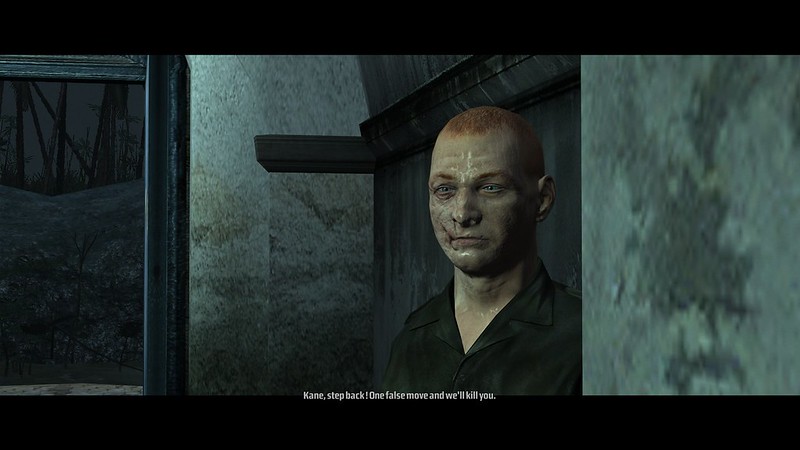
They also didn’t really explain how or why Kane betrayed them, and since everyone was a liar, a thief, and a murderer it was impossible to tell who was telling the truth.
Make no mistake about it, Kane was not a reformed criminal trying to set things right, he was a selfish murderer constantly trying to pull strings for his own end. This wouldn’t have been so bad if maybe the game didn’t roll out the story in such a disjointed and confusing fashion.
Most of the character details had to be pieced together in between the loading screens, but once again since every character with a speaking role – other than Kane’s wife and daughter – was either a manipulative liar or a psychopath it was hard to tell what parts of any of their story was true.
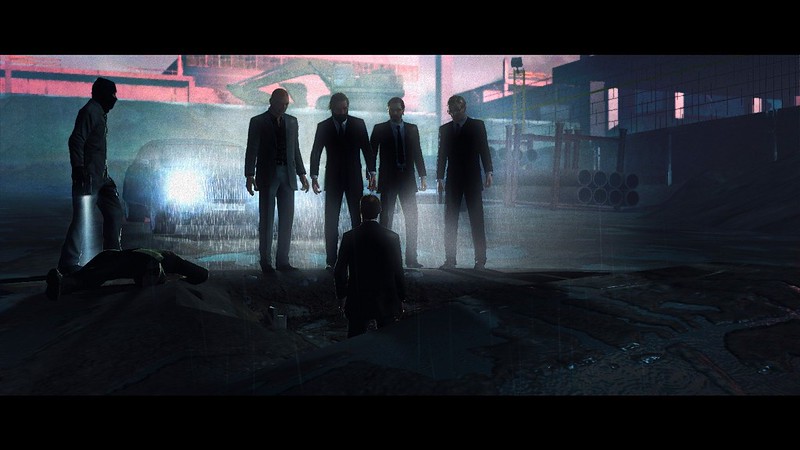
It felt like the second half of the already short game was rushed, and they decided to just wing it from there.
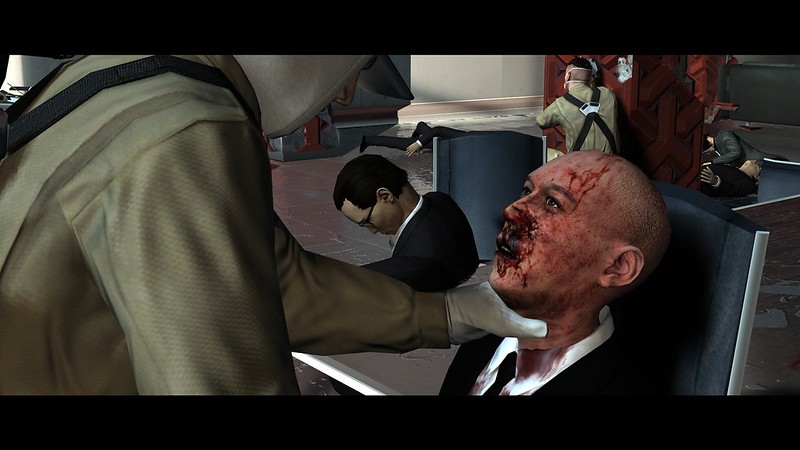
After a big finale at an airstrip the game gives players an option of pursuing two different but equally nihilistic and depressing endings. The so-called “good ending” is actually even more depressing than the so-called “bad ending”, but both endings basically ensure that by the time the credits roll you realize that everyone other than Kane’s daughter was an irredeemable arsehole.
I wouldn’t mind that so much if maybe we had a bit more backstory on why they were that way or how they came to be that way.
I would have scrapped the entire second half of the game and actually made the middle part where Kane is confronted by The7 and the fight with the giant dump truck driver the final boss. I would have filled out the parts between the prison break and Tokyo with more heist levels where you gather supplies, equipment, and finances to travel to Tokyo, and spliced some short cinematics in-between explaining the group’s relationship to one another and a little bit of their backstories.
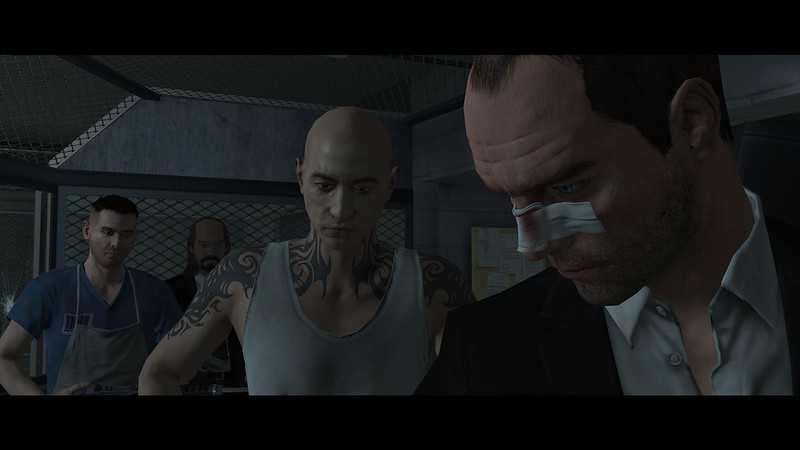
The entire sequel could have been about actually hunting down and killing The7, as there would have been proper motivation for doing so and maybe IO Interactive could have further fleshed out the game mechanics and playability to make the overall game more accommodating to what they wanted to achieve with everything that took place after the siege levels in Venezuela.
As it stands, Kane & Lynch: Dead Men had a ton of potential that was undercut by a lot of weird or faulty design decisions. The campaign mode was only around four through five hours long, and didn’t offer much in the way of replayability unless gamers were intent on trying to play through some segments stealthily.
The multiplayer, however, could have been a breath of fresh air if it wasn’t tied to Games For Windows Live. Once again, the concept actually was better realized than what the campaign portion of the game was. It honed in on the heist aspect of Kane & Lynch where up to eight players would attempt to rob a place and make a getaway while cops are hot in pursuit. Players can potentially gain more score by killing their teammates, betraying them and taking all the loot for themselves.
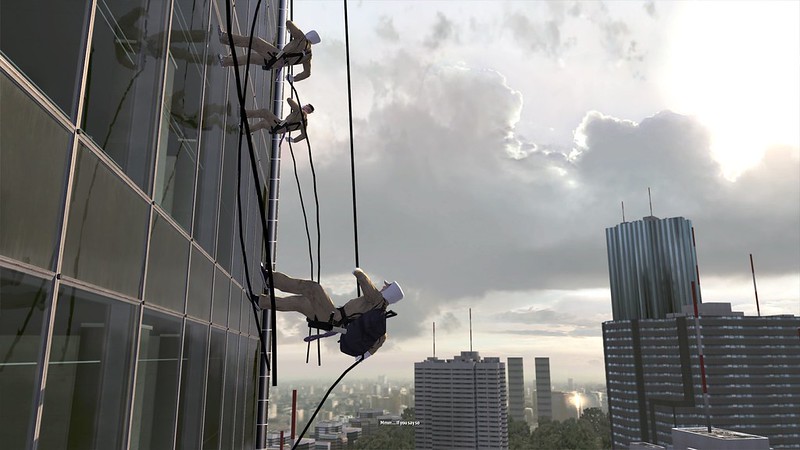
This creates a cool dynamic of tension that should have been present in the campaign mode in some capacity. Sadly if you aren’t playing on the PS3 or Xbox 360 you probably won’t be enjoying it much on PC unless you can find some other people to Jerry-rig their GFWL profiles to actually work correctly.
One good thing about all versions of the game, even on PC, is that you can at least play the campaign mode in two-player split-screen, which is a rare treat. It also works with Steam’s couch co-op Remote Play feature.
Is it a game that I would ever return to, though? Not likely. The concept is better than the execution, and the story wasn’t compelling enough to replay for that reason alone. A similar but much better executed version of a similar kind of game is Josef Fares and Hazelight Studios’ A Way Out for home consoles and PC. You may not get the Heat-style shootouts or the cool nightclub showdowns, but the split-screen feature is there, the story is a lot more coherent, and the gameplay isn’t bogged down with clunky aiming controls and clumsy micro-management of AI teammates.
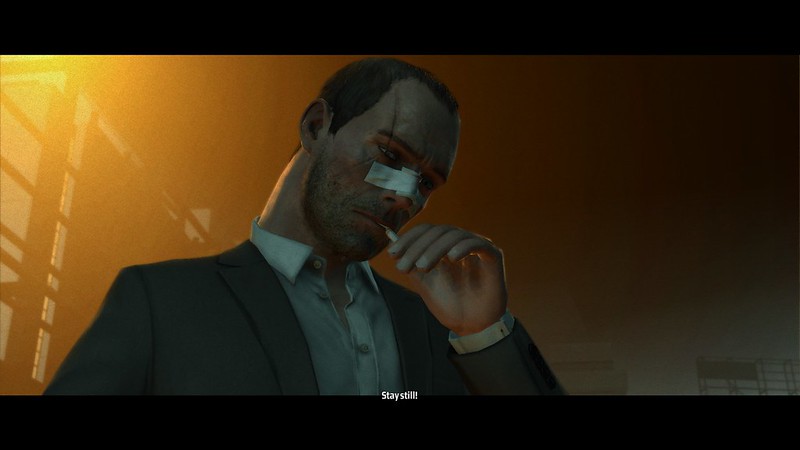
If the game wanted to be an edgy, nihilist look into the minds of disturbed individuals, I think they should have really slowed down on how they told the story and made it a lot more focused like Surreal Software’s The Suffering.
But 13 years later and Kane & Lynch: Dead Men is still the same cumbersome game that it was back when it first released on seventh gen consoles and PC. It’s a shame because some games age with time and you can better appreciate their qualities after attaining a refined view on the development and construction of the title, but in this case you could tell that development was rushed and disjointed, and despite all the potential it had, it just couldn’t live up to the greatness that it could have achieved.
Verdict: