
Title: Brütal Legend
Genre: Adventure/RTS/Hack-and-Slash
Platforms: PS3, Xbox 360, PC (Reviewed)
Developer: Double Fine Productions
Publisher: Electronic Arts
Release Date: October 13th, 2009
Since they don’t make good games anymore in the AAA space that aren’t woke or full of alphabet degeneracy, I’ve been sinking my time into my back catalog of games across home consoles and PC. The latest game to strike my fancy is a game I originally ignored when it came out because it seemed like the marketing team didn’t know how to promote the game, and since EA didn’t seem to know what to do with Brutal Legend, I promptly ignored it when it first came out. I can safely say that was a big mistake on my part because this game is chock full of testosterone, a badass soundtrack, hot chicks with big jiggly tits, and a flawed but fun combat system.
They really don’t make ’em like this anymore. Regardless of the issues you might have with Tim Schafer, his mismanagement of money, his half-cocked Kickstarters, getting woke, becoming a Traitor of America, or his failure to do proper sock-puppet math, Brutal Legend marked the last time an AAA title duly stepped outside the box and tried to do something wholly original the likes of which we haven’t seen before. It’s a shame because not only have we not seen another game made like it again, but given the current direction gaming is going in, we probably won’t see another game made like it in the AAA space… ever.
Multiple Genres, One Game
Now this isn’t to say that Brutal Legend is perfect or without fault. It has plenty of faults; the biggest of which is the glaring proof that it’s a game made by artists not engineers, and it plays like it… for better and certainly for worse.
But let’s take a step back and go real slow, right from the start.
What is Brutal Legend? It’s an open-world, hack-and-slash, lite role-playing, real-time strategy, heavy metal adventure game.
That’s a real mouthful, eh?
Well, it’s true. The game jams a ton of content into a 10 – 20 hour experience, depending on how many side-quests you complete or whether you get jammed on some levels because the balance of the game is broke as heck.
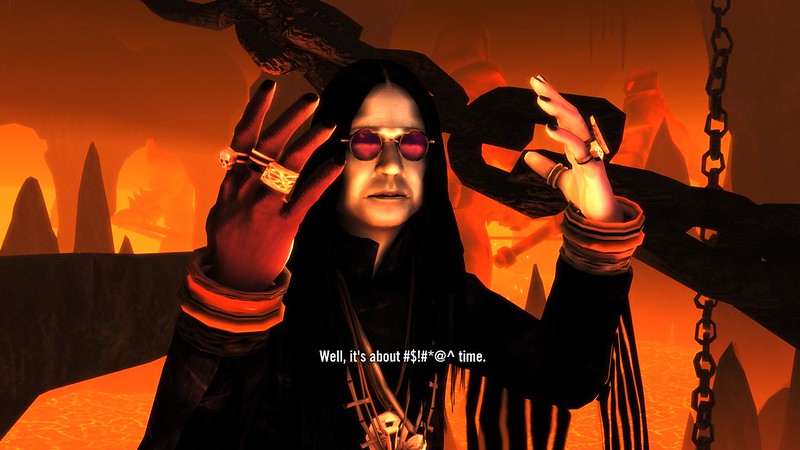
Even still, the story is flatout awesome and features guest appearances from metal legends such as Ozzy Osbourne from Black Sabbath, Lemmy Kilmister from Motorheah, and Lita Ford from The Runaways.
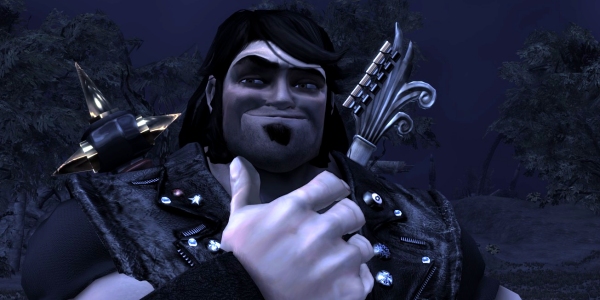
Jack Black, however, is the real star of the show, voicing protagonist and roadie extraordinaire, Eddie Riggs.
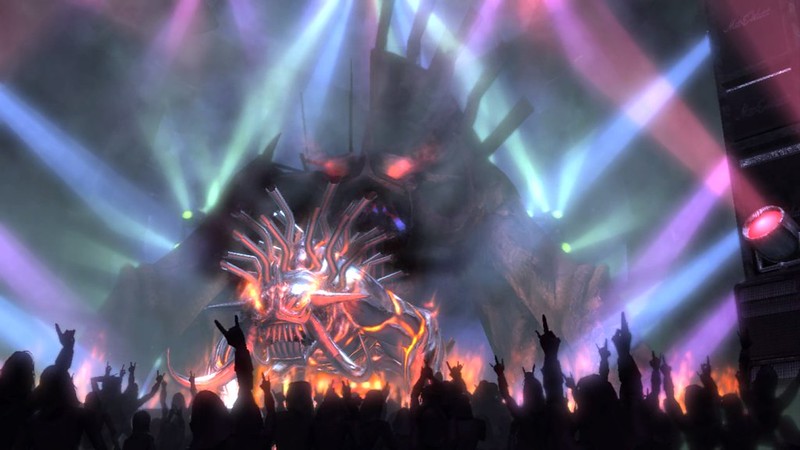
Eddie is thrust into an otherworldly adventure filled with demons, titans, and heavy metal, shortly after meeting his demise during a rock concert attempting to save an idiot band member from falling to his death. Eddie, however, is spared a traditional fate given that his father’s relic is activated when his blood touches it. The roadie is then sent back in time by the fire god, Ormagöden, who makes a pretty badass entrance at the start of the game.
Mature Content Filters
Also, it’s funny because instead of cutting out all of the mature-themed content to aim for a lower age rating, Double Fine added the option to turn on a content filter that censors the gore, blood, and profane language. It’s a reminder that back before [current year] sociopolitics ruined video games, developers simply gave gamers the option to toggle mature content on or off at their own leisure.
Unfortunately, that feature has been removed from newer games, and now developers simply self-censor during the development process or cut out all the “offending” material after some crazy SJW complains about it on social media. Back during the 1990s when the Shareware era was in full bloom — and up through the seventh gen — the mature content toggle was a well-regarded feature if you wanted to play a mature game in front of the kiddies without worrying about tainting their innocent eyes and ears.
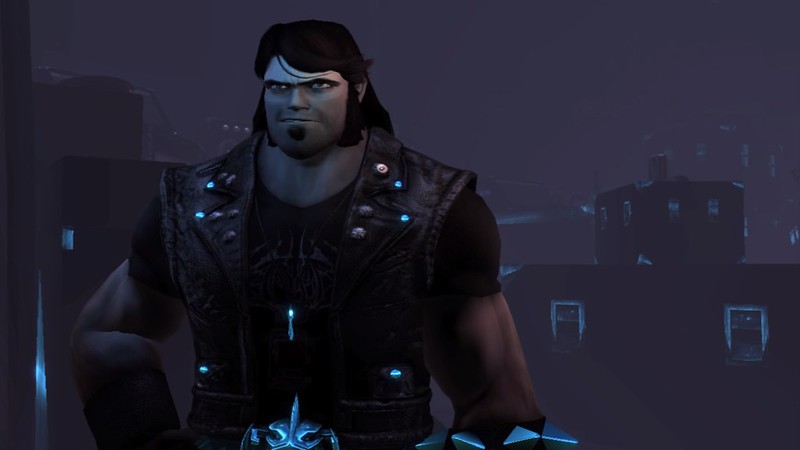
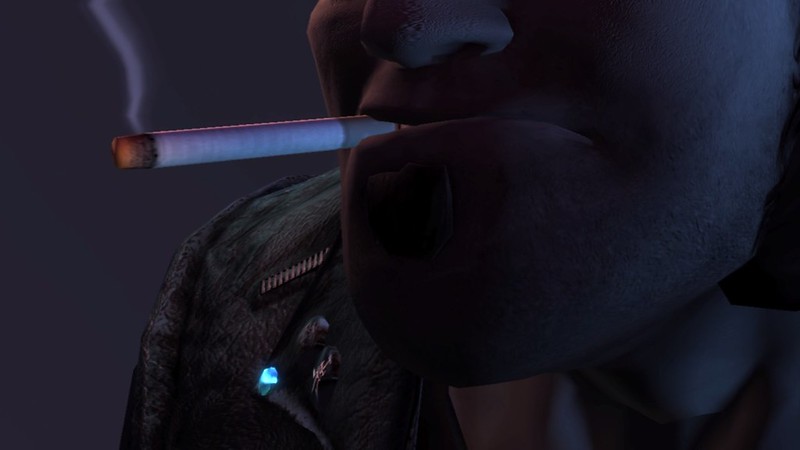
But even with the censorship toggle turned on, Brutal Legend is exceptionally masculine, including the cigarette smoking, lady-loving, musclebound, Eddie Riggs.
A Real Character For Real Gamers
As mentioned, Jack Black carries the game with a heck of a lot of charisma and unbridled verve. You can tell he really, really enjoyed playing Riggs and diving deep into this bizarre, crazy, violent world basked in heavy metal aesthetics.
Eddie isn’t just a cookie-cutter cutout hero, though. While he’s sometimes bumbling, he’s certainly not a fool. And while he can sometimes be aloof, he’s still perceptive about what’s going on around him.
He’s a well-rounded character that has some depth and dimension to him. It always shocks me playing these older games and realizing that developers used to make characters that gamers could actually like, instead of ‘roided up, post-apocalyptic golfers suffering from violent, psychotic gender-dysphoria episodes.
Eddie is accompanied by a cast of colorful characters, many of whom offer levity or dimension to a story that’s both fantastical and widely violent.
The core of the game revolves around a demon lord named Doviculus, voiced by the incomparable Tim Curry, who attempts to weed out and destroy the remaining presence of the human freedom fighters scattered about the land.
When Ormagöden sends Eddie to the land of rock and metal at Bladehenge, he joins up with a small band of resistance fighters led by the sibling duo of Lars and his sister Lita.
Compelling Storytelling
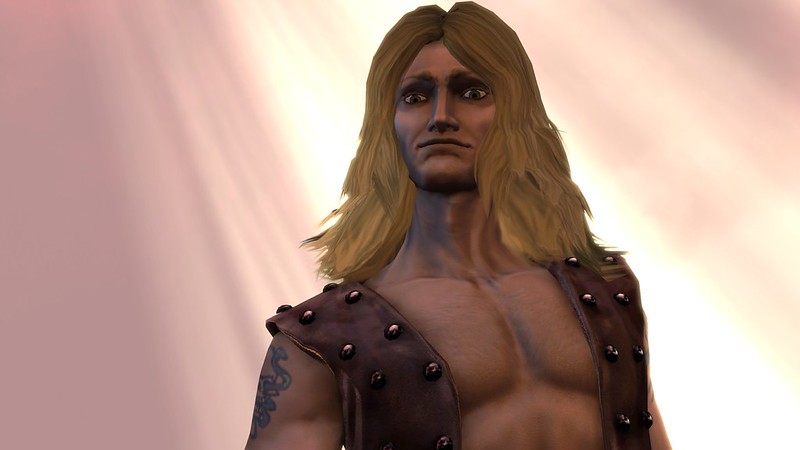
Pretty boy Lars is more of a charmer than a doer, though, and while he helps rally the morale of the ragtag group of fighters that Eddie and the outcast Ophelia help put together, it’s basically Eddie and Ophelia who do most of the legwork to make the rebellion a cohesive fighting unit.
The story is a lot more layered than you might expect, though. Lars likes Ophelia, Lita doesn’t like Ophelia, but Eddie also likes Ophelia, and there’s some trust issues that bubble up between the main heroes/heroines that eventually results in a tragic outcome for the human army.
There are some twists and turns scattered about the story that you probably may (or may not) see coming, and some revelations that also tie directly into some of the gameplay mechanics, including Eddie being a roadie.
Unlike other games where the main protagonist saves the world mostly through their own actions and heroism, Brutal Legend puts most of the busywork in the hands of the minions under Eddie’s direction.
The first part of the game relies on basic hack-and-slash mechanics, where you have to battle through a number of enemies to grow your army. It’s during this segment where the core of the game relies on mastering Eddie’s ability to utilize axe combos (basic melee), guitar attacks (long ranged attacks), and powerful ground smashes (AOE attack). You can also lock onto enemy targets, block, and roll using the ‘B’ button on the Xbox controller, or Circle on a DualShock.
The basic melee combat is very shallow, and there’s not enough feedback on when you hit an enemy or when Eddie gets hit by an enemy. He doesn’t have a lifebar but instead it uses the Call of Duty style health system where if you sustain too much damage in a short of amount of time, Eddie will die. Keeping away from enemies or avoiding damage for a short period will restore your life.
Once you gather enough units into your army, the game switches from an open-world, hack-and-slash action title to a real-time strategy game.
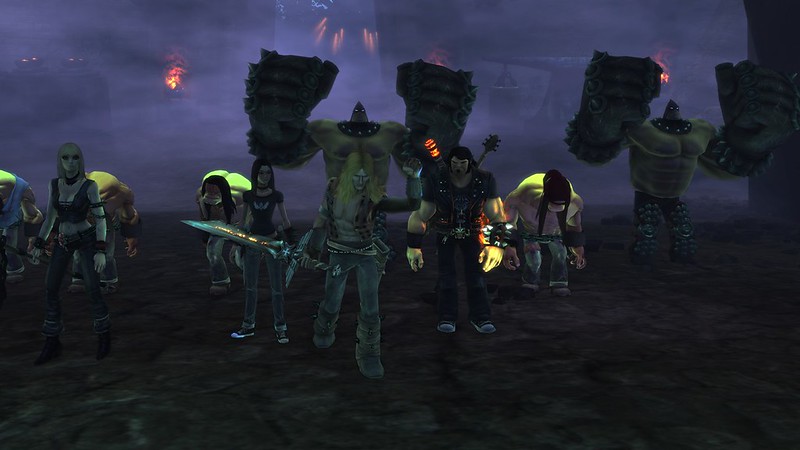
Shoddy RTS Controls
It’s here where the quality of the gameplay gets kind of shoddy, because the hack-and-slash elements were already kind of bare bones, but the real-time strategy mechanics are half-done.
For instance, there’s no easy way to select groups of units or select single units with a simple press of a button or two. You can do so by going over to a unit and holding down ‘Y’ on the Xbox controller (or Triangle on a DualShock), but trying to hold down the button and give the unit directions becomes a game of finger-Twister all unto itself.
You can also only direct units when you’re in their presence, so this typically means that you have to fly over to those units or drive to them to give them directions either using the digital pad or waypoint indicators on the left bumper. This turns into a game of micromanaging simple directions that should have been mapped out easier by allowing gamers to simply hold down a button and select the units they wanted to direct.
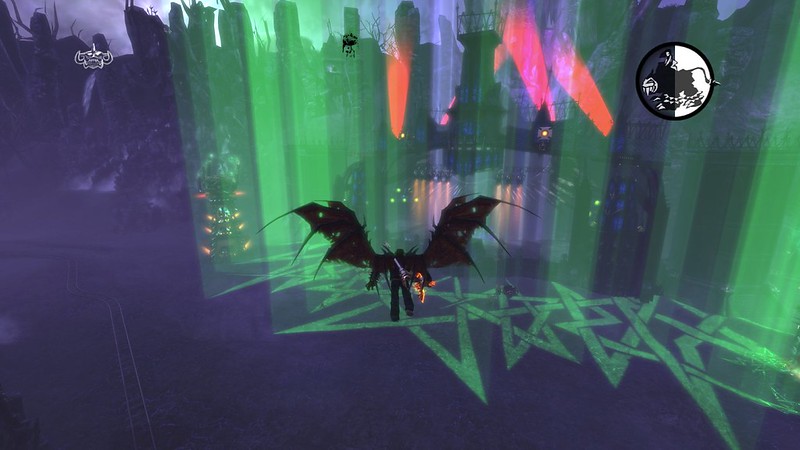
Unit Control
It’s very cumbersome to play with a controller, but you can get adjusted to it after a while.
The structure of the RTS elements is actually decent enough, though. You have a unit pool of 40, with each type of unit taking up ‘X’ amount of slots within the pool. So you have to pick and choose which units you want on the field and how many.
The further into the game you get, the more advanced the units become, and you will also have the option to upgrade the units so they can dish out more damage or have higher buffs against enemies. However, higher grade units take up more slots, so you end up with fewer total units on the battlefield.
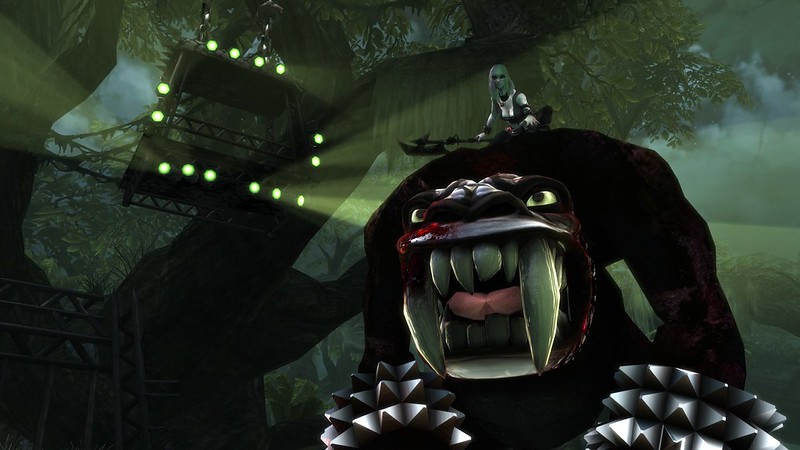
In order to create units you have to take control of mounds where the souls of rock fans reside and turning them into merchandise booths. This is just a spiffy way of calling it a resource control point.
There’s a bit of a strategy to maintaining these points, though, because enemies can attack your merchandise booths and whittle down on quickly you can build up fans. The idea is that the more fans you have the quicker you can produce more units on the battlefield or upgrade your stage to unlock stronger units or unit upgrades.
This usually requires constantly flying/driving/running back and forth to merchandise booths to protect them or positioning your troops to waylay them from attacking your merchandise booths. If you lose all the booths then the enemy will advance to your stage and attack it until it’s destroyed, which will result in your defeat. Likewise, if you control all the merchandise booths and attack the enemy stronghold, then you will win the match and gain a victory.
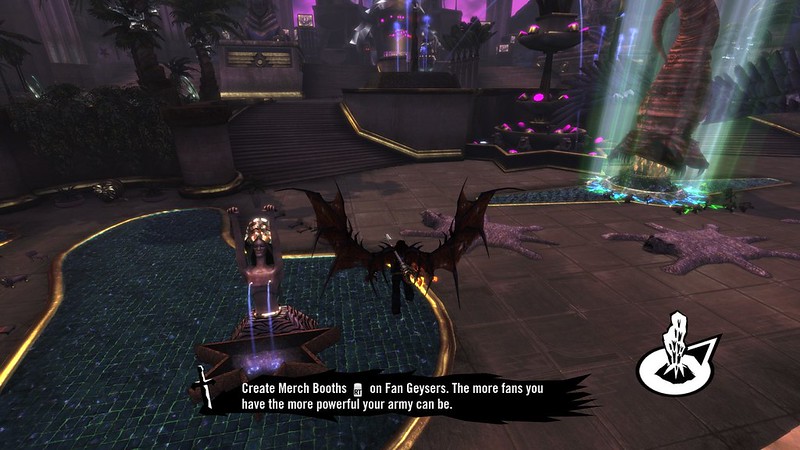
Hidden Stage Features
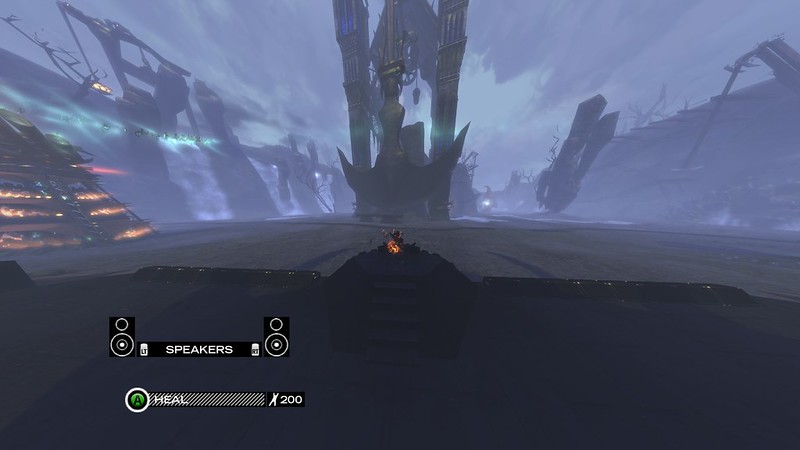
Some production quagmires also appear in the form of players not being properly informed about all the functionality of the stage. You can tell there was trouble brewing behind the scenes because the tutorials are half-arsed and they completely leave out the fact that you can heal the stage if you have 200 fans by jumping onto the platform and tapping ‘A’.
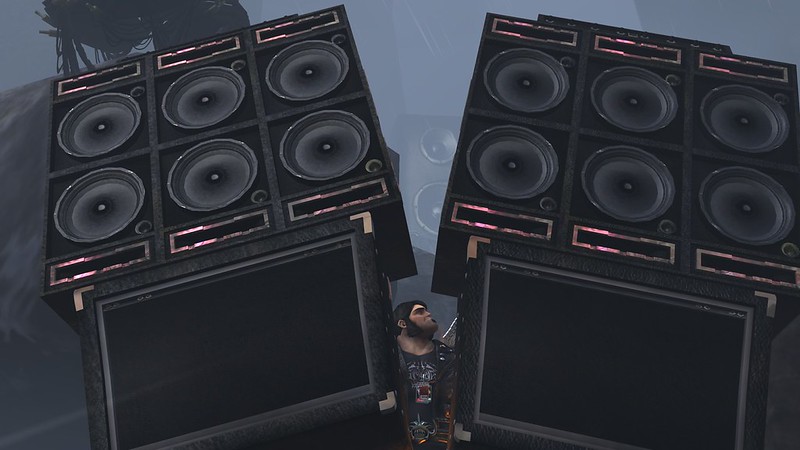
They also don’t explain in any capacity what blasting the left and right speakers do.
You can also fly up to the rafters and take control of the spotlights and fire at enemies down below.
I was kind of shocked that they didn’t inform gamers about that feature.
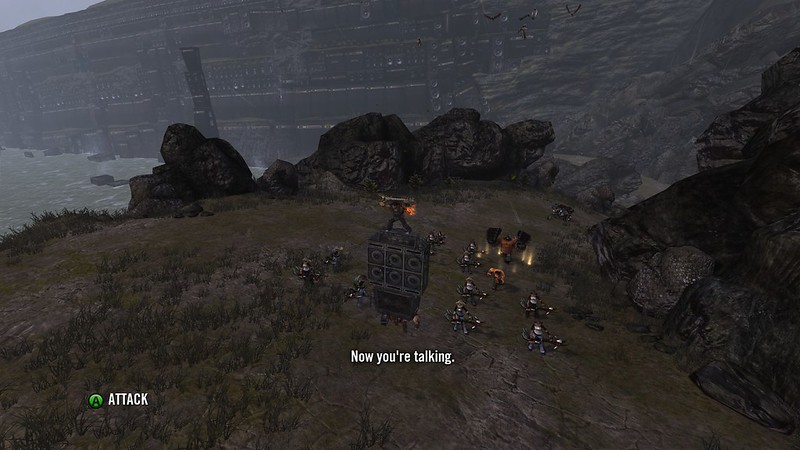
They did, however, drive home the point that you can utilize double-team attacks to perform devastating maneuvers against your foes by joining with any unit currently on the battlefield.
Now this was really inventive because every single unit has its own attacks or special moves. And what’s more you can make use of these abilities even outside of the RTS mode.
So, for instance there are some motor vehicle units you can hop on that have the ability to stun enemies in the nearby area, or – if you’re outside of the RTS mode – you can hop on the back and use them to drive around from one destination to the next.
Other units have abilities such as firing off powerful projectiles, or unleashing special abilities that perform specific tasks, such as tearing down towers or destroying enemy structures.
Double Team Attacks
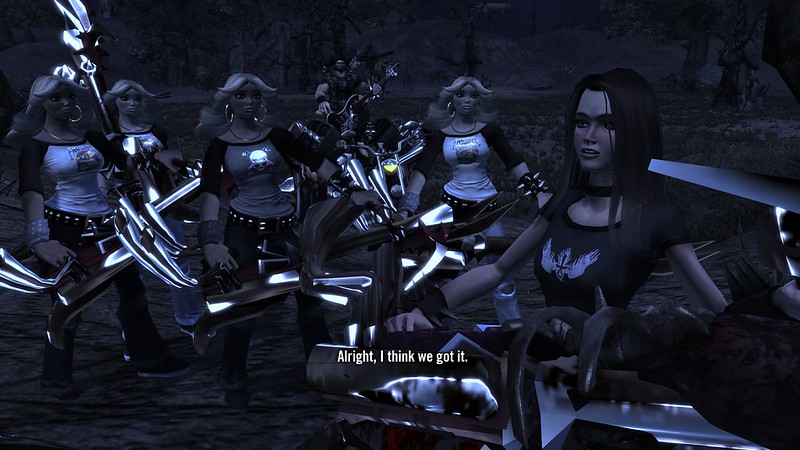
This feature alone keeps a lot of the RTS battles feeling unique and original. And if you get tired of directing the action from above or on foot, you can easily rally with the Razor Girls and blast enemies down by sniping them with the razor cannons. Alternatively you can hop on the back of a metal beast and flame enemies in your path.
One of my favorites was teaming up with the bouncers and performing a pseudo Hulk Smash to clear out the area of nearby foes.
In some ways it’s a little disappointing because there are so many different units and unit abilities that they don’t get much screen-time during the actual campaign, but again this was due to budget cuts and development time being cut short.
It’s interesting because this is one of the rare games where there are more under-utilized mechanics than there is game-length to make use of them.
In today’s industry usually it’s the opposite, where the core mechanics are passe and boring, yet you’re forced to recycle the same moves, the same weapons, and the same features over and over again for anywhere between 20 and 40 hours of gameplay.
And this is partly why I have more praise than criticism to share regarding Brutal Legend because there’s so much untapped potential with this game, including content already in the game that most people probably will never encounter during their first playthrough.
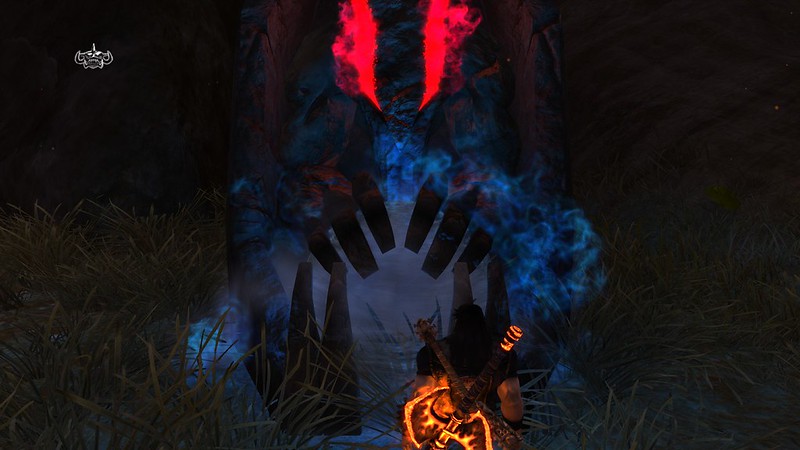
For instance, outside of each main mission you can freely drive around, explore the world, complete side-quests, or attempt to find collectibles, including ancient relics that reveal the history of the game’s world and how it came to be the way that it is.
Uncovering Secrets & Upgrades
A lot of the deep lore is tucked away in corners across the various regions within the game, and by unlocking them you’re able to better understand what Schafer and the narrative crew were crafting with Brutal Legend‘s worldbuilding.
There are also some other trinkets to help you along the way, such as ball-gagged dragons that you must free, which in turn give you a little bit of metal that you can use to upgrade your moves, weapons, or vehicle.
Sadly, upgrades are more for show than efficiency save for the last two big battles against the bosses.
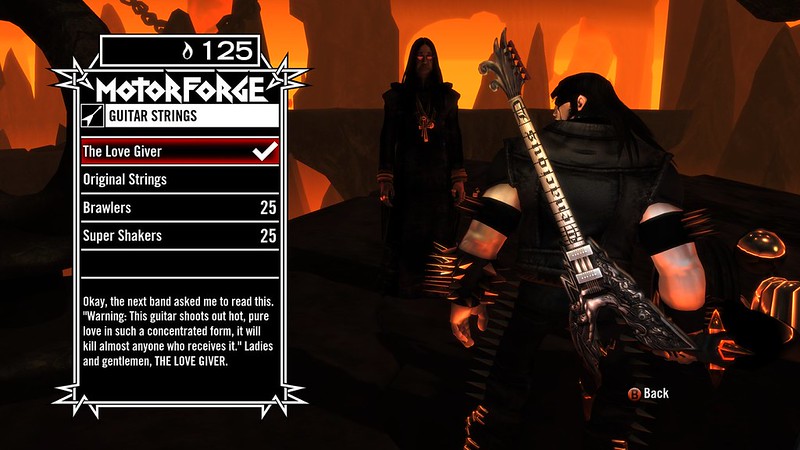
You can go through most of the game not upgrading Eddie’s vehicle at all, and it really won’t change how well you’ll perform during any of the battles outside of the final showdown. It’s kind of a shame because when I found myself getting royally whooped in the last level I was actually forced to go back and scavenge some side-quests to unlock the armor and performance upgrades for Eddie’s ride so it would be more effective against Doviculus’ ridiculously over-powered units.
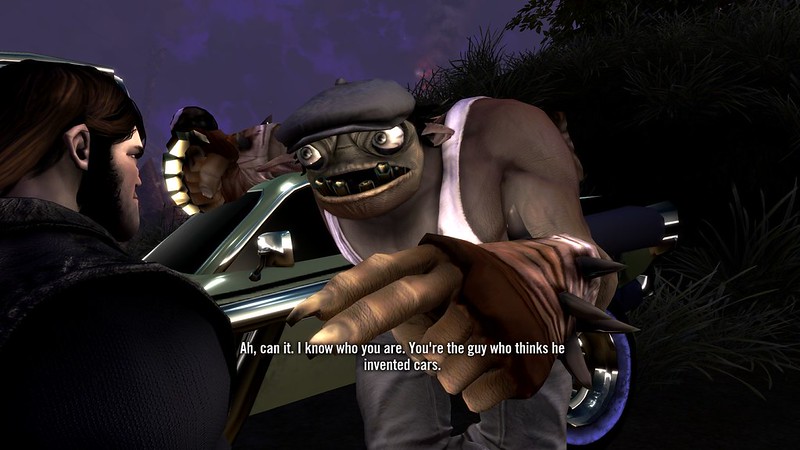
The standard side-quests come in a handful of options, including one where you have to work with a group of units to ambush enemies without your friendly units dying, or helping a cannonier test out his explosive prowess, as well as racing against an old-timer for a few extra points.
Side-Quests & Hidden Extras
The side-quests aren’t groundbreaking, but a few of them are interesting. Some I felt weren’t very well tested or were poorly implemented, such as the one where you have to get the beer kegs to the beach. But that had more to do with the vehicle physics than the mission itself.
Along the way, however, I discovered a variety of other side-quests tucked away in secret areas, as well as a few other upgrade totems that the game didn’t directly inform you about.
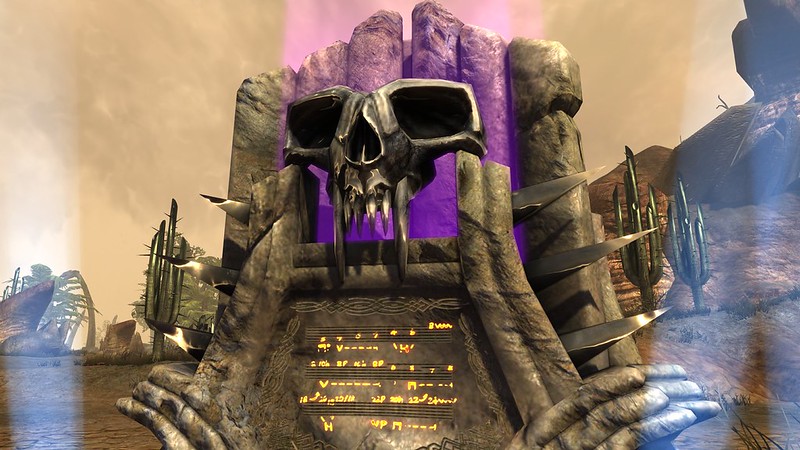
One side-quest in particular that stood out to me was the one with the bat family who needed the cave cleaned out of “squatters”, which turned out to be a gang of violent monsters.
The reason that quest stood out was because it didn’t appear on the map and unless you just decided to explore the world for the heck of it, you would have very easily missed it.
There are a number of other secrets scattered about the game world that can only be discovered by just roaming around and being curious.
Visual Captivation
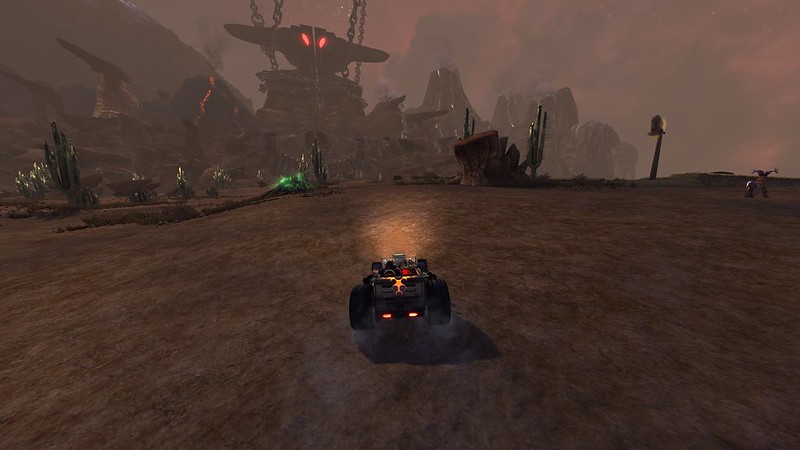
It’s also not hard to find oneself wanting to roam thanks to the fact that the visuals in the game are completely off the charts.
This isn’t one of those titles that was under the microscope of pushing futurist graphical technology or outlandish performance APIs. The highlight of Brutal Legend’s visuals is in the fact that you could readily tell the artists had a field day going buck wild with this completely unique world themed around metal music and infamous metal albums, including laser panthers.
Each of the biomes in the world are based on popular rock aesthetics or themes, such as the dry ice mines, or the amplitude cliffs.
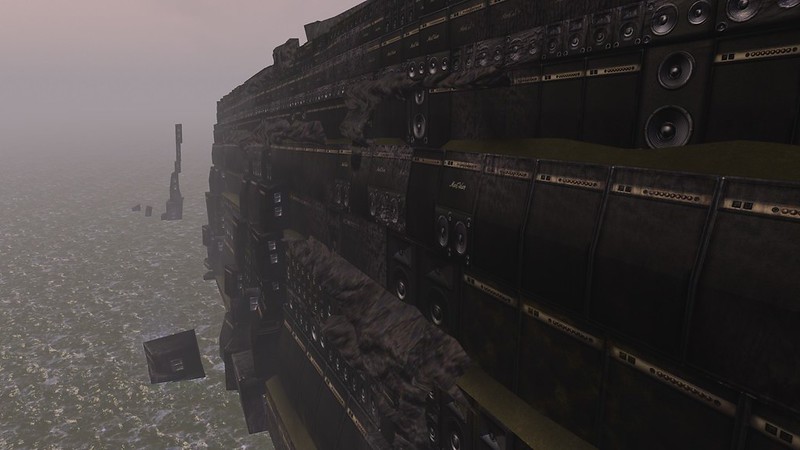
The fact that the focus was on style over realism helps keep Brutal Legend from looking too dated. Obviously the mesh-work shows pointed edges where the triangles meet, the LOD pop-in is rather obvious in some places, and the lighting consists of a lot of the bare essentials to bring the fantasy world to life, but as far as capturing a fantasy realm themed around heavy metal, Brutal Legend is in a league of its own.
Some of the vistas and designs are just awe-inspiring. It’s hard to not just stop and stare at some of the outlandish creatures and structures.
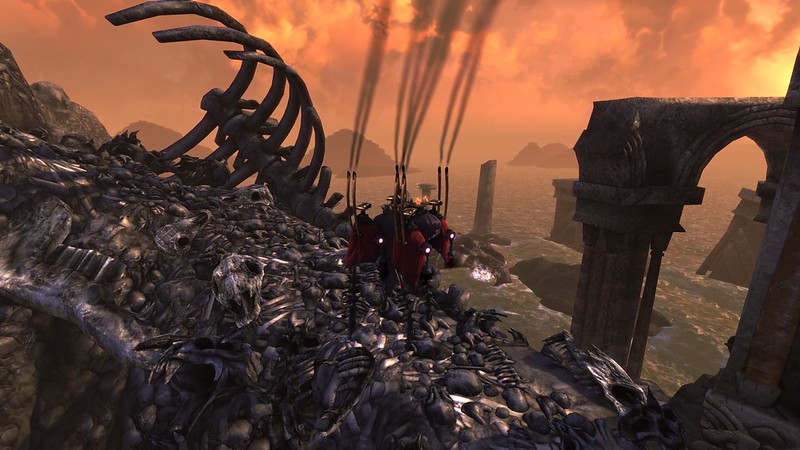
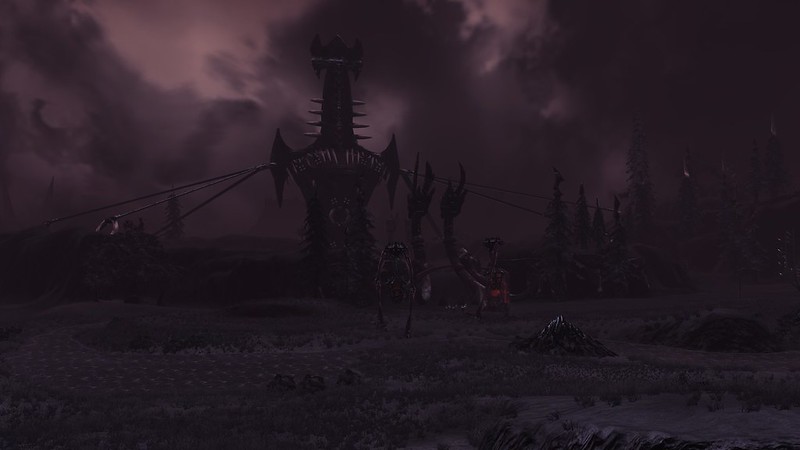
They didn’t have to, but they also made the world have a full day and night cycle, where everything changes and looks even more metal during certain points of the game. Fire-spewing volcanos, giant walking creatures that belch soul-destroying liquids, ravenous beasts chained up and led around by battle nuns, or steel strings suspending a BDSM-laced blade into the ground while a purple haze fills the air.
It literally looks like heavy metal album covers come to life, and it’s both visually invigorating and disappointing knowing that we don’t get games like this anymore (and likely never will).
Artists Aren’t Engineers
Unfortunately, though, as I mentioned at the top of the article, you could tell this was a game designed by artists and not engineers.
Remember I mentioned about the beer keg side-quest being difficult to complete due to the vehicle physics? Well, despite the entire game relying on vehicles to travel from one destination to the other – replete with padded missions where you have to defend the tour bus from enemies attacking it from all sides – the vehicle handling is not well done at all.
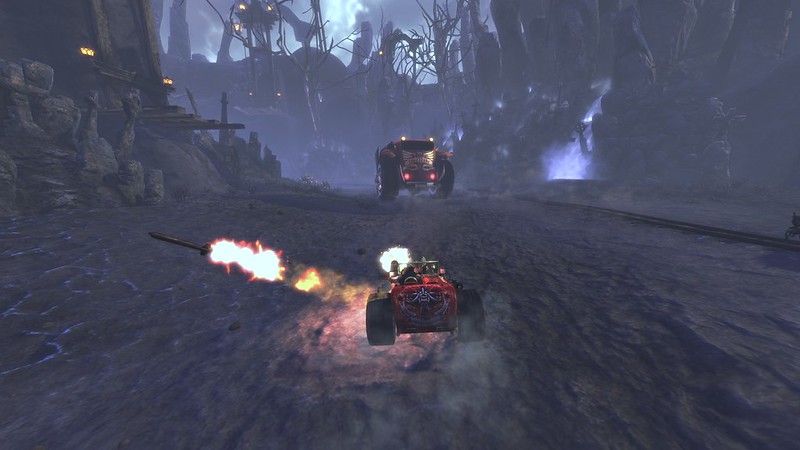
Oftentimes you’ll find yourself fighting with the controls, especially when you have to make sharp turns or quickly come to a screeching halt.
Eddie’s Deuce is very float whenever you run into or over objects, very similar to a lot of Unity 3D powered games. Instead of slamming into a rock the Deuce will usually attempt to float up the rock and then flip over it or flip backwards.
Things get worse when you run into other vehicles, where the Deuce will almost always instantly spin in the other direction or flip over and toss Eddie out.
Don’t expect to have any epic vehicular clashes like in Twisted Metal, Destruction Derby or Avalanche Studios’ highly underrated Mad max.
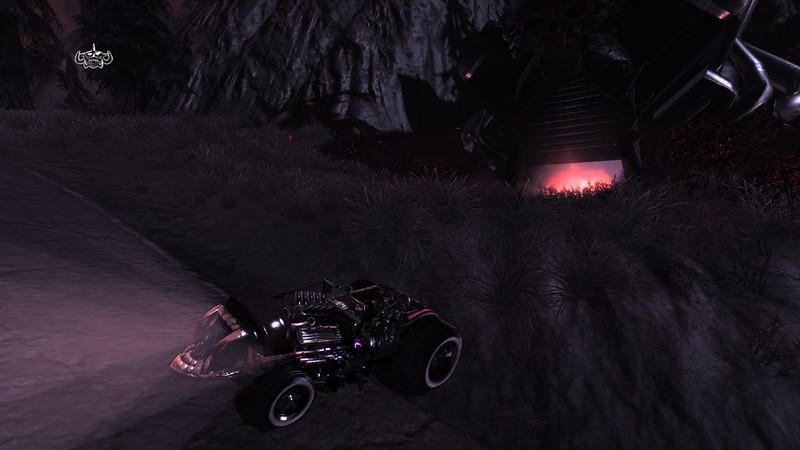
It’s a real shame, too, because – once again – you can tell the artists put a lot of time and love into all of the different customization options available for the Deuce.
The paint jobs, the weapon upgrades, heck even every time you upgrade the performance or armor you actually see the visual feedback of those choices with changes to the in-game model of the Deuce. Suffice it to say, it looks badass.
I just wish the handling was on par to the way it looked.
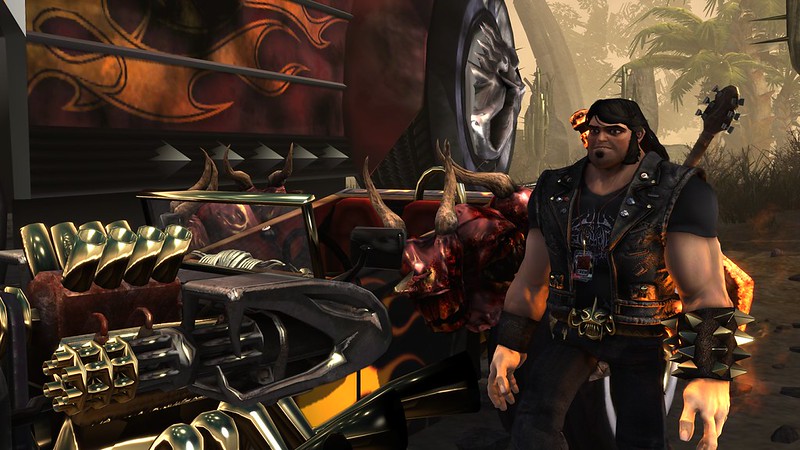
But this methodology of art-before-engineering seemed to be one of the curses that spread throughout the developmental veins of Brutal Legend.
A lot of the game world isn’t scaled properly, and there’s tons of empty space in some segments where it looked like some objects were supposed to fill out the environment, but instead it’s just vacant real estate.
Also, some design structures looked like they were supposed to be interactive but turned out that they weren’t.
There were also some issues with the character physics and animations, such as General Lionwhyte’s hair clipping around and some of the strands not cooperating with the rest of his head.
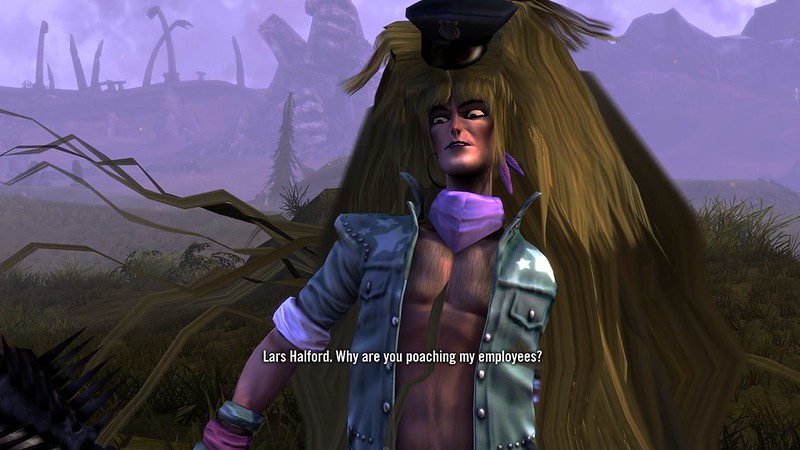
The graphic glitches are minor issues, but the driving mechanics were a real problem for me given that you had to spend a large portion of the game driving around.
They really should have hired in a few veteran engineers from other studios like Rockstar, Domark Software, Monster Games, or Ubisoft who were well-versed with vehicle physics, so that at least when exploring the main hub the Deuce felt weighty and responsive, and didn’t glitch about when colliding with other vehicles.
It’s not a game-breaker but it does take you out of the experience whenever you have to wrestle back control of the Deuce after making contact with another large, moving object.
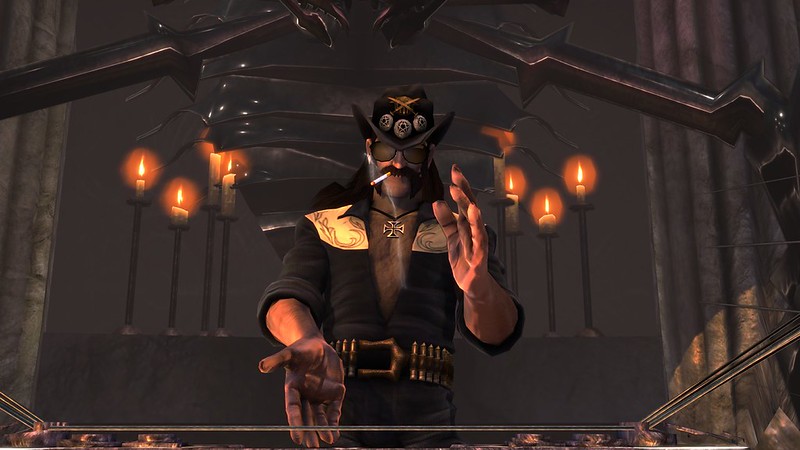
Beyond that, though, I can’t really fault the game too much. You can really tell this was a passion project for everybody involved, even guest stars from bands like Motorhead.
Sexy Villains & Heroes
And again, Tim Curry brought his classic devilish charm to Doviculus in only a way that he could.
He made the sadist-loving villain come across as both seductive and dangerous, which is not an easy thing to do, especially when the character doesn’t have an actual face. The motivations of Doviculus aren’t grand, but they make sense for who he is, and his minions of vile and wretched creatures fit the theme of a world basked in darkness and suffering.
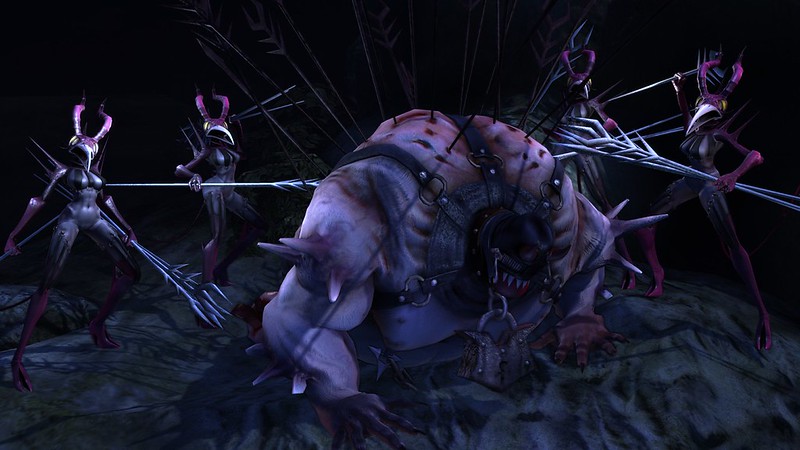
Once again, we’re dealing with a game where the developers were able to express characterization through visuals alone.
Even before Doviculus said a word you knew what he was about, and he didn’t even have to grandstand or gloat about what he was going to do when it was time to do it, he usually just did it.
This was further highlighted by the fact that his structures, his weapons, and his world looked like some kind of twisted amalgamation of demonic heavy metal album art. It was great.
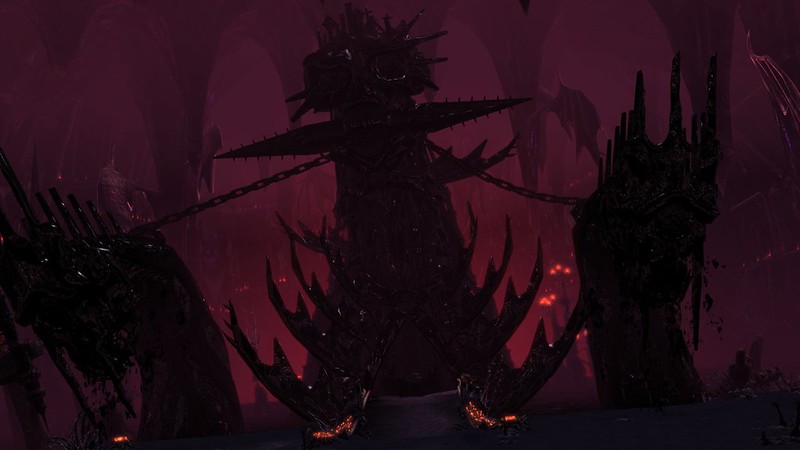
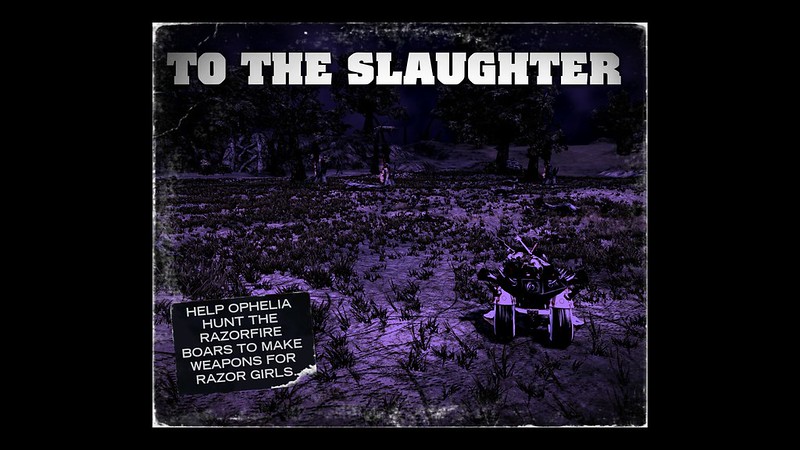
Each aspect of the game is built with a loving homage to a bygone era of music that just doesn’t get enough respect in this day and age.
Heck, even each of the signature mission titles are depicted as classic vinyl albums
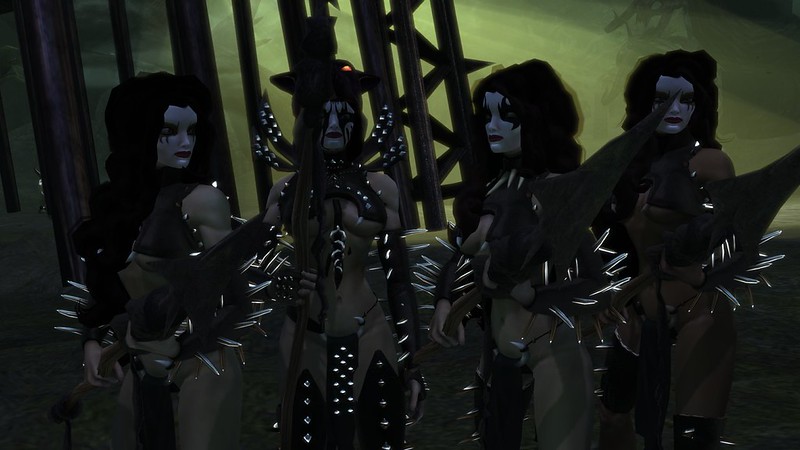
You can also tell this is a game from an era long trapped in the past given that Schafer and crew still had the balls to tap into the S&M aspects of heavy metal.
Everyone knows that sexy ladies, big motors, and malevolent imagery all make up a strong defining characteristic of the music genre, and this was something that you saw throughout Brutal Legend in an unabashed and unashamed fashion.
For instance, the jungle chicks where you retrieve the metal beasts are dressed up like KISS but with metal bikini armor and loin cloths.
They’re as sexy as they are dangerous.
Pozz-Free Gaming
We don’t see character designs like this in Western games at all. And this is all part and parcel of what made Brutal Legend such a joy to play, in spite of its shortcomings, short runtime, and some of the mechanically unpolished elements.
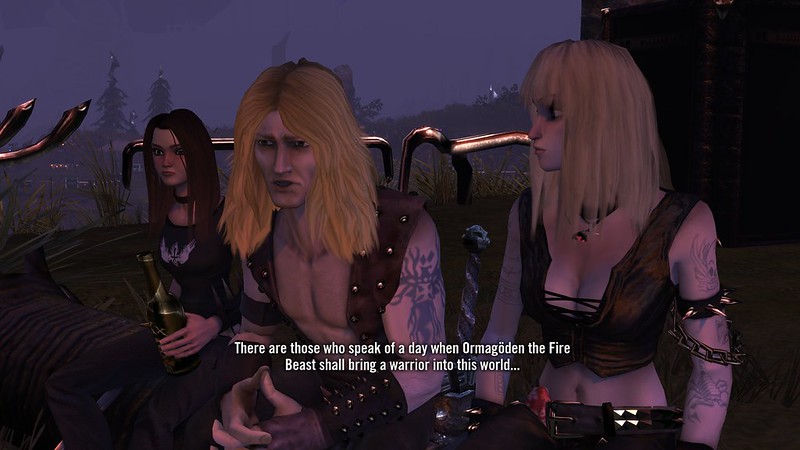
And best of all? Brutal Legend is 100% pozz-free.
There are no alphabet soup freaks thrown in for “representation” purposes, no POCkers popping up just to announce that they’re “melanin enhanced”, nor any kind of the typical Liberal degeneracy that has destroyed every single entertainment medium in the West.
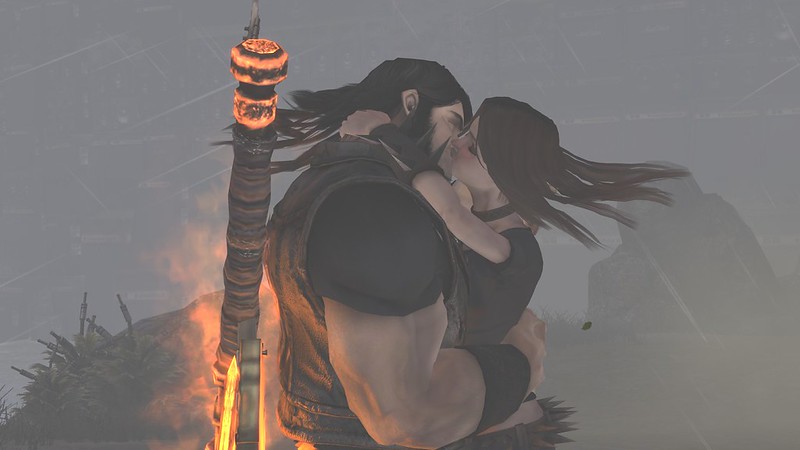
Eddie has the hots for Ophelia, and Ophelia is actually a hot rocker chick that doesn’t act like a man-hating feminist.
In fact, her biggest character arc is themed around her love for Eddie, which is something we don’t see in modern day Western games at all. In fact, I’m sure if Brutal Legend was made today (or if they ever get around to making a sequel) Lars’ sister, Lita, would end up being forced into an interracial relationship, Ophelia would be turned into a lesbian, Lars would have been turned gay, and Eddie would have been left in the cold.
Thankfully, Brutal Legend was made back when the world recognized there were, are, and always will be two genders, and having a testosterone-pumping adventure with hot chicks and fast cars was considered good entertainment.
This game isn’t for everybody, though. Hardcore RTS fans will find the controls too limiting and the difficulty spikes and strategic requirements highly uneven. Hack-and-slash gamers probably won’t like said uneven RTS elements, and RPG enthusiasts might not be entirely thrilled with all of the driving around and lack of traditional NPC interactions. However, it’s a completely original title that dives into topic matter untouched by any other game currently on the market (and anything slated to hit the market), so I would at least suggest to give it a try if you’re looking for a rock-and-roll experience that takes a little bit of everything to create something new.
Verdict: