
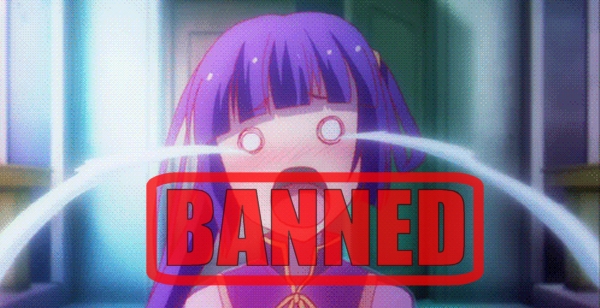
The Australian Classification Board has refused classification for several volumes of the light novel No Game, No Life. Before anyone assumes that the entire brand has been banned, if you search the Australian Classification Board’s website you’ll find that you can still purchase the DVDs for No Game, No Life, two of which have been rated, just not certain light novel volumes. However, it probably won’t be long before the OVAs are targeted.
If you check the Australian Classification Board’s database for No Game, No Life Vol. 1, Vol. 2 and Vol. 9, each of the entries have been denied classification, effectively meaning that they can’t be openly sold across the counters from retail shops in Australia.
The reason for the bans reads…
“Pubs 1(b): The publication is classified RC in accordance with the National Classification Code, Publications Table, 1. (b) as publications that ‘describe or depict in a way that is likely to cause offence to a reasonable adult, a person who is, or appears to be, a child under 18 (whether the person is engaged in sexual activity or not).’”
If you check the date on the Classification Board’s website, each of the volumes were banned on July 23rd, 2020.
That’s just two days after South Australian legislator Connie Bonaros congratulated the Kinokuniya bookstore for banning the following manga series:
- Eromanga Sensei
- Sword Art Online
- Goblin Slayer
- No Game, No Life
- Inside Mari
- Parallel Paradise
- Dragonar Academy
Originally this all started back in March of 2020, where Bonaros and other MPs had been pressuring the Classification Board and retail outlets to ban the sale of the aforementioned light novels and mangas. Bonaros in particular had been aggressively pursuing the censorship of various Japanese works she deemed “child pornography”. Her pleas for censorship worked.
In late July, alongside Kinokuniya, Australian retail outfit Book Depository also complied with Bonaros’ demands, removing No Game, No Life, Clockwork Planet, Eromanga Sensei and Oreimo! from their depository. This is despite the fact that none of the works contained sexual content nor any adult material.
Around the same time companies like Amazon also confirmed to Yen Press that they would no longer be carrying certain light novels and manga series.
At first it seemed like there was some hope to fight back when the politicians were only pressuring individual retail outlets to stop carrying the books, but once the ratings board starts refusing classification of material, it means that all major retail shops will likely drop the books. We’ve seen this happen frequently with video games, where titles like The Grisaia Trilogy and Omega Labyrinth Z were refused classification for trivial reasons, effectively banning them from being sold in stores across Australia.
In some rare cases publishers were able to get their games re-rated and unbanned, such as Idea Factory International’s Mary Skelter 2, which was banned back in October of 2019, but they managed to get it reclassified in January of 2020. Outlast 2 managed to get reclassified after censoring a scene, and games published by larger studios, such as We Happy Few, have also been able to secure a rating after initially being banned. But once again, those reclassifications happen far and few between many other bans, and in some cases even censoring half the game’s content, like in Criminal Girls 2’s case, still resulted in the game being refused classification and prohibited from being sold in stores.
In short, there is a deliberate effort from politicians, ratings boards, and retailers to ban light novels and mangas, especially in Australia. Don’t think the censorship stops here.
In the world of video games the censorship has only escalated to absurd degrees, and now it looks like light novels and mangas are being targeted. Soon you can expect niche anime to get the cross-hairs next, followed by an all-out assault of censorship on your favorite media.
We tried to warn you.
(Thanks for the news tip Diabolica)