

Title: Total Overdose: A Gunslinger’s Tale In Mexico
Genre: Third-Person Shooter
Platform(s): OG Xbox, PS2, PC
Developer: Deadline Games
Publisher: SCi Games
Release Date: September 16th, 2005
Deadline Games and SCi Games’ 2005 third-person shooter, Total Overdose: A Gunslinger’s Tale In Mexico is one of those hidden gems from sixth gen that came out during a time where anything third-person or open-world related was likely overshadowed by all the other GTA-style clones that flooded consoles during that time. However, despite its simplistic nature, dated graphics, and unrefined execution of some fun-filled concepts, Total Overdose was definitely a game of its era and well worth a playthrough if you’re looking for a machismo-filled shooter that puts fun at the forefront of the experience.
The story is completely ridiculous but it’s told in a rather fascinating way. You’ll play a total of three characters throughout the game, starting with DEA agent Ernesto Cruz, who meets an untimely end once the first level is finished. This isn’t really a spoiler given that Ernesto’s death is what sets up all of the events of the main game, where players then take on the role of one of Ernesto’s sons who attempts to infiltrate a drug cartel to find out who really killed his father and why.
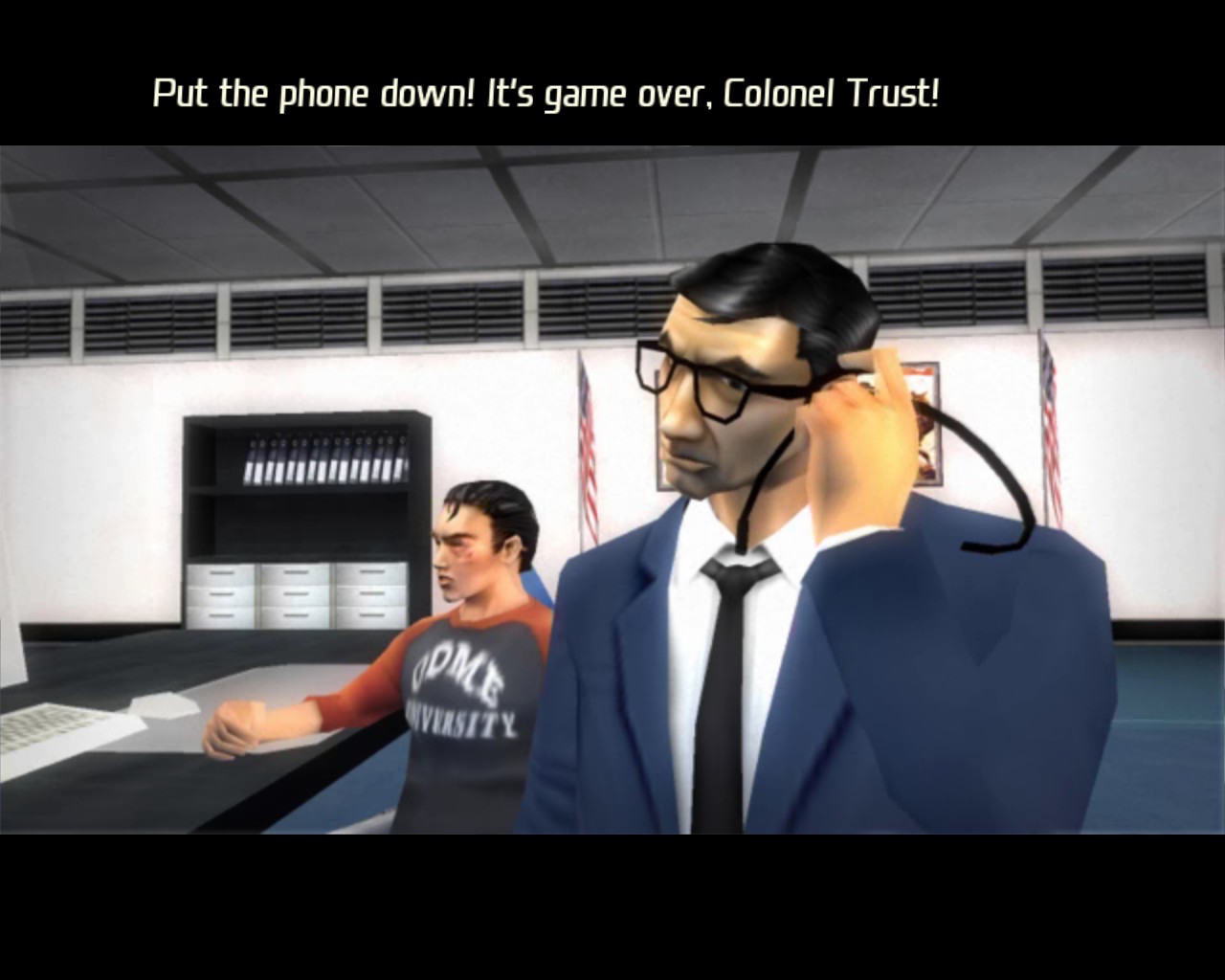
Majority of the story is told through flashbacks by Tommy Cruz, one of Ernesto’s sons. You’ll get play a mission as Tommy before he’s put out of action and then you’re put into the shoes of Ramiro “Ram” Cruz, the true star of the game.
I have to give props to Deadline’s writers for taking a more non-linear approach to unfolding the story because it allowed for a seamless tutorial stage without feeling too out of the way, and it also made for some interesting character and story developments as Tommy relays both to his superior and the gamer how he and his brother got wrapped up in an interweaving tale of betrayal and conspiracy involving Mexican cartels, street gangs, and the DEA.
This isn’t Steven Soderbergh or Paul Greengrass levels of storytelling here. No part of the game’s plot will blow your mind, but it is chock full of entertaining moments and that’s what counts.
Irreverent Fun
The full game isn’t very long and can be finished in about five through six hours depending on your skill level and whether you only do the main missions or attempt to scour the game world for side-quests, secrets, and other hidden goodies.
This is the sort of game that could very easily extend to 10 through 15 hours if you really wanted to complete all of the side-quests.
Each of the main missions are spread across just over a handful of chapters. In order to unlock each new main mission you’ll have to complete side-quests in between. These range from killing specific people, destroying certain targets, delivering goods to a destination, or heck even carrying out odd jobs like using a forklift to move palettes over to retrieve a vehicle.
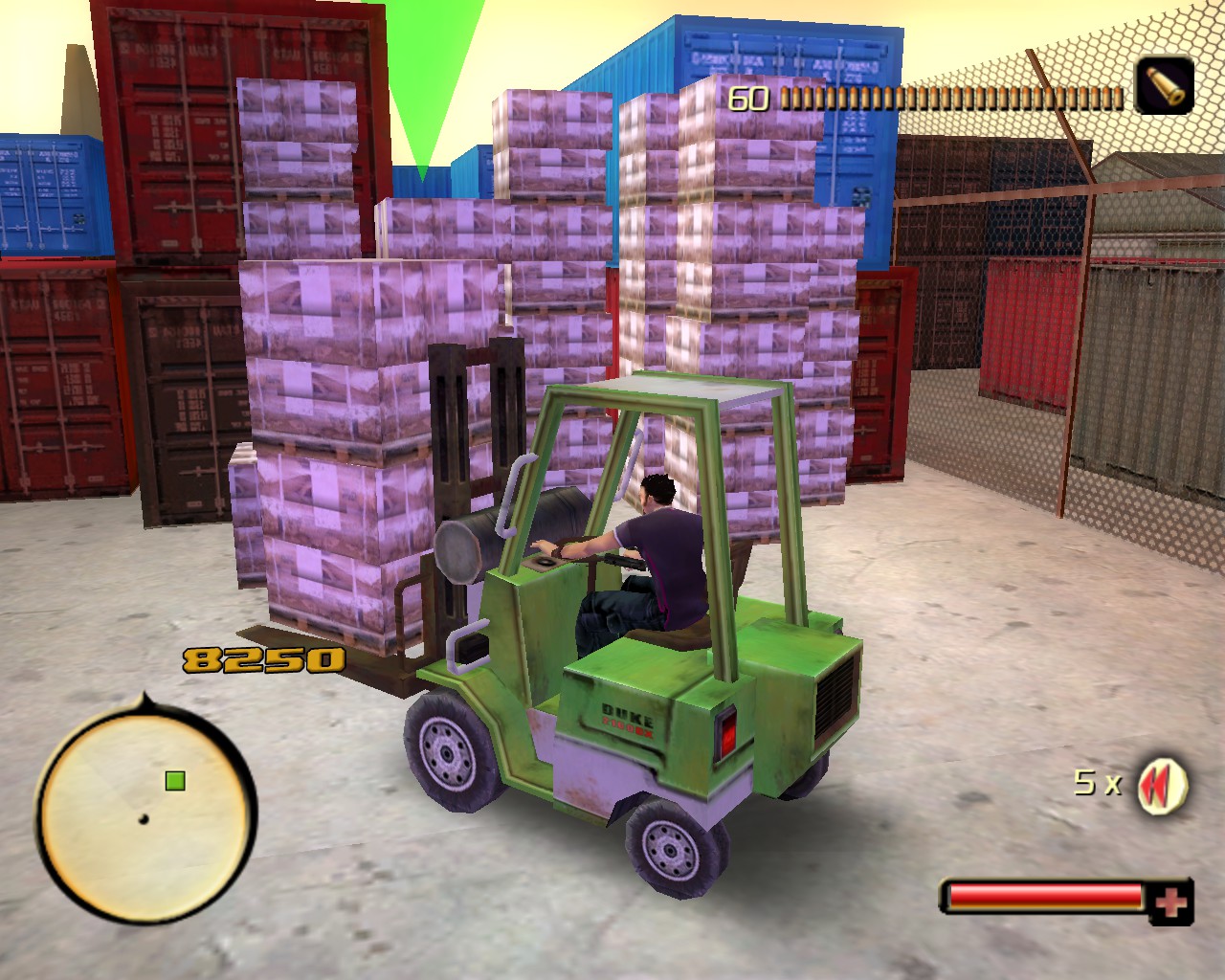
The side-missions never become tedious or overbearing like the jobs you had to do in Shenmue. Instead they’re just there to spruce up the variety of the gameplay and move away from the monotony of one shootout after another. And believe me, you’ll be doing plenty of shooting in Total Overdose.
The meat and potatoes of the game are the fast and raucous shootouts that fill out the majority of the mechanics.
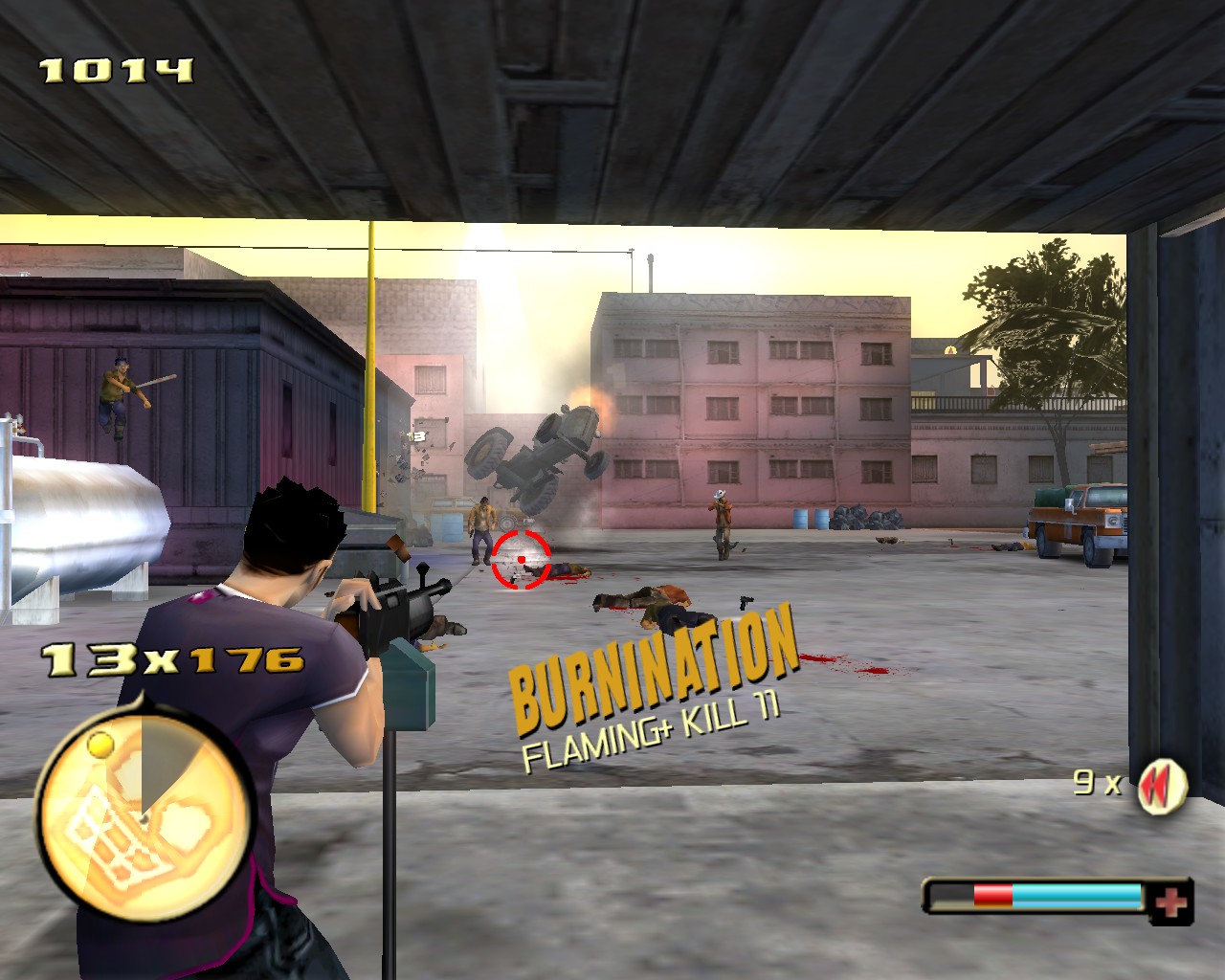
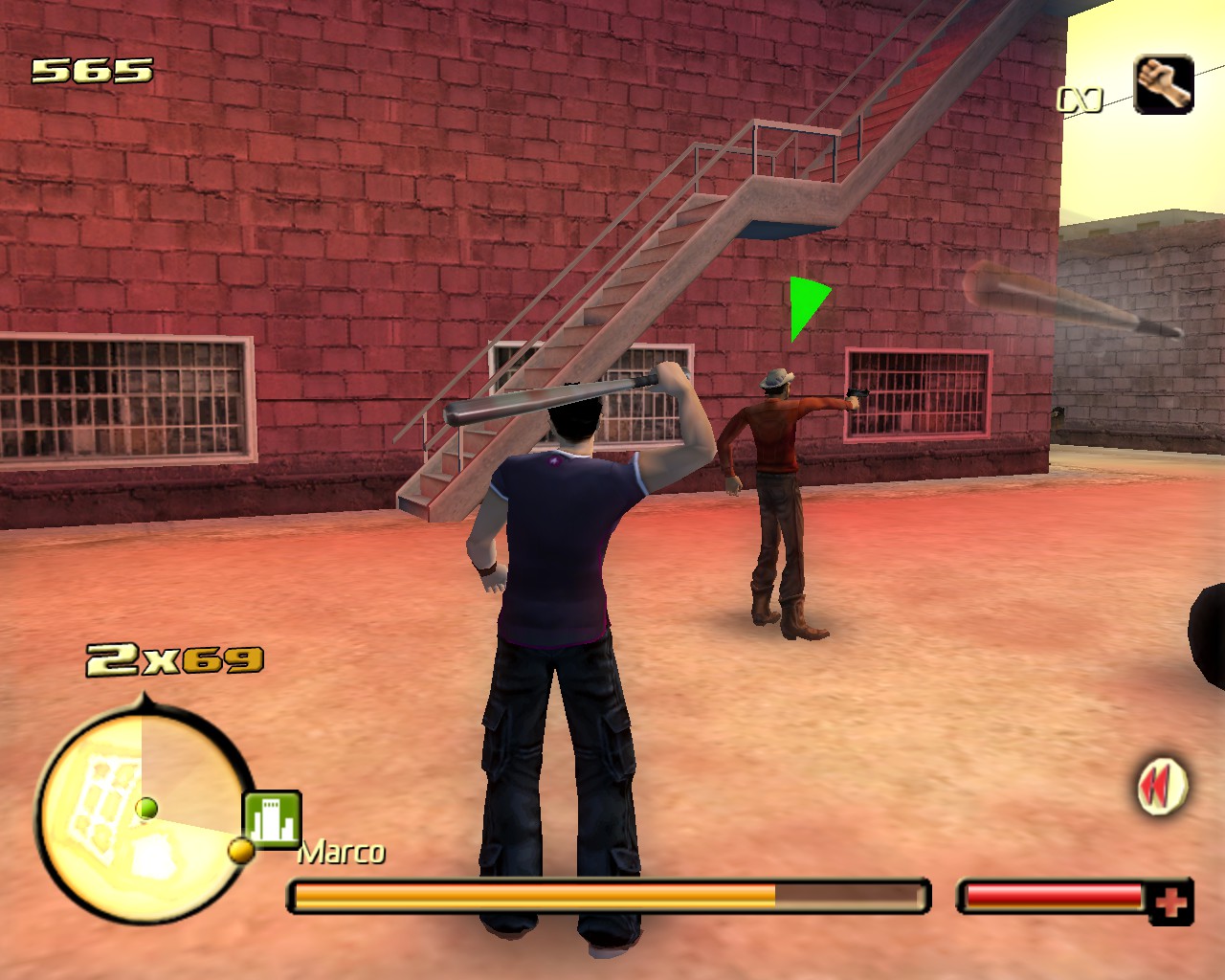
Total Overdose’s shooting is themed mostly after Remedy’s Max Payne games, where you can shoot-dodge enemies using a wide variety of weapons, ranging from pistols and shotguns to sub-machine guns, grenades, and rocket launchers, with plenty of other weapons in between such as baseball bats, shovels, and even pinatas.
Stunt-Based Shootouts
To help separate Total Overdose from its nearest rivals, the game included a bunch of stunt-style shoot-dodge mechanics as well. These work to varying degrees with more or less success.
For instance, you can do a reverse jump-cancel by jumping in one direction and then canceling and jumping in the other direction to take out enemies behind you.
If you find yourself trapped in a corner or against a wall, you can use the shoot-dodge button against the wall to perform specialty moves, such as the Fly On The Wall, which sees Cruz performing a cartwheel off the side of the wall in slow-motion while targeting nearby enemies.
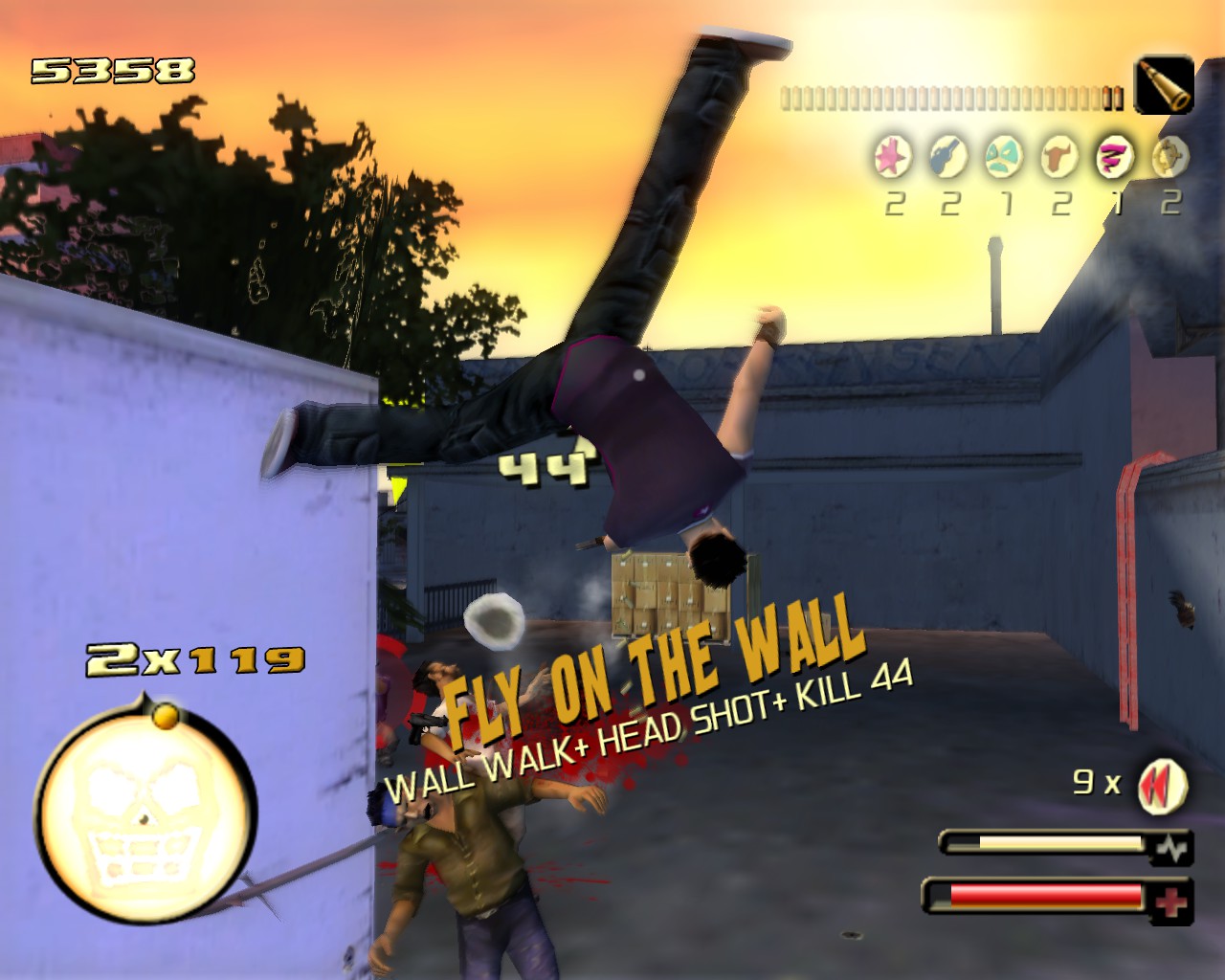
You’ll have to mix and match these moves while also making use of the environment to avoid dying. And oh boy is it easy to die in Total Overdose.
Enemies can kill you pretty quickly by peppering you from all sides, which then requires you to have to take them out in creative and performative ways to not only raise your score but also to unlock bonuses.
Creative kills will reward you with life restoration or the ability to unlock new Loco moves.
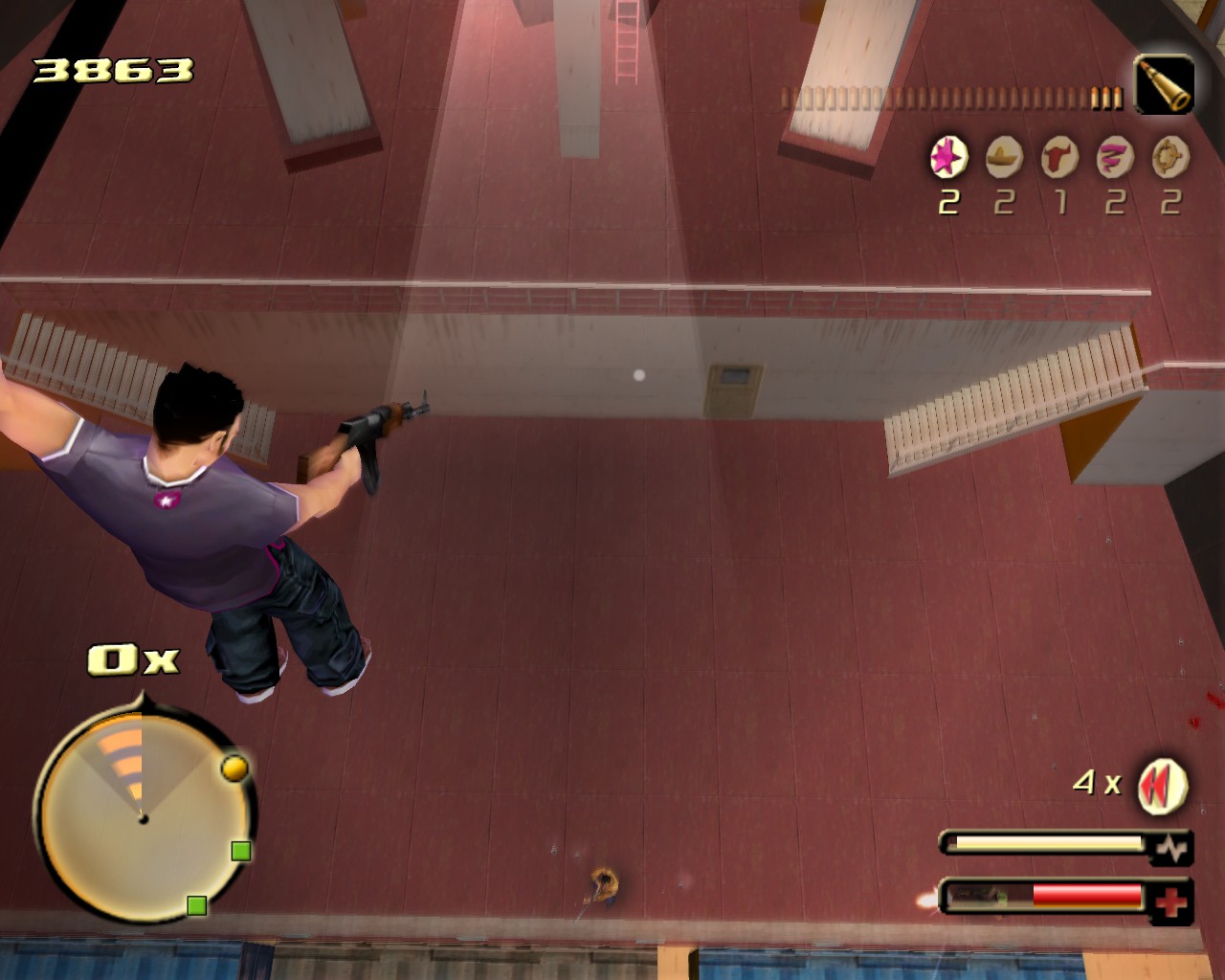
Loco moves are specialty moves that can quickly clear out enemies.
Different Loco moves have different purposes, and most are themed around classic action movie maneuvers.
For instance there’s a tornado spin that pays homage to John Woo’s iconic akimbo spin-move that Chow Yun-Fat often used in his movies. Alternatively you can use the “Mariachi” Loco move that enables you to dual-wield two guitar cases that fire powerful machine guns out of the front end, which is an obvious nod to the classic scene from Robert Rodriguez’s Desperado.
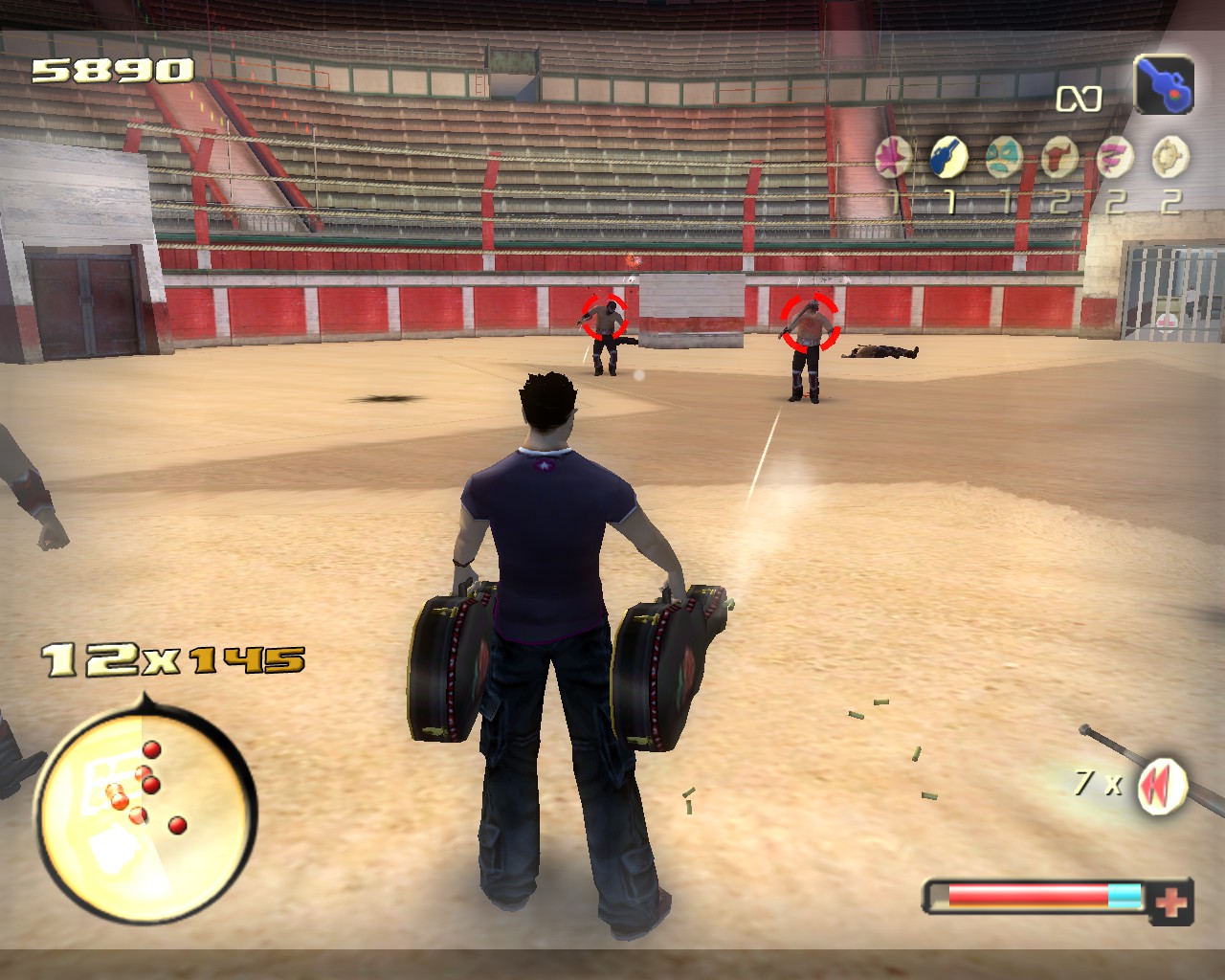
Loco Homages
Other Loco moves allow you to run around like a bull and railroad enemies off the screen, or call for backup in the form of a masked luchador who will run around killing enemies to help you out for a short duration.
One of my favorites was a nod to 007 Goldeneye 64, allowing you to get your hands on a golden gun that could instantly kill any enemy you targeted.
For the most part the shooting mechanics worked well, but it’s nowhere near as refined as say… Max Payne or The Punisher for the OG Xbox, PS2 and PC.
Aiming is a bit finicky and you mostly have to rely on the auto lock-on to take down foes. You can also land headshots by double-tapping the left trigger, which gives you a short window to shoot an enemy in the head when the reticule briefly flashes yellow.
The headshot mechanic sometimes works and oftentimes doesn’t. It requires a level of precision that’s most of an out-of-the-way hassle than what it should have been.
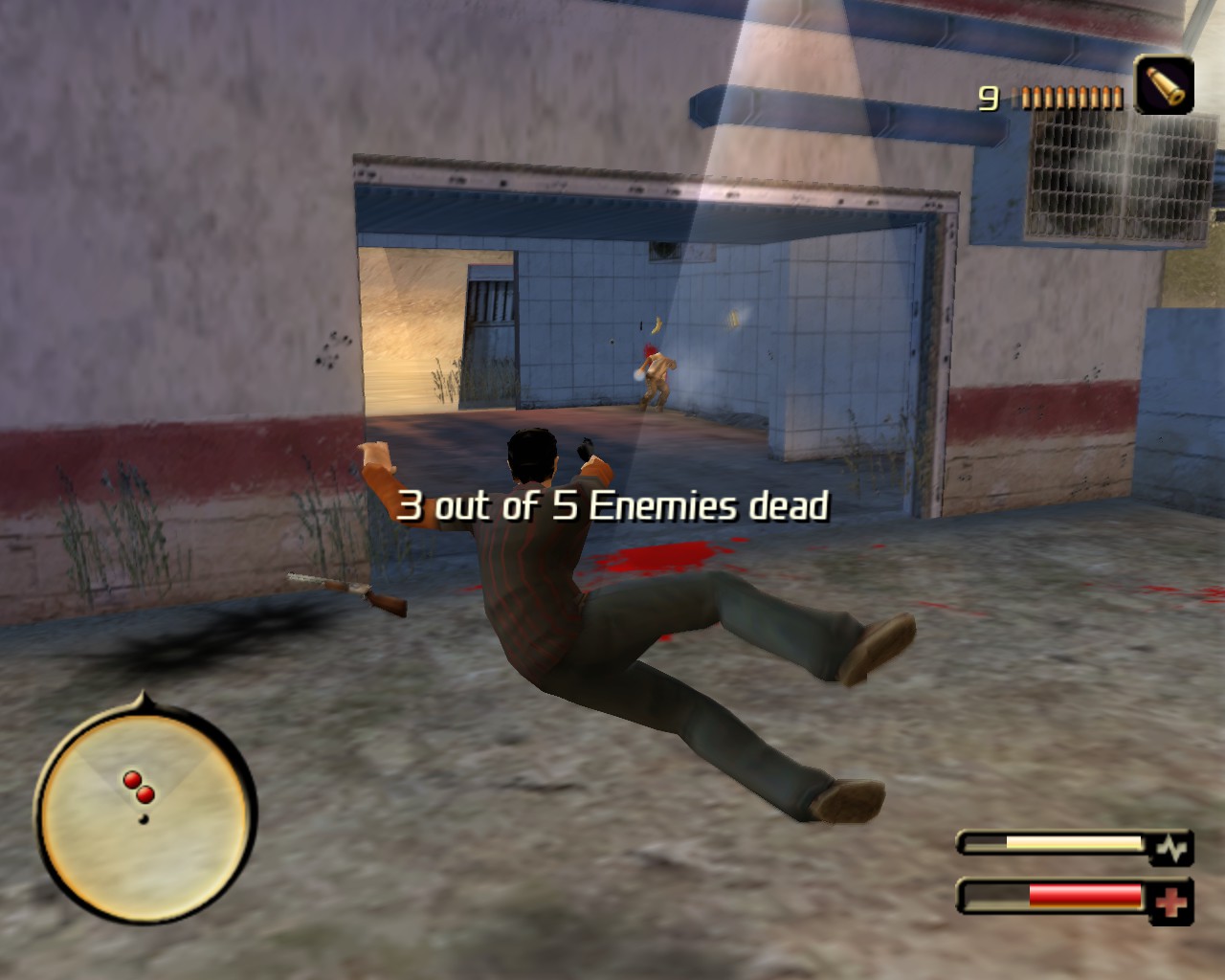
Lock-On Zoom Troubles
The main issue is that you have to wait for the lock to zoom in on a target’s head and briefly flash yellow before you can pull off the headshot, which means that if you shoot before or after it doesn’t count. All while you’re waiting for the reticule to hone in on an enemy’s head, though, the bad guys can still shoot you. So it’s a huge risk/reward factor that oftentimes falls more into the risk than reward territory.
However, I do like that Deadline decided to do away with the traditional lives and checkpoints and instead utilize a combination of save spots and rewind tokens. You can collect the rewind tokens by performing creative kill combos or by picking them up as they lay scattered around the stages.
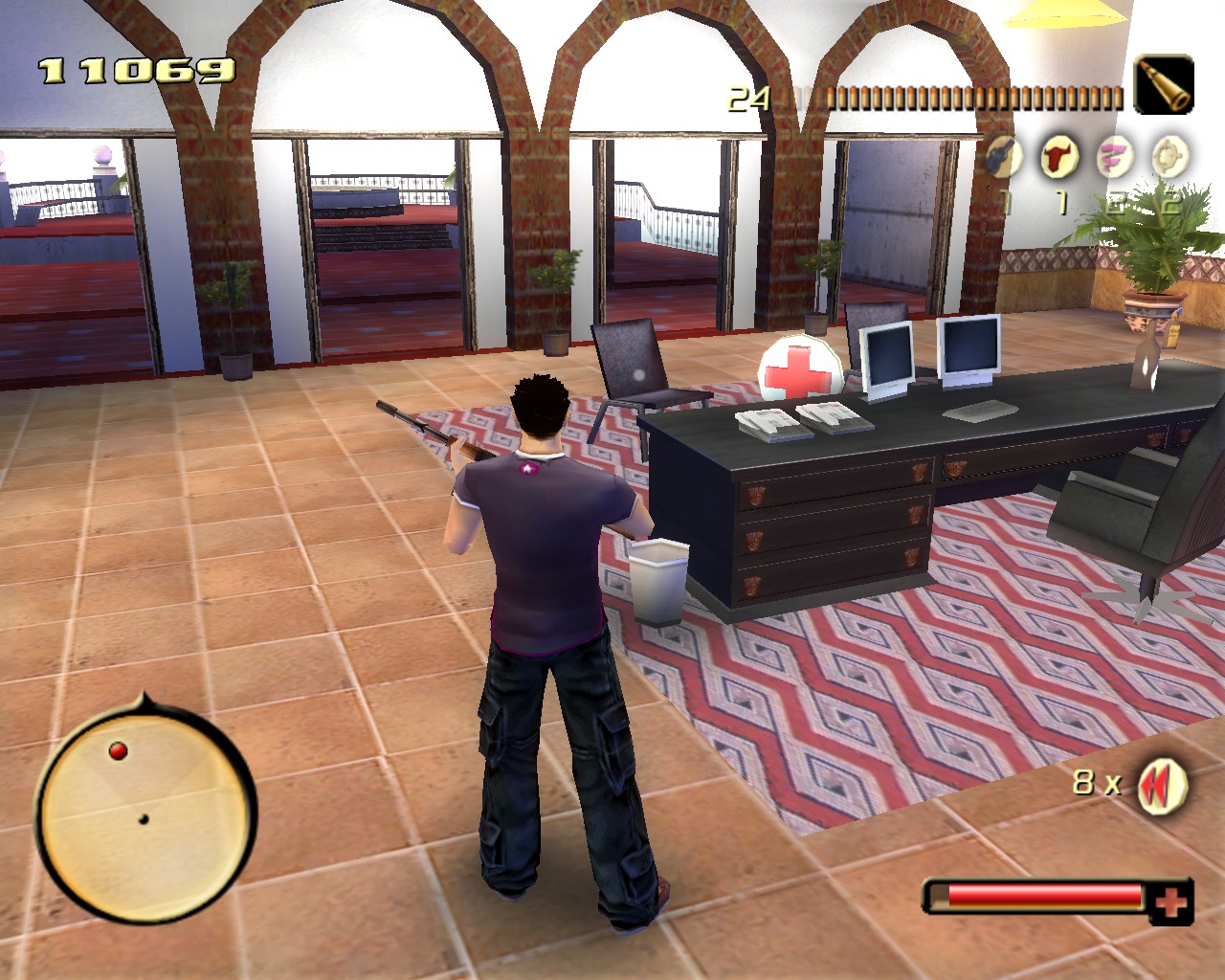
The way it works is that the rewind tokens are attached to a dedicated button and if you die, you hold down the rewind button to rewind to the point just before your death. You can carry up to nine tokens and depending on your skill will depend on how often you’ll need to use them.
Even still, Total Overdose functions best when you’re just running and gunning and stringing together combos for maximum score.
It reminds me a lot of True Crime Streets of L.A. with a hint of Scarface: The World Is Yours.
Unfortunately the shooting isn’t quite as enjoyable as Just Cause, and the melee is nowhere near as reliable as nor as well executed as True Crime, but if you managed to play through any of the sixth-gen GTA games then you’ll likely find Total Overdose acceptable enough.
Tiny Open-World
In between side-missions and story missions you’ll be able to explore the fictional border town of Los Turos, which sits between Mexico and the United States.
There are a handful of districts to roam around in, but don’t expect a large map to keep you occupied with the same level of depth as its open-world rivals.
While the districts are visually well designed, they’re so tiny that they certainly leave a lot to be desired. Most of the districts are only several blocks in terms of spread, so they’re large enough to require wheels but not large enough to feel expansive.
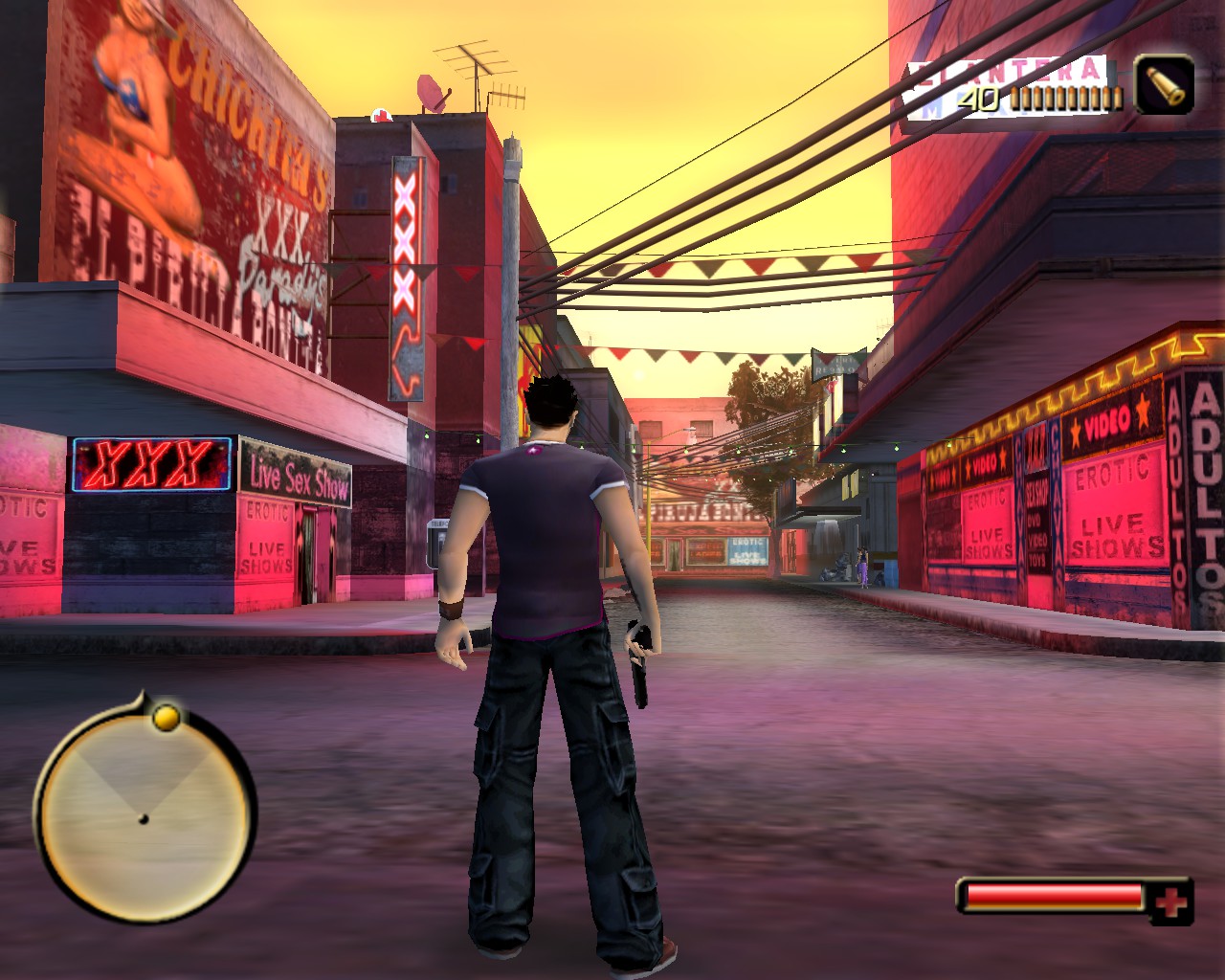
You can traverse each district with a number of vehicles, including trucks, station wagons, town cars, vans, tractors and motorcycles, but majority of the time the vehicles are just to get from one destination to the next in short order.
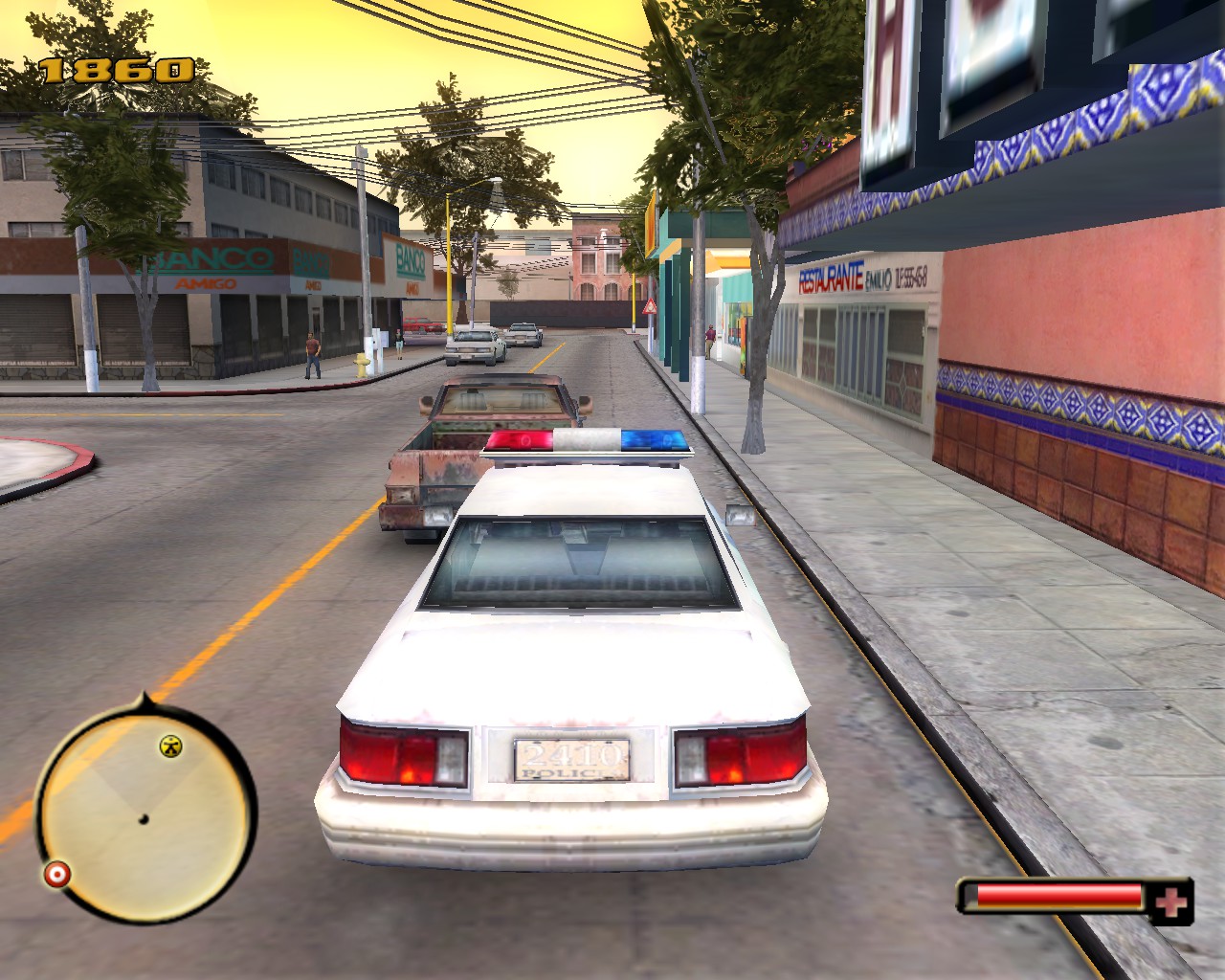
The vehicle physics are operable but far from refined. At first glance you might compare it to the GTA 3 era of games, where the vehicle handling ranged from loose to serviceable.
With Total Overdose, so long as you’re doing the bare minimum of just driving normally around corners and through turns, the cars and trucks work as they should. However, when it’s time to perform more advanced maneuvers such as burnouts, powerslides, or reverse 180s, everything falls apart.
Fatal Lack Of Inertia
The vehicles don’t have proper inertia nor do they have proper mass transfer, so they’re prone to floating and flipping over unnecessarily, especially at high speeds.
This makes some of the games other side challenges somewhat more difficult than they need to be due to the uneven or less-than-refined vehicle handling.
The racing mini-games for instance – which center around driving a vehicle through checkpoints spread throughout a district – require very careful navigation, otherwise it’s terribly easy to flip over and get caught up in the geometry, or spinout and get jammed in between buildings.
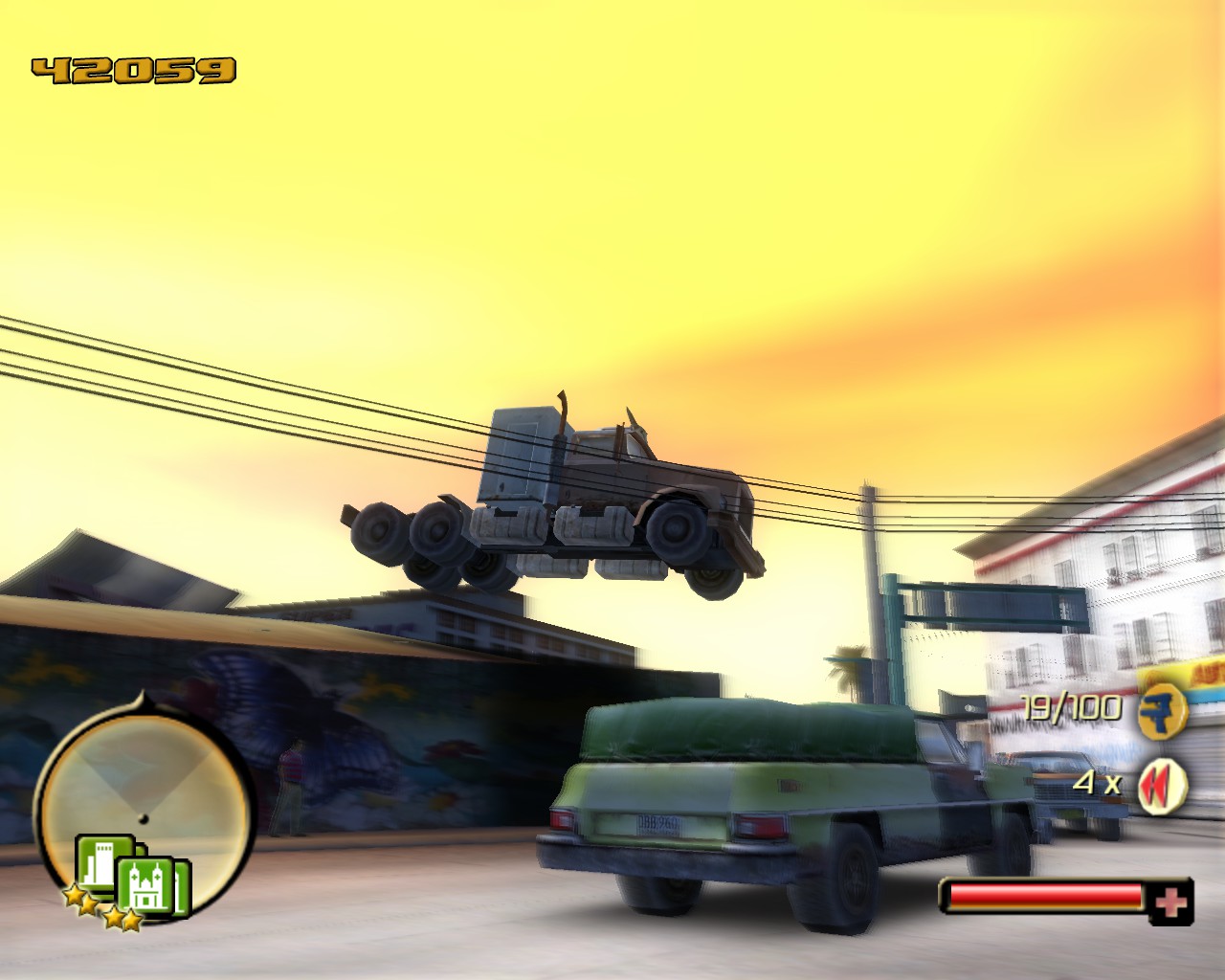
The vehicle handling reminded me a lot of older Crytek games, like Far Cry: Instincts or Crysis, where they were prone to getting stuck on things or spazzing out due to the lack of a proper physics engine for vehicles.
It really makes you appreciate games with weightier vehicle physics and handling themed around realistic weight distribution and traction mechanics.
Chase sequences are also far and few between due to the small size of the districts, and this leads to most vehicular use being condensed to rolling explosives.
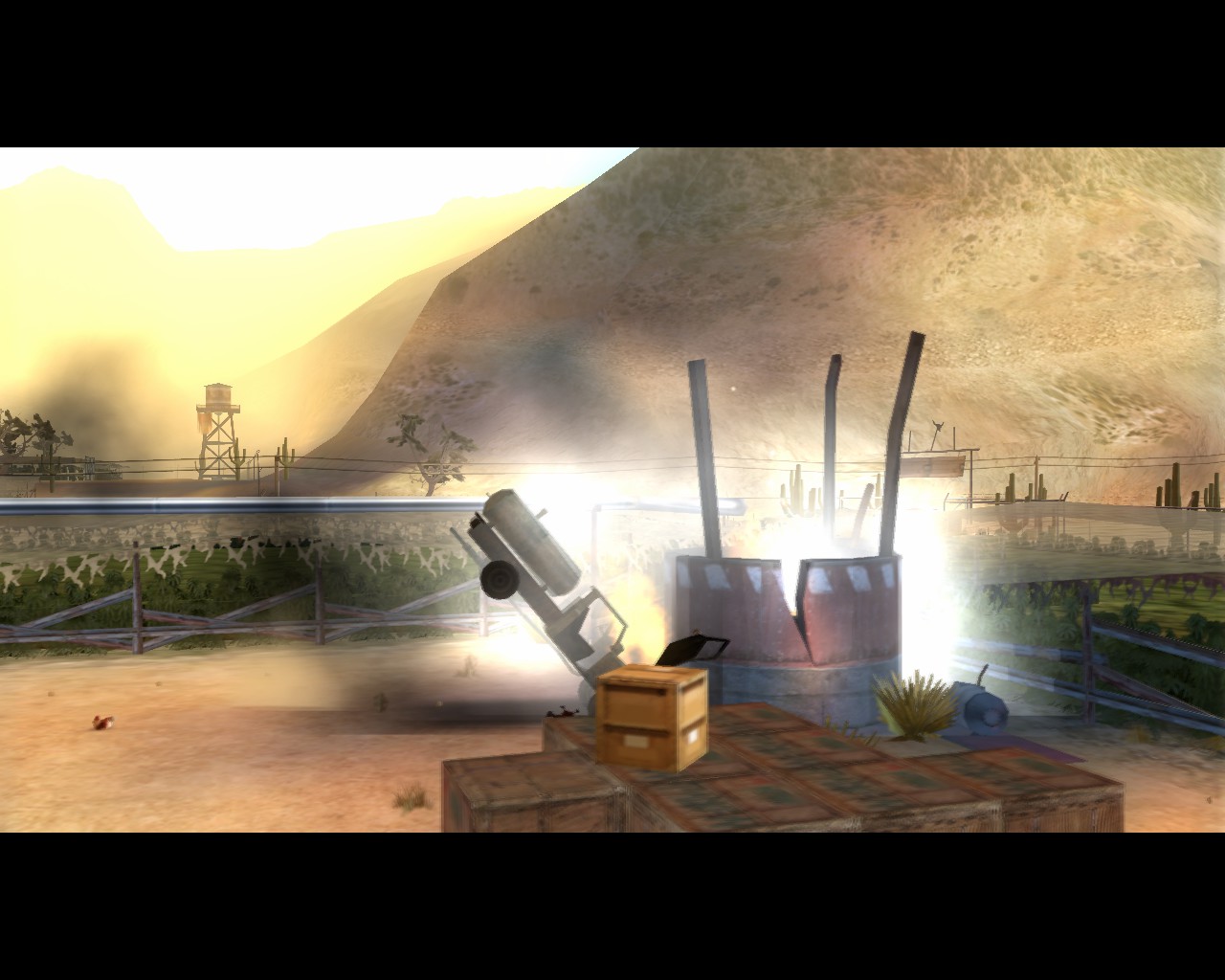
Much like Just Cause you can hang out the side of a vehicle and drive it into other vehicles or objects, causing it to instantly explode.
Wonky Vehicles
Majority of the time this is what I found myself using the vehicles for during combat; gaining a little bit of distance and then rolling it right into a group of enemies while shoot-dodging my way out the side of the door.
I have to say that the mechanic works better than the vehicles themselves.
It’s a real shame because I really wanted to like some of the vehicles in the game, but just couldn’t. The motorcycle for instance is almost nigh impossible to drive correctly due to it flipping over and moving around like a paper airplane in a windstorm, which is a shame because only the motorcycle and tractor allow you to shoot while driving.
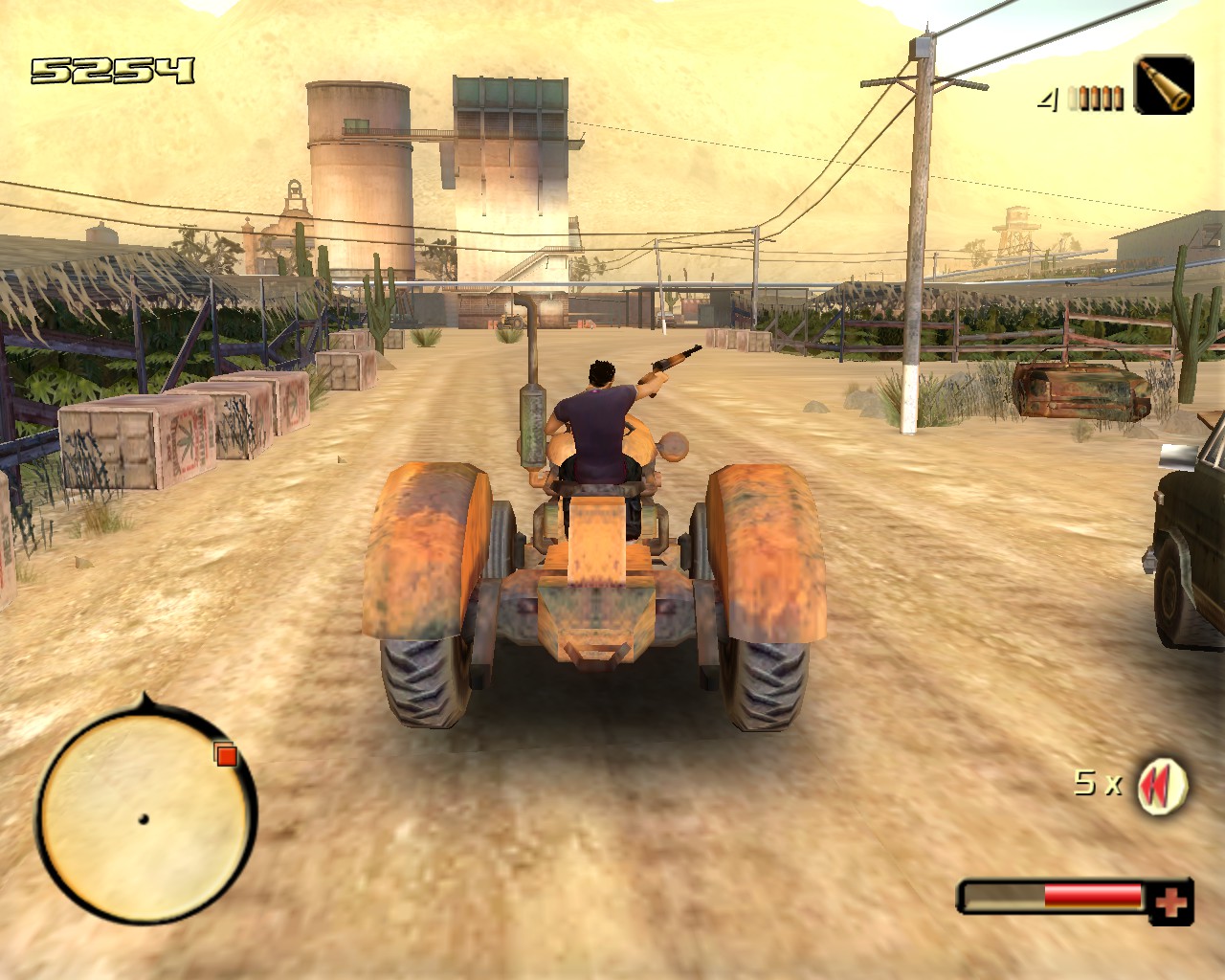
Again, not all of the vehicle handling is terrible. If you’re just getting from point ‘A’ to point ‘B’ you shouldn’t have too much trouble. Also, using them as rolling missiles is almost always a guaranteed way to clear out enemies in short order.
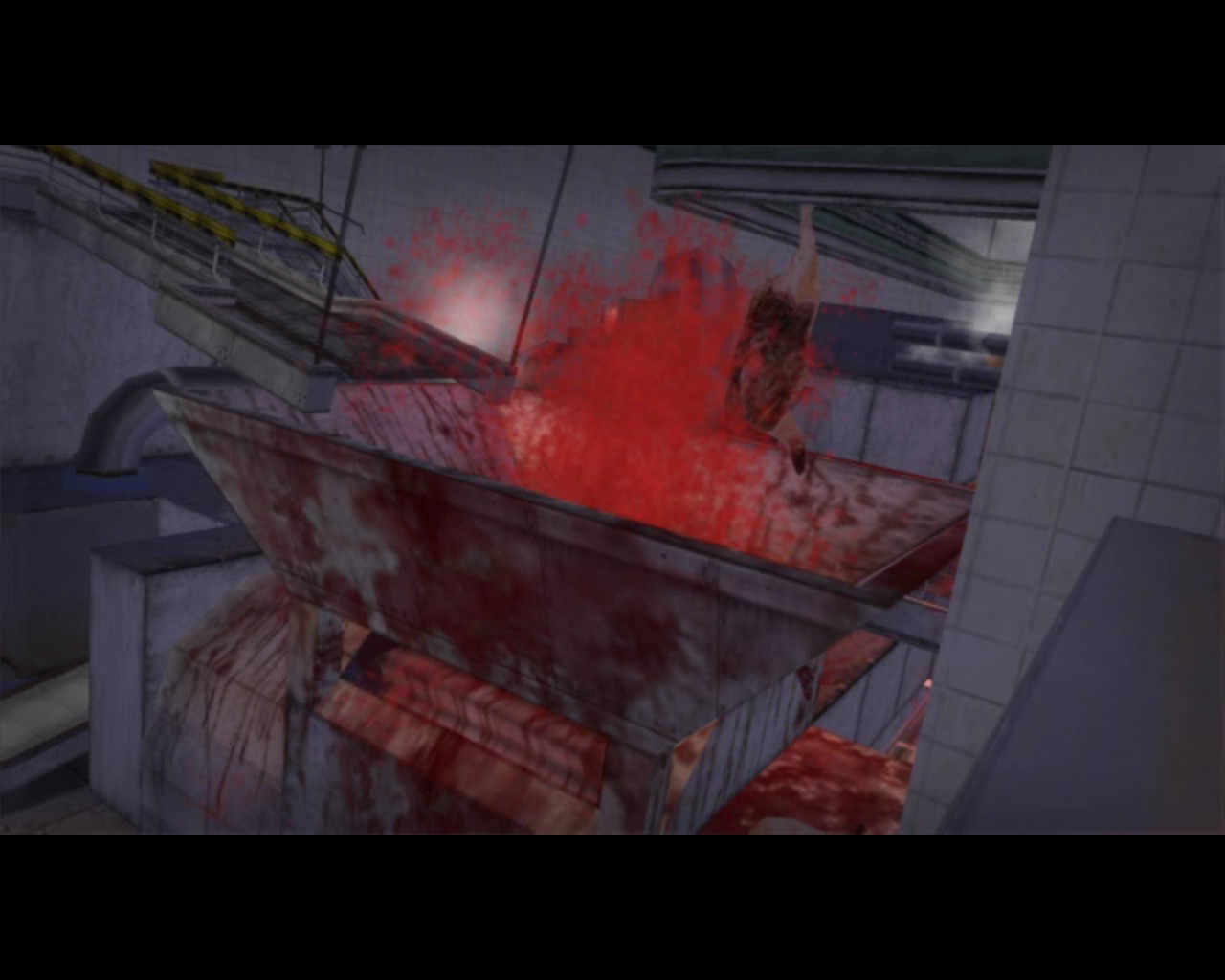
The scripted getaway sequences were also pretty cool, with one scene in particular seeing you man a turret in the back of an El Camino while escaping from a meat factory.
You could tell the developers put a lot of heart and soul into sequences like that, bringing classic action-movie cinema moments to the digital screen.
Physics Mishandling
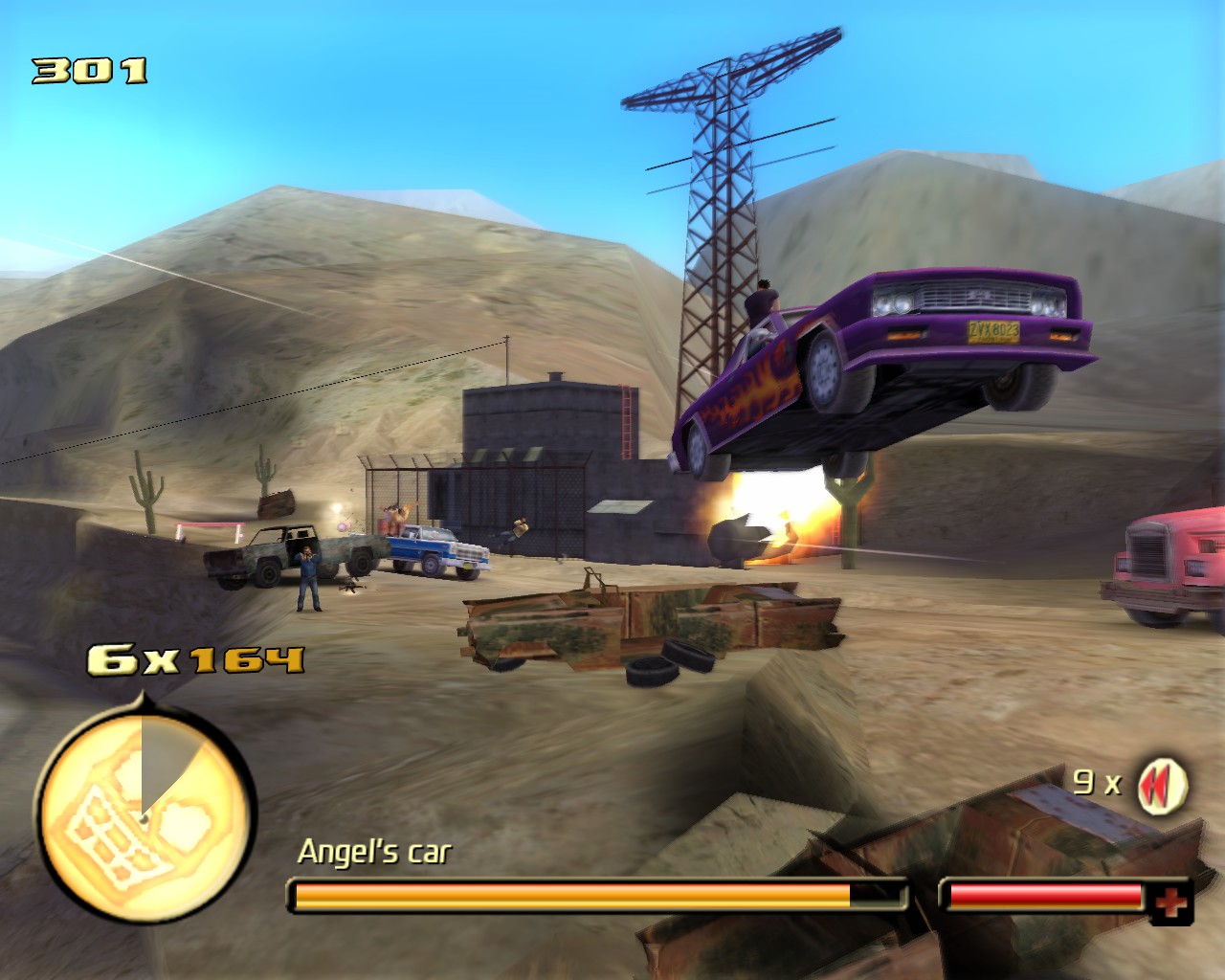
You could tell that Deadline was working with a tight budget, hence why the vehicle handling was kind of wonky and why other features lacked refinement, such as being able to jump on objects properly.
I found it kind of odd that they had a shoot-dodge button and a jump button. You rarely had to use the jump button, but when you did you could tell that it was some sort of a last minute addition.
Also attempting to jump through or over things that weren’t intended to be traversed usually resulted in Cruz getting stuck or jammed in the geometry.
In one case I blew up a truck on a bridge and the truck blocked the pathway across the bridge. Cruz was unable to jump over or climb on top of the truck, so I had to jump up on the bridge archway, but I kept slipping off the side because the geometry for the bridge wasn’t wide enough to stand on properly.
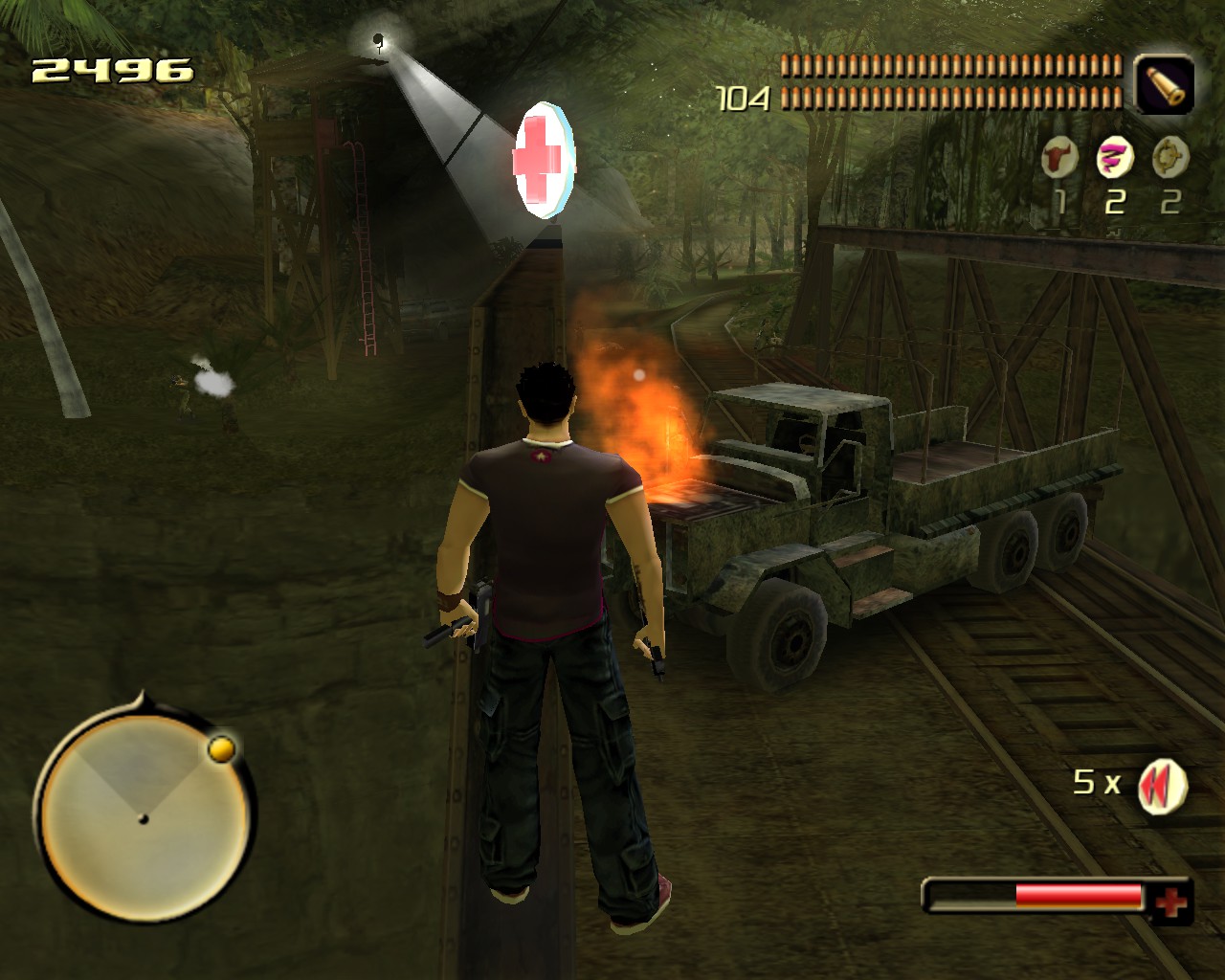
These kind of small issues really did strip away from the experience because moving the game into a mechanical direction that it wasn’t designed for made for frustrating moments.
This was typically a problem for a lot of 3D games back then where they were running on their own engines or some off-shoot of other proprietary software where the ideas from the development team were bigger and more complex than the technology that could support those ideas.
But how dang, I at least have to give them props for trying. It’s a heck of a lot more than what I can say for today’s games, where most are trite, derivative, poorly made clones with less features and mechanics than games made two decades ago.
Enemy Tedium
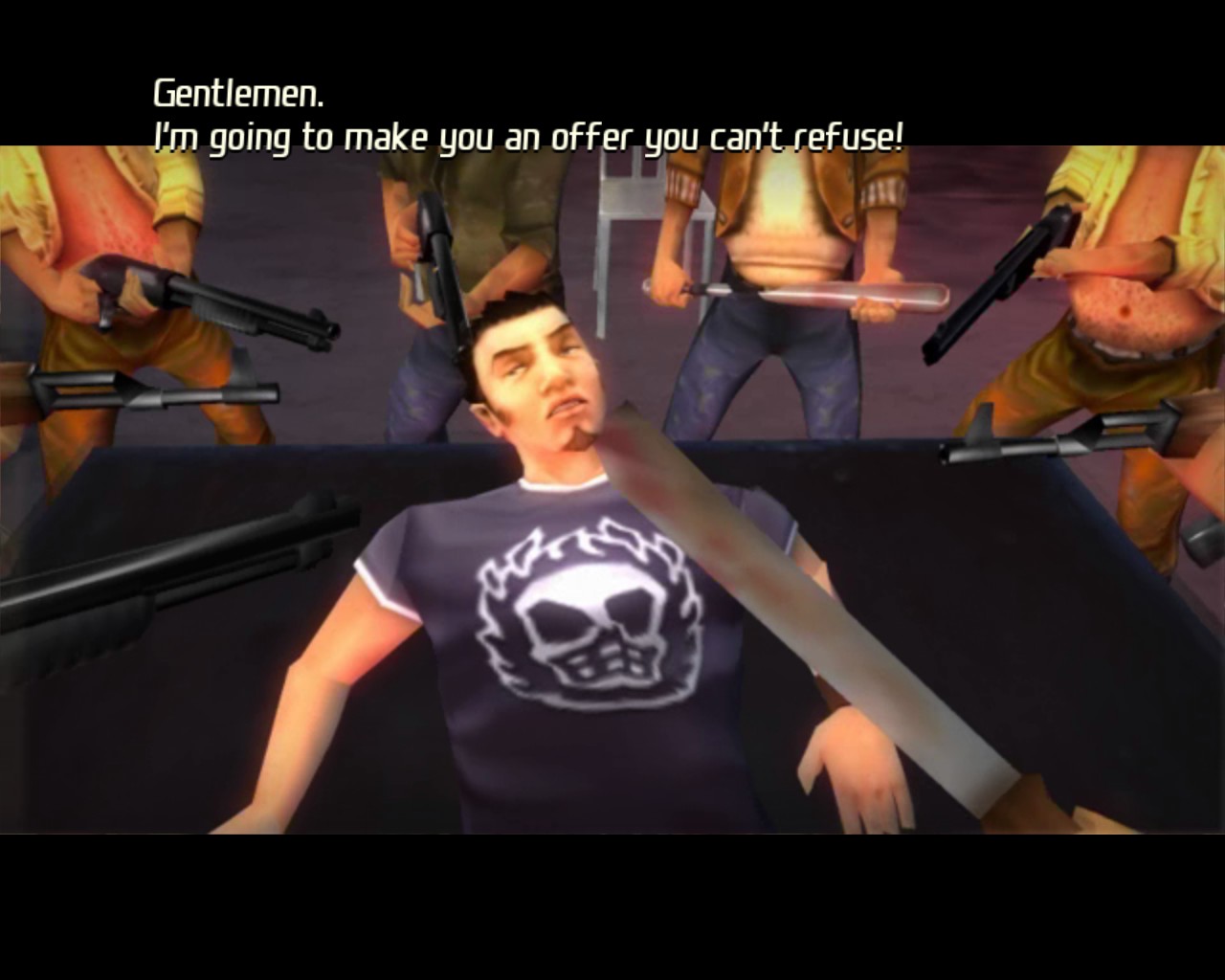
I did find that Total Overdose lost a bit of its charm during the latter levels where enemy health was ratcheted up a little too high, forcing you to have to shoot-dodge the same enemy multiple times in different ways just to kill him.
The game functioned a lot smoother when the flow of combat was progressive and constantly moving, where there was plenty of momentum and the pace of the action was kept fast and fluid.
Even though the main story missions became a bit tedious near the end, at least the side-missions retained their over-the-top and mass-carnage appeal.
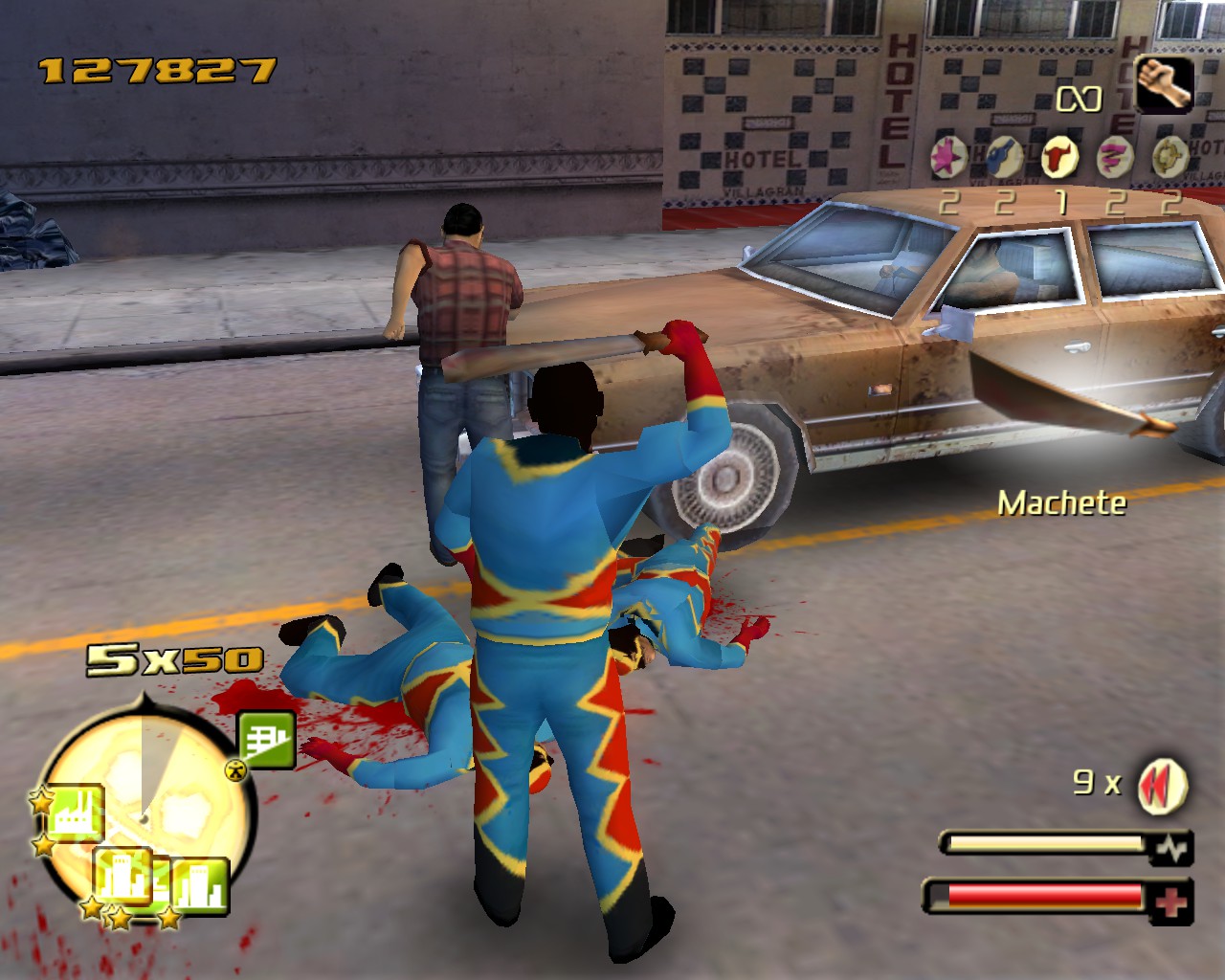
Some of the mini-games and side-missions included running around as a crazy luchador who has to kill as many enemies as possible using melee weapons, while other tasks involved picking up power-ups and killing a bunch of a zombies dressed in skeleton outfits.
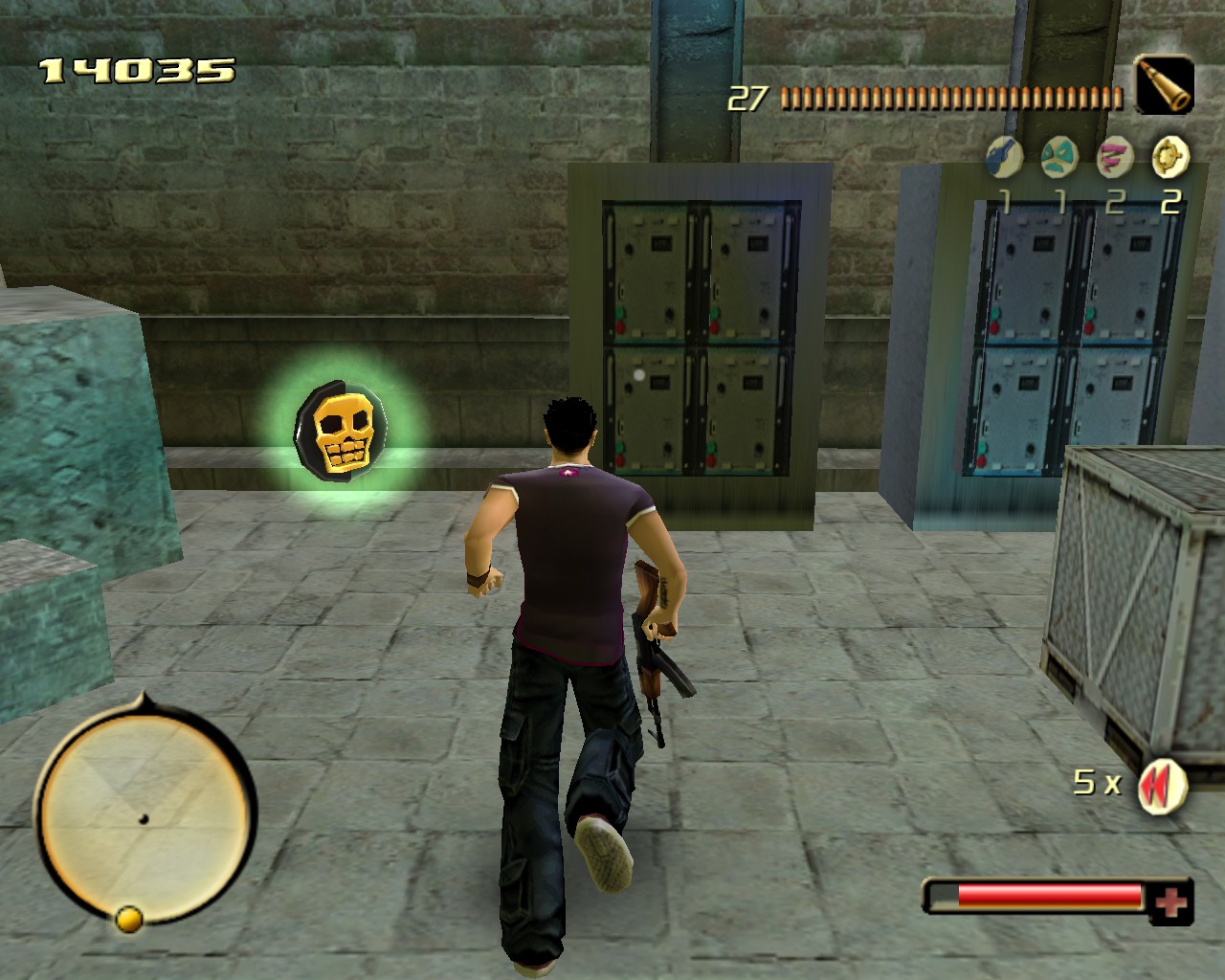
The throwback to power-ups also caught me by surprise because we don’t get to see power-ups in many of today’s super-serious, super-depressing, non-fun shooter games.
For some reason glowing orbs and spinning tokens are now verboten, despite the fact that they helped define the best aspects of gaming for decades.
Power-Ups For The Win
Seeing all the random pick-ups and power-ups in Total Overdose was a constant reminder that the developers wanted gamers to have fun. They wanted you to experiment and be wacky and create all sorts of mayhem within the tiny little sandbox environments that they created.
You could tell this was a love-letter made to celebrate digital carnage.
It’s amazing to me because this has the sort of gameplay and over-the-top tone that should have been in Sunset Overdrive, which tried really hard to be wacky but was tame as crap and lame as heck compared to Total Overdose.
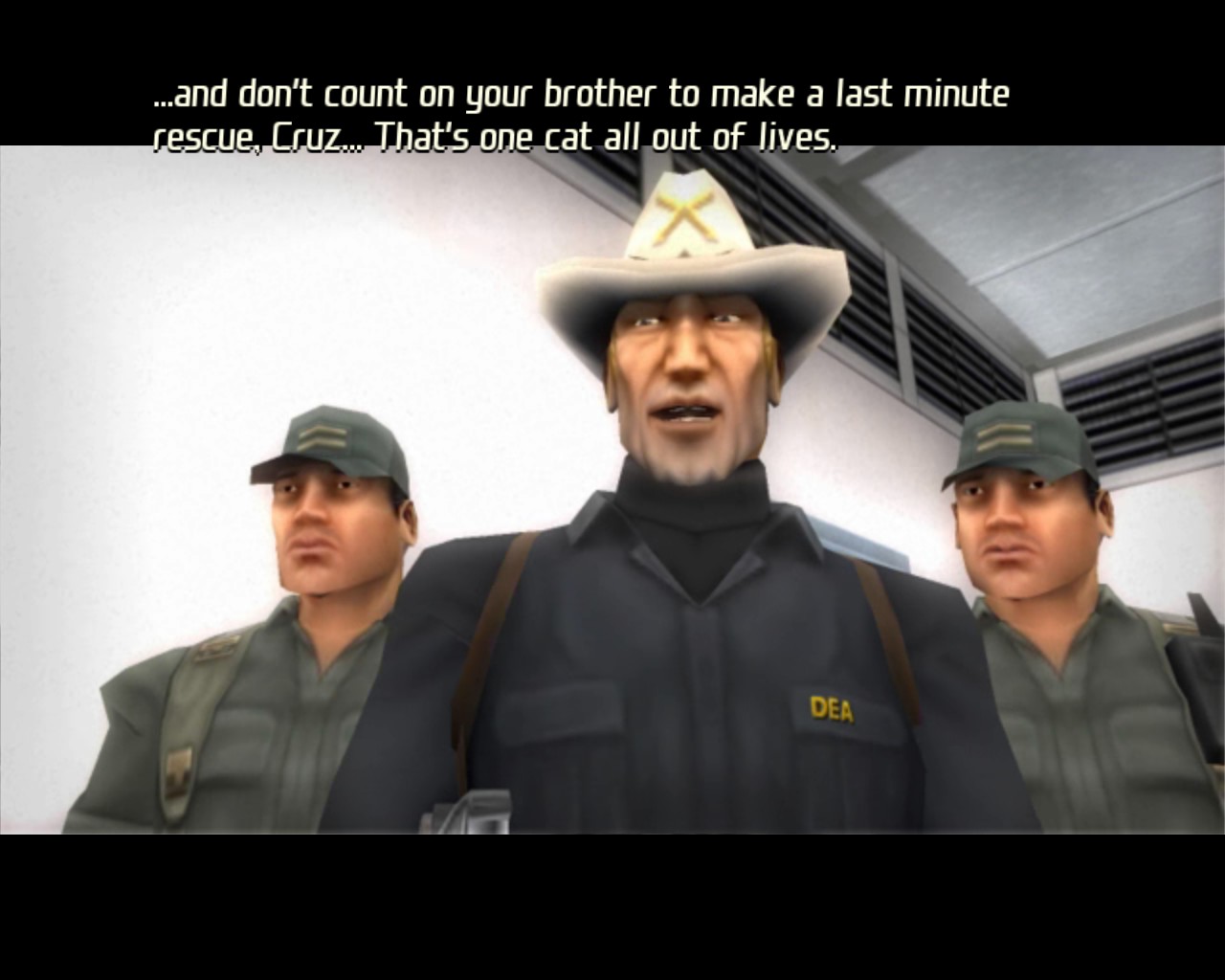
The latter never took itself too seriously and just had a lot of fun with plenty of politically incorrect content, such as the fact that you break into the DEA’s office and just gun down everyone in there in an attempt to save your brother’s life.
The game also manages to completely avoid pushing any sort of political agenda. Despite taking place near the border of Mexico there’s no message about illegal immigrants or being pro open-borders. There’s nothing about regional oppression or political subversiveness, or any of that nonsense.
Total Overdose focuses purely on the story it’s telling involving the cartels and the brothers looking to avenge their father’s death; nothing more.
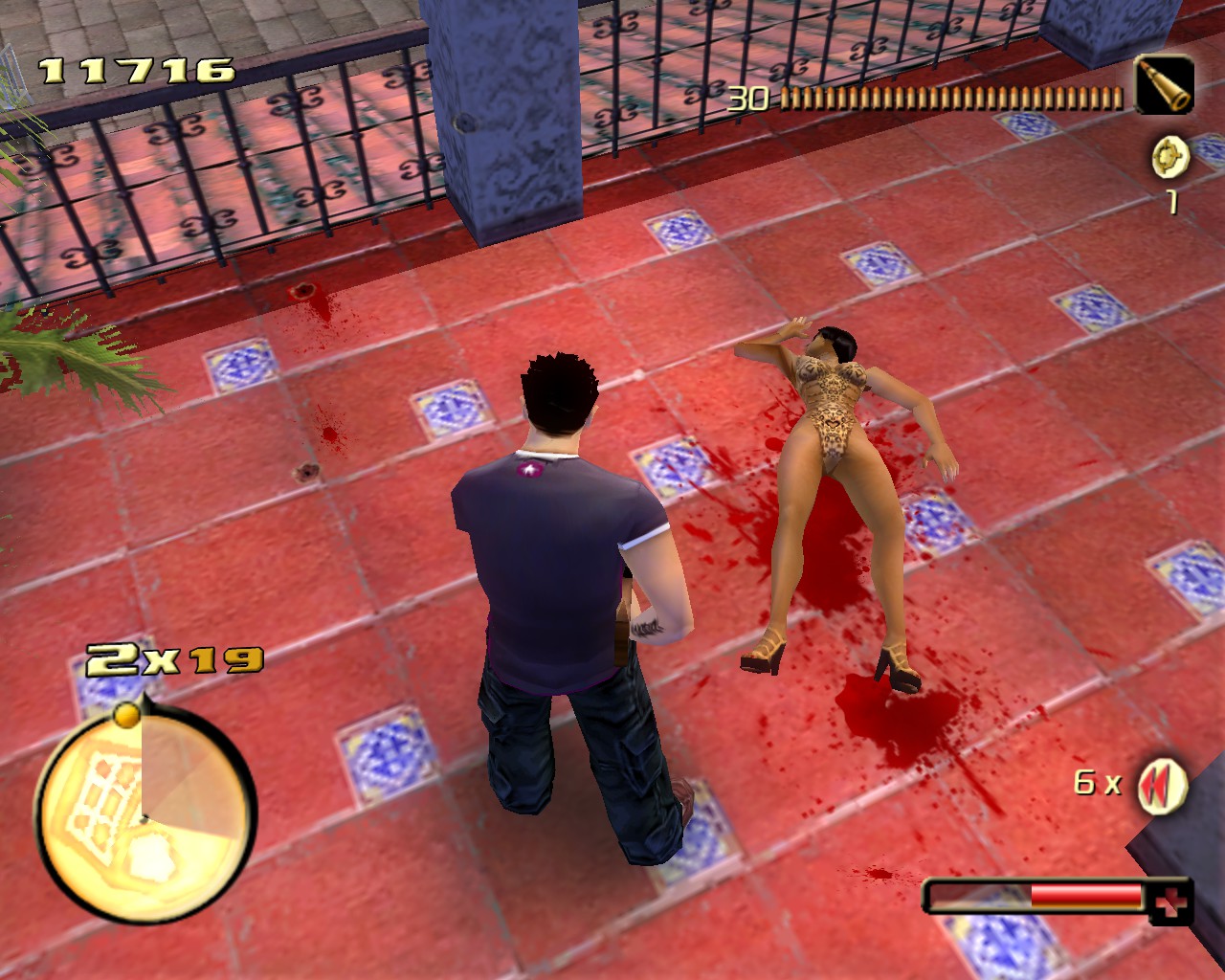
It doesn’t hold back in diving headfirst into silly antics, including raiding a hacienda where bikini-clad bodyguards with machine guns attempt to gun down Cruz.
I doubt we’ll ever see anything like that in a Western AAA game made in [current year].
No Propaganda, No Degeneracy
Another highlight is that there is no degeneracy in the game.
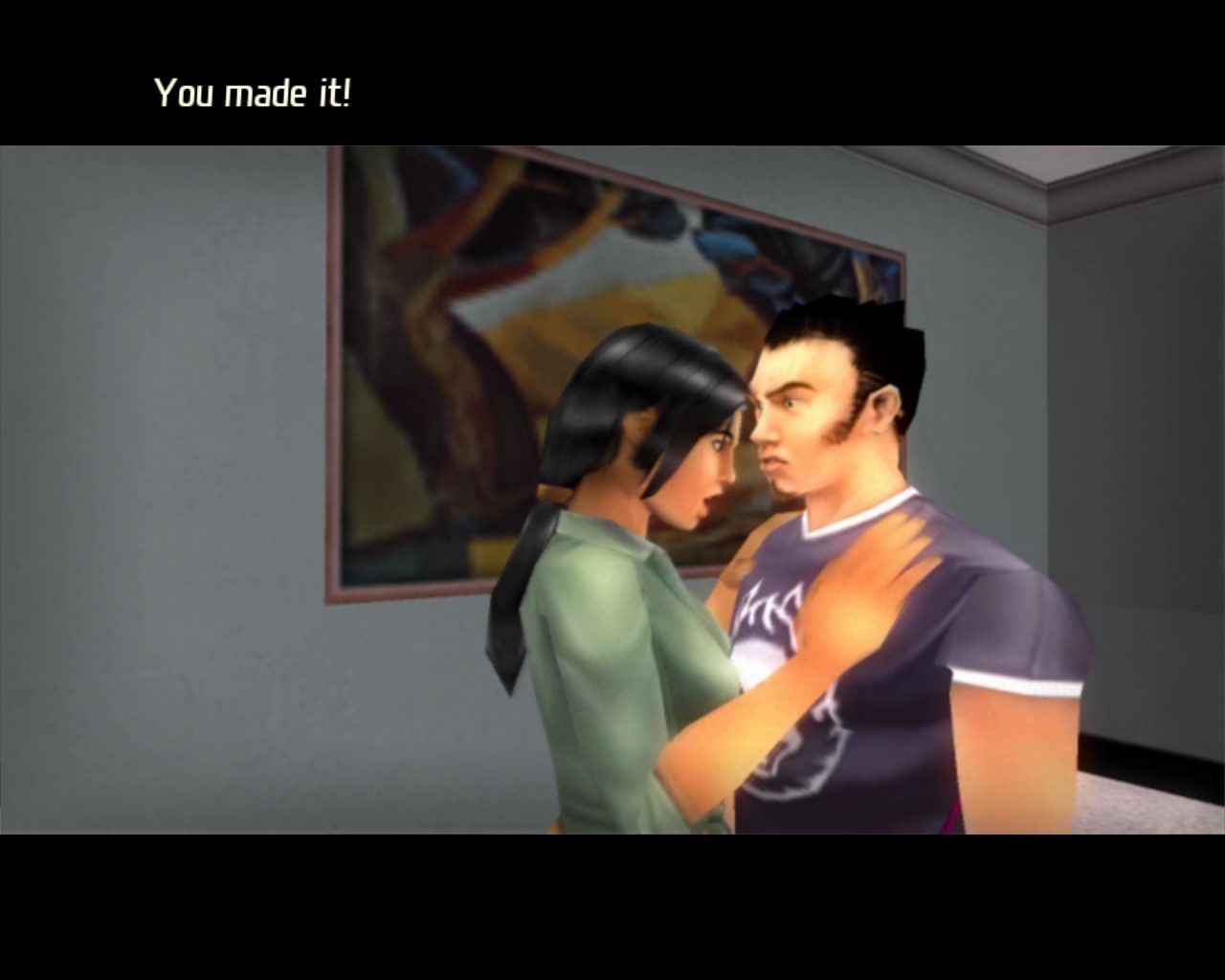
The only relationships are heterosexual. You don’t have to worry about being inundated with ridiculous and shoehorned-in depictions of “representation”.
And all of the women in the game are hot. You don’t have to worry about looking at androgynous, trans-adjacent freaks for eight hours like all of the AAA Western games made in [current year].
Overall, Total Overdose: A Gunslinger’s Tale In Mexico is a decent third-person shooter.
The soundtrack is also totally fitting, even if the music isn’t quite up my alley. The rock-and-rap combination of Spanish tunes perfectly sync with the game’s fast-paced combat and non-stop explosive scenarios. It’s hard not to get geeked up as the interactive music begins to blare, getting louder and more bombastic the more kills you rack up with the combo meter. It’s very similar to Devil May Cry 5 in that respect.
The mechanics work for the most part, despite the fact that they’re not the most refined. The districts are tiny and the vehicles aren’t the most reliable, but if you had a day or two to burn and wanted to play a game that didn’t contain any [current year] propaganda, Total Overdose is well worth the purchase.
You can grab a copy from over on GOG.com, or you can snag a used copy from Amazon or GameStop for the OG XBox or PS2.
Verdict: