

An article was recently published on February 12th, 2020 over on the South Korean news site Inven. The article details how researchers using funding through the Ministry Of Culture and the Ministry of Gender Equality – which came from the Ministry of Science, ICT and Future Planning to study neurological science and resource technology from back in 2014 – have been running with a recent claim that they found that video game addiction can be discovered via blood tests and that the “disease” may be genetic.
The Ministry of Gender Equality funneled 2.3 billion won into funding a research team from the Catholic University of Korea led by Professor Kim Dae-Jin. That’s about equivalent to $2 million USD.
According to Professor Kim Dae-Jin…
“We are going to develop software related to smart healthcare service platforms by establishing diagnostic indicators based on smart devices and identifying the causes of brainwashing of Internet game addiction, biometric signals and big data analysis. The size of the smart healthcare IT market exceeded $17.5 billion in the global market and $100 million in Korea in 2015. We will be able to compete in the fast-growing global smart health market.”
The researchers stated that they’re looking for possible solutions to video game addiction via drugs and other similar treatments.
The research team explained in their report…
“In particular, the fact that Internet game addiction is found in teenagers is very worrisome in terms of brain development. There is an urgent need for proper prevention and treatment policies for excessive use of the Internet and games.”
Inven is reporting that Professor Kim Dae-Jin and his research team at the Catholic University of Korea are looking to find a “target molecule” that can modify and alter behavioral addictions. They believe that if they can neutralize or control this behavioral mechanic, they can subdue video game addiction along with drug addiction, alcohol addiction, and gambling addiction, which the government have labeled as the “four evils” of South Korean society.
They’ve specifically targeted video games because reports have indicated that South Korean productivity has shrunk over the years, and recent studies from the Ministry of Culture have indicated that the country is on a steep population decline, with the country hitting all-time lows with their annual birthrates.
Coupling the productivity issues with high suicide rates and low birthrates, South Korea’s stability looks uncertain for the future.
The Ministry of Gender Equality and the Catholic University of Korea believe that curbing video game and internet addiction might be the answer to their societal woes, as opposed to using common sense and looking inward at gender relations, home life, and emotionally cultivating kids instead of trying to brainwash and subjugate them.
But it gets worse.
The Ministry of Culture also funded 1.2 billion won toward Professor Jeong Yeon-joon’s research team to study blood samples to see if they could find links between genetic markers of video game addiction and both drug and alcohol addiction.
In a report from Professor Jeong Yeon-jun from back in 2017, it was stated…
“There are studies that show that Internet game addiction is caused by genetic factors rather than environmental factors,” […]
“Since the creation for diagnosing Internet game disorders can be used as a biomarker, it can be used as a new way to prevent or treat game disorders,”
Inven noted that Jeong Yeon-jun applied for a patent to diagnose internet gaming addiction by using miRNA as a biomarker. The KIPO awarded Professor Jeong Yeon-jun’s team the patent on January 6th, 2020.
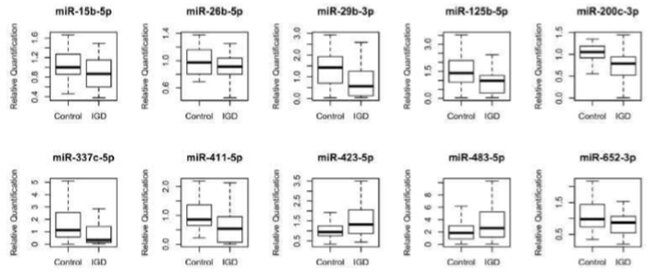
The whole thing reeks of a scam by the researchers to make bank on treating something they’re claiming is genetic when there’s no exhaustive tests proving that video game addiction is genetic.
Thankfully not everyone is buying into the insanity. The article did offer a counter-argument from Lee Jang-ju, a director at a South Korean culture institute, who stated that common sense dictates that this may not be a viable approach to the problem and that the gaming industry officials should handle it instead of researchers…
“There are studies using miRNA for physical diseases such as cancer and diabetes, but there is a lot of common sense and theoretical controversy as to whether they can be applied to things classified as mental disorders.”
“At the moment, the ministry and game industry officials should actively deal with the issue. Once it spreads socially, it is likely that game addiction will be mistaken as a physical condition that can be examined through blood instead of a controversy over the validity of the patent.”
Some other doctors noted that they haven’t been able to replicate the results from research conducted by the teams headed up by people such as Professor Jeong Yeon-joon and Kim Dae-jin.
Worse yet is that the government funded this research under the Park Geun-hye administration back in 2014 before she was impeached during the eight goddesses conspiracy. However, one interesting thing to note is that the main reason why the funding for Kim Dae-jin’s research was cut from 5.1 billion won down to 2.1 billion won was due to Park Geun-hye being impeached, and the plans to further regulate the gaming industry were undermined by said impeachment.
For those who don’t know, Park Geun-hye’s administration had it in for gaming because a militant feminist group in South Korea known as Megalia had targeted practically anything that appealed to straight Korean men. The government put major clamps on the industry, implementing harsh regulations and restrictions on gaming, which was further detailed in a seven minute report by NHK World back in spring of 2014.
South Korea’s gaming industry was at one point on a fast-moving rocket of success, but then hit a major slump by 2014 due to all the new regulations, as reported by News 1 Korea.
With this new revelation that South Korea is looking to treat internet gaming addiction as some kind of physical disease, it sheds light now on reports from years ago that an Asian country was pressuring the World Health Organization into adding video game addiction and gaming disorders to the ICD-11.
Speculatively speaking that could have been a power-play from South Korean researchers to have gaming disorders recognized as an international disease to make it easier to get more funding, and in turn create patents for possible treatments that can be used both to neutralize and control the youth population of South Korea, as well as make bank on the proposed treatment(s).
(Thanks for the news tip and translations jjj0309)
Loading comments…