
Psychology, along with its study, often suffers from a bad reputation. Owed in part to the fields heavily politicized nature, unreplicable studies that underpin the bulk of the field, and in some fields, outright ideological biases pushed as if they possessed scientific validity. Yet within the field of study, there are dedicated professionals who produce scientifically valid works that often go ignored by the mainstream.
In a recent set of studies, researchers at the University of British Columbia delved into the issue of virtue signaling. Determining after a series of studies based upon pre-established works that virtue signaling is often a hallmark of what is referred to in Psychology as the Dark Triad.
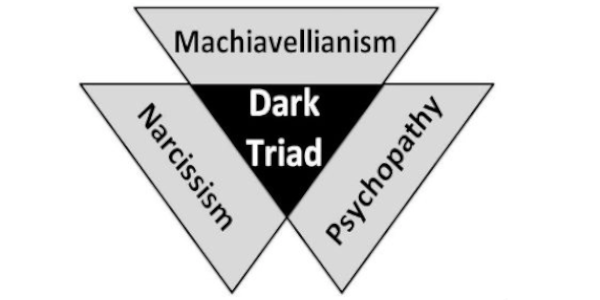
The Dark Triad refers to three personality traits often seen together that result in malevolent behaviors on the part of individuals manifesting them. These traits are Narcissism, Psychopathy, and Machiavellianism. The latter should not be conflated with its political equivalent under the same name. Psychological Machiavellianism refers to the cold, unemotional manipulation of other people. Often without concern with moral or ethical ramifications.
The studies forward reads as follows:
We investigate the consequences and predictors of emitting signals of victimhood and virtue. In our first three studies, we show that the virtuous victim signal can facilitate nonreciprocal resource transfer from others to the signaler. Next, we develop and validate a victim signaling scale that we combine with an established measure of virtue signaling to operationalize the virtuous victim construct. We show that individuals with Dark Triad traits—Machiavellianism, Narcissism, Psychopathy—more frequently signal virtuous victimhood, controlling for demographic and socioeconomic variables that are commonly associated with victimization in Western societies. In Study 5, we show that a specific dimension of Machiavellianism—amoral manipulation—and a form of narcissism that reflects a person’s belief in their superior prosociality predict more frequent virtuous victim signaling. Studies 3, 4, and 6 test our hypothesis that the frequency of emitting virtuous victim signal predicts a person’s willingness to engage in and endorse ethically questionable behaviors, such as lying to earn a bonus, intention to purchase counterfeit products and moral judgments of counterfeiters, and making exaggerated claims about being harmed in an organizational context.
Continuing the study illustrates the very nature of virtue signaling and victimhood as a means of resource extraction. Be the resources financial, social, or material; the end goal of the behavior is to accrue resources from the action.
Our hypotheses follow from the proposition that victim signaling may be used as a social influence tactic that can motivate recipients of the signal to voluntarily transfer resources to the signaler. This argument is not new. An emerging literature on competitive victimhood documents the prevalence of victim signaling by various social groups (Noor, Shnabel, Halabi, & Nadler, 2012) and provides evidence for its functionality as a resource extraction strategy (Graso, Aquino, & Ok, 2019; Sullivan, Landau, Branscombe et al., 2012). For instance, victim signaling justifies victim groups seeking retribution against alleged oppressors (Sullivan, Landau, Branscombe et al., 2012). Retribution often takes the form of demanding compensation through some kind of resource transfer from nonvictims to the alleged victim. Claiming victim status can also facilitate resource transfer by conferring moral immunity upon the claimant (Baumeister & Newman, 1994). Moral immunity shields the alleged victim from criticism about the means they might use to satisfy their demands. In other words, victim status can morally justify the use of deceit, intimidation, or even violence by alleged victims to achieve their goals. Relatedly, claiming victim status can lead observers to hold a person less blameworthy, excusing transgressions, such as the appropriation of private property or the infliction of pain upon others, that might otherwise bring condemnation or rebuke (Gray & Wegner, 2011). Finally, claiming victim status elevates the claimant’s psychological standing, defined as a subjective sense of legitimacy or entitlement to speak up (Miller, 1999; Miller & Effron, 2010). A person who has the psychological standing can reject or ignore any objections by nonvictims to the unreasonableness of their demands (Ratner & Miller, 2001). In contrast to victim signalers, people who do not publicly disclose their misfortune or disadvantage are less likely to reap the benefits of retributive compensation, moral immunity, deflection of blame, or psychological standing and would therefore find it difficult to initiate resource transfers.
The determinations of some of the studies will not sound unfamiliar to anyone who has had the displeasure of interacting with these people. Here is some of what the studies determined.
-People are less likely to transfer resources to a victim viewed as less virtuous. They were more likely to transfer resources to a victim that appeared virtuous at a slightly higher rate than a victim viewed as neutral.
“…emitting the dual signal of virtue and victimhood will be more effective at encouraging observers to transfer resources to the signaler in an online crowdfunding context than emitting either signal on its own.”
-”…virtuous victim signaling is more frequently displayed by Dark Triad personalities, even when controlling for factors that may make people vulnerable to being mistreated or disadvantaged in society (i.e., demographic and socioeconomic characteristics) as well as the importance they place on being a virtuous individual as part of their self-concept (as measured by the internalization dimension of moral identity)”
-Individuals who engage in virtue signaling are more likely to purchase designer products than knockoffs. This behavior is theorized to originate from said people’s “high deservingness and entitlement perceptions.”
-Virtue signalers are more likely to lie about the outcomes of games. In the study, the focus was on a coin flip, and those who engaged in virtue signaling were more willing to flip the coin twice and then lie about the outcome if it didn’t come out their way than normal people.
-”This study provides further evidence for the possible use of virtuous victim signaling in an instrumental way by individuals who are prone to disregarding standards of morality for self-gain (amoral and manipulative Machiavellians) and by those with the self-oriented motive of establishing their superior morality (communal narcissists).”
-”This study shows that frequent virtuous victim signalers may interpret ambiguous situations and act upon them in a way that may have potentially advantageous results for themselves in a workplace context.”
This result is in reference to a virtue signaler being more willing to exploit human nature to gain workplace advantages through the manipulated perception that they are a victim of circumstance, systematic oppression, or the actions – real or imagined – of another person.
For those that have interacted with Marxists and SJWs, there is little in the way of revolutionary content in this study. What is described can be seen by a casual observer with enough time and preferably distance from the source of the occurrence. Where the study becomes useful is in the validity, it offers the observations we routinely make. It also correlates these findings with prior studies for greater clarity and validity.
(Thanks for the tip BaldCape)
Loading comments…